Nonprofit Spotlight: San Francisco Estuary Institute
By Amy Nelson
Draining a watershed of nearly 60,000 square miles, from the Sierra Crest to the Pacific Ocean, the San Francisco Estuary is the largest estuary in California. Encompassing San Francisco Bay and the Sacramento-San Joaquin River Delta, it drains nearly 40% of California and supports thousands of species of wildlife and over eight million people.
But the health of the Estuary is threatened by many factors, including climate change, habitat destruction, reduced freshwater flows, water diversion, invasive species, and… pollution. About two-thirds of San Francisco Bay’s nutrient pollution comes from the wastewater generated by the region’s expansive population. Population in the San Francisco Bay area alone has doubled since 1970, and much of the region’s wastewater infrastructure was built in the 1950s and 60s. While many major upgrades have been made since the passing of the Clean Water Act, there is still work to be done to reduce excess nutrients flowing into the Estuary, and the need for this work has become increasingly clear in recent years.
Until very recently, the Estuary’s high turbidity and strong tidal mixing helped buffer it from the impacts of nutrient loading—like harmful algal blooms and fish kills—experienced by other large estuaries in the U.S. But a changing climate and other stressors have weakened that defense, and in the summer of 2022, the Estuary’s vulnerability was exposed. A harmful algal bloom (also known as a red tide) occurred in San Francisco Bay, killing thousands of fish and closing beaches.
Within two years, the California Regional Water Quality Control Board adopted the Nutrients Watershed Permit (Order R2-2024-0013), imposing new total inorganic nitrogen effluent limitations on publicly owned treatment works in San Francisco Bay. The permit offers several compliance options, including the creation of nature-based approaches, such as treatment wetlands. But how might a municipal sewage treatment agency manager know if constructed wetlands are an option at any of their facilities? And how might they go about implementing nature-based solutions?
Fortunately, there is the San Francisco Estuary Institute (SFEI), a nonprofit organization with a mission to deliver visionary science so people can revitalize nature in the Estuary’s many communities. With a focus on clean water, resilient landscapes, and the advancement and communication of science and technology related to those issues, SFEI partners with communities, Tribal nations, nonprofits, the private sector, academics, and all levels of government to create solutions. This includes nature-based solutions like constructed wetlands for wastewater treatment.
Among SFEI’s many programs and initiatives, the organization has been collaborating with Bay Area Clean Water Agencies to help treatment plants around the Bay region identify opportunities to use nature-based solutions, such as integrating open water wetlands and horizontal levees into their treatment trains, to reduce nutrients.
“We looked for multi-benefit project opportunities,” said Ellen Plane, a Senior Scientist with SFEI, who has been involved in this effort. SFEI began by conducting a GIS-based analysis to examine the suitability of treatment plant sites for constructed wetland interventions. The team then visited and spoke with staff at the sites where wetlands seemed most feasible. That led to the identification of eight facilities for which Plane and her team conducted deeper analyses of opportunities and constraints. From those eight, three sites were selected to move forward with conceptual designs and preliminary cost estimates.
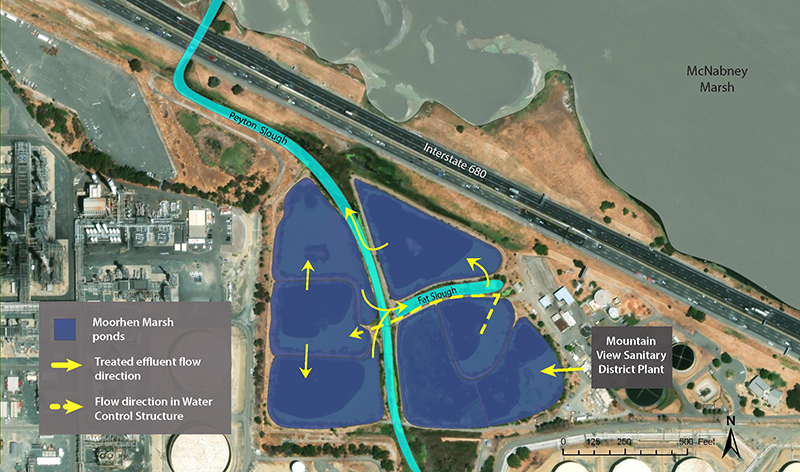
Part of the project involved studying existing constructed wetlands at some of the region’s treatment plants and speaking to the people who work there. “We found that the constructed wetlands are a real source of pride for staff,” said Plane. “They care deeply about those systems and they’re a big community asset.” She cited constructed wetlands at Ellis Creek in Petaluma and Las Gallinas Valley Sanitary District ponds, which have become popular destinations for hikers, birdwatchers, and school groups.
“A lot of facilities are still figuring out how nature-based solutions could fit into the puzzle,” said Plane, “but we hope to see more adoption of these types of nature-based solutions around the region.”
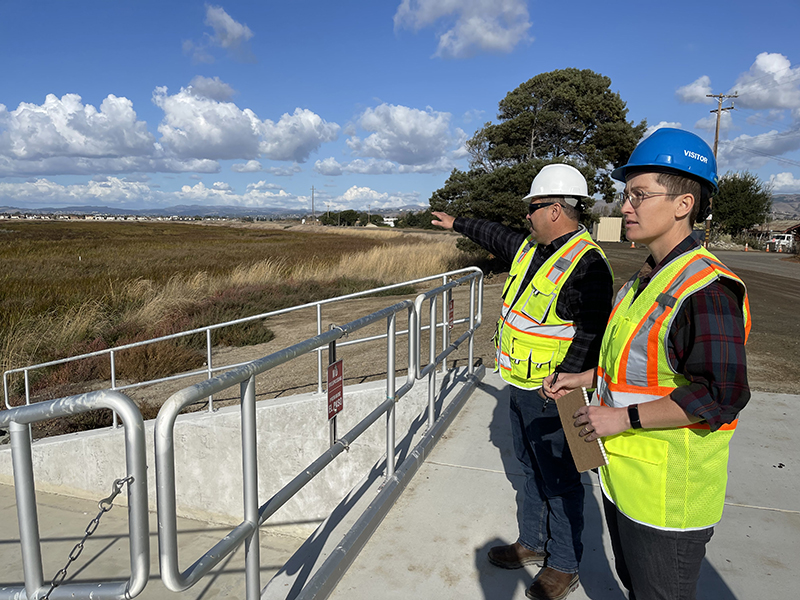
SFEI’s work in advancing such solutions began long before the new Nutrients Watershed Permit. In the early 2000s, for example, SFEI joined a team, led by the San Francisco Estuary Partnership and including the University of California Berkeley, Environmental Science Associates, ecologist Peter Baye, Save the Bay, and others to develop and pilot the West Coast’s first horizontal levee at the Oro Loma Sanitary District,
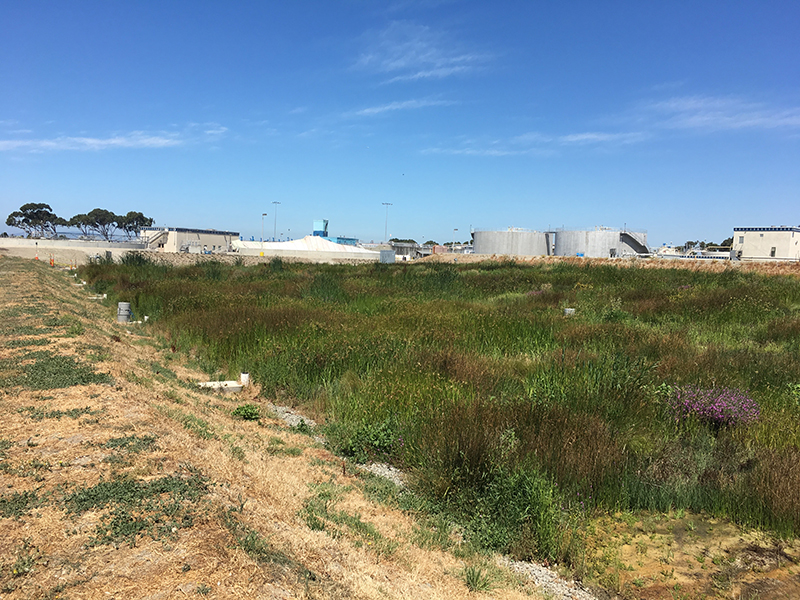
Constructed in 2017 along San Francisco Bay’s eastern shoreline, the Oro Loma Horizontal Levee includes a freshwater treatment wetland to remove nutrients from the plant’s effluent. The groundbreaking project has served as a living laboratory to study the effectiveness of horizontal levees for improving water quality, strengthening sea level rise resilience, and enhancing habitat. It has also informed the design of other horizontal levees, including a newly opened horizontal levee at Palo Alto’s Baylands Nature Preserve.
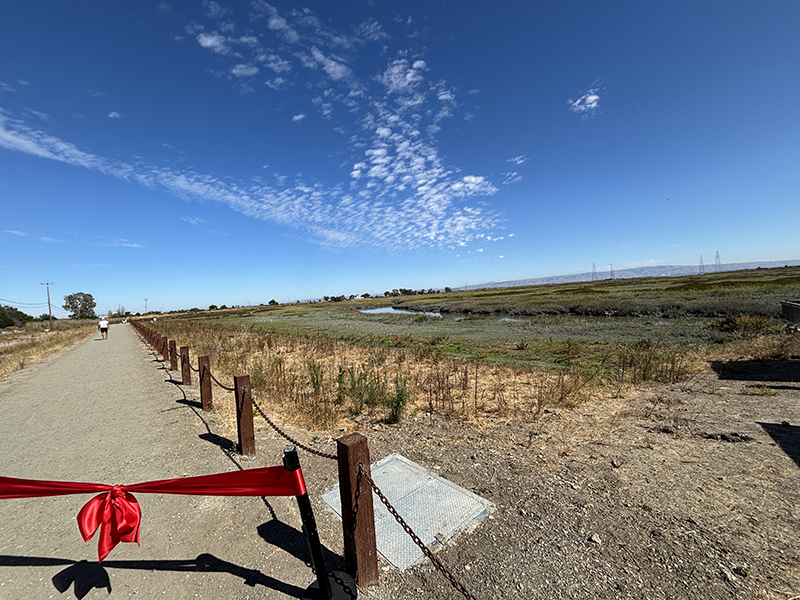
“A lot of my work is focused on ways that we can leverage natural processes to create better environments for people and wildlife while creating a cleaner Bay that’s more resilient to sea level rise,” said Plane. “Nature-based solutions give me hope, and there is so much opportunity.”
While SFEI’s funding comes primarily from government sources, uncertainty in federal science funding has made philanthropic donations and the flexibility they provide more important than ever. “Additional funding from donors is hugely valuable to us in terms of being able to expand our strategic vision through communication and outreach,” said Plane.
To discover more about the many programs and initiatives of the San Francisco Estuary Institute, and to learn how you can help support their important work, visit sfei.org.