Expert Q&A: David Austin PE, CSE, CLM, CED
By Amy Nelson
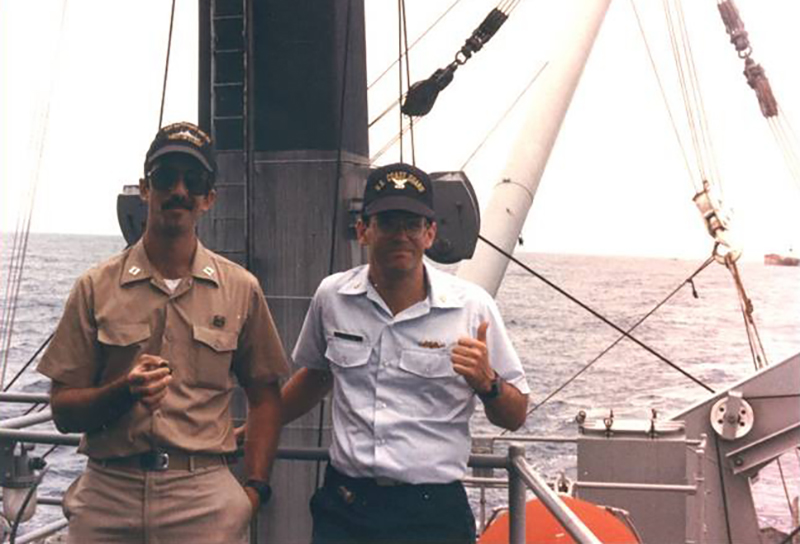
I understand that your interest in an environmental career was sparked while you were serving as a marine salvage and diving officer in the U.S. Navy. Can you tell me about that?
Our ship was stationed in Oahu. We were working with the Coast Guard doing interdiction operations, searching ships at sea for contraband. One dark and stormy night, as we were coming home to Pearl Harbor, we got an urgent call from the Coast Guard that an oil tanker, the Exxon Houston, had run aground off Barbers Point, where oil gets offloaded. We changed course, headed to the scene, and arrived to discover that the ship had slipped off its pier, gotten blown by the wind, and gone aground on a reef.
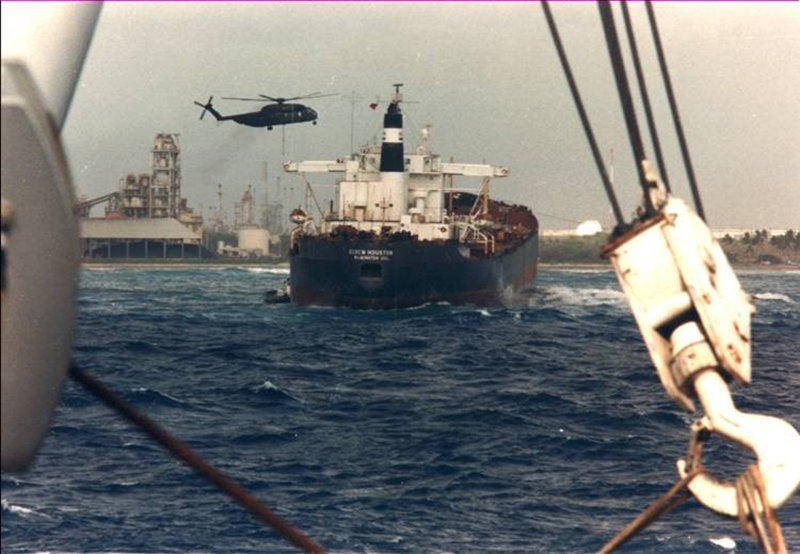
The front of the ship was on the reef, and wind was blowing the ship sideways. If you think of the ship as a lever and the reef as a fulcrum, well… ships aren’t designed to bend like that, and they can crack like an egg. When we were coming up on the Exxon Houston, I realized how big a supertanker really is. It hit me like a ton of bricks. The hair stood up on the back of my neck and I thought, “If we don’t pull down on this thing, there will be a catastrophe.” The whole operation took 36 hours, but we pulled it off. It was so close to catastrophe… like briefing the President of the United States kind of catastrophe.
Just two weeks later, while we were in port, I walked in the wardroom and there on the television was an image of the Exxon Valdez, just gushing oil into Prince William Sound. This is the only time this has ever happened to me in my life: my knees buckled. I was suddenly back on the bridge looking at the Exxon Houston, thinking, “Oh man.” It was just sickening to see.
Before all of this happened, I had planned to leave the Navy and teach high school mathematics. That was my dream. But [that whole experience with the Exxon Houston and then seeing the Valdez spill] got me thinking about the environment, and how there are probably a lot of near catastrophes—on top of those that actually happen. I knew then that I needed to be involved in solving those problems.
I left the Navy, and was living in Madison, Wisconsin, where I became interested in the work of John Todd and decided to take a course from him in Massachusetts. I asked him how I could get involved in his work and he said, “Become a limnologist.” The University of Wisconsin-Madison is one of the most famous limnology schools in the world. I got a master’s degree in water resources management, which allowed me to take all the limnology I wanted, and about halfway through that, I fell in love with wastewater and realized I needed to be an engineer. This was around 1990. I had heard about a professor at the University of California, Davis named George Tchabanoglous who was doing interesting work in ecological engineering, so I flew out there, told him my story, and said, “I’ve got to be an environmental engineer, too!” He said, “Welcome aboard,” and I went on to do a master’s degree in Civil and Environmental Engineering at Davis. I was going to start a PhD at Berkeley when my funding disappeared. I was savagely disappointed for about two minutes because I was suffering severe paycheck withdrawal symptoms. But then I thought, “Well, now I can just get a job, right?” And that’s how my career as an ecological engineer began.
Much of your early career as an ecological engineer was spent in research and development. Can you tell us about some of that pioneering work?
I went to work for Living Technologies in Burlington, Vermont. I started off working on Living Technologies®, hydroponic systems that were sort of cousins of constructed wetlands. Before beginning that job, I had read an EPA report with some pretty severe critiques of a Living Machine located inside a greenhouse on land that belonged to the City of South Burlington. That Living Machine [consisted of] aerated, activated sludge with plants on it and recirculating bio filters, and it handled 40,000 gallons of wastewater per day. The EPA was largely right in their critiques, which included the fact that the role of plants was unresearched. As I read each of their critiques, I thought, “We can take care of this.”
When I began the job and took over that project, I started instituting reforms [to address the EPA critiques]. The rules for this project were a bit unclear, and I thought, “I’m not going to ask anyone for permission; I’m just going to fix the problem. If they tell me that I shouldn’t have done that, then I’ll take my licking.” After a couple of months, we met with the EPA, and they could see that we were figuring things out.
What were some of the things you figured out?
The critical thing was with the plants. George Tchabanoglous, who happened to be on the Technical Advisory Committee of the EPA project had been working with the City of San Diego on [an experimental wastewater treatment system that used] water hyacinths. He had done a lot of research on plant roots, because it’s the interaction between water and the biofilms on plant roots that does a lot of the treatment. The more plant roots you have (and therefore the more mass surface area you have), the more biofilms you have.
If you give water hyacinths all the nutrients they need, they have little, bitty roots about a centimeter or two long. But if you starve them of nitrogen (and there is a specific engineering method to spread the nitrogen out and fool them into thinking they don’t have enough) they grow roots around two meters long. That’s what they did in San Diego, and the project succeeded brilliantly. I transferred that knowledge—that plant roots need to be long and that we need 20-30% of the water column occupied by plant roots—to the South Burlington system. We hired an excellent horticulturalist from the University of Vermont to find those plants. It took 300 plants and four years to find which plants actually grow long roots, and we used that information to optimize the Living Machine.
I was extremely fortunate [to have had funding for this research]. A billionaire had acquired the company, and [after several long conversations with me about the system and its needed improvements] he stuck out his hand and said, “I’ll make you director of R&D. You’ll have an unlimited budget.” I spent five years there. We created an R&D facility out of a very large garage and started building pilot, experimental wastewater treatment systems. That’s where I began to get involved in constructed wetlands. I realized that we were perfecting the Living Machine technology and the systems were working beautifully, but they couldn’t scale economically. I wanted to solve big problems, so I had to go to wetlands. One thing I understood right away was that there were big holes in wetland knowledge. There was no textbook that could tell you, for example, how to avoid clogging. When constructed wetlands get clogged, they don’t work, so that’s the failure mode. If there’s no engineering guidance on the principal failure mode, how can you design these things? I made a pledge to myself to put all my textbooks on a shelf and not look at them for a year. I said, “I’m going to figure out what the questions are, build this facility, and advance wetland technology.” Eleven patents later, we advanced the technology a lot.*
What were some of the key gains in knowledge that came out of that effort?
One innovation was “flooding and draining” hydraulics. There are a lot of very complex pathways of water through gravel media. It’s really a tough problem in physics to be exact about that. I thought, “Wait a second. If you fill the box of rocks and you drain the box of rocks, that simplifies the heck out of it.” We also discovered that if we used the right type of media, the ammonia in the wastewater would absorb to the media, and when you drained it, it would oxidize and turn into nitrate. Then, when you filled the wetland up again, the nitrate would go into the water, so we could simultaneously nitrify and denitrify with almost no energy. Pumping is cheap compared to aeration.
What type of media did you use?
The media needs a positive ammonium exchange capacity. I used expanded shale aggregate. Expanded slate and clay work well also. The technical name is lightweight expanded aggregate. It is used to make lightweight concrete. It conforms to ASTM C330. We did not talk about this, but one of the advantages of this material is that it has strict manufacturing specifications from the construction industry. Quarry stone, in contrast, is never consistent.
[Another innovation involved the microorganisms in the wetland] I remembered that in graduate school, when I used to play hooky and read papers, I had read about novel bacteria. I found the one company in the world back then that was doing genetic molecular probes. The company was in Germany, so I sent them samples of biofilms on the media and got amazing results back on what bacteria were in my principal treatment wetland pilot.
I also was confronted with my ignorance. I kept asking their chief technology officer questions. She sent me a paper and said, “this paper was published two months ago, and it is the best paper published on the topic.” I read the paper and when I got to the end, I realized I understood nothing, other than the fact that I needed to know this stuff. It was an incredible experience to be confronted with a problem and just think, “how do I chip away at my stupidity here?” It helped that I had a friend who was a PhD virologist who I called to ask questions. Google had just broken out at that time, so I also had this incredible tool to look up stuff. By the end of the week, I understood the paper. I’m not sure how sure how well I would have done on a final exam on bacterial genomics, but I understood it well enough to know what I needed to know, and then I did the research. The big discoveries were that classic nitrogen cycle bacteria were not important players like in activated sludge. Classic means nitrification through nitrite and nitrate and then denitrification from nitrate to nitrogen gas. I discovered heterotrophic nitrification, anammox, simultaneous nitrification and denitrification, and there were a lot of mystery bacteria that showed up which were obviously important to the nitrogen cycle but lit up no know genetic probe. Today would be a different story, alas, but methods in 2003-2005 were kind of primitive compared to today.
What do you consider the most exciting advances that have occurred since those early days of R&D?
The most exciting advances have happened since I joined CH2M Hill and now Jacobs Solutions (Jacobs) because of the scale of the projects [CH2M Hill was acquired by Jacobs in 2017]. We are a big engineering company with big clients who have big problems, so that equals big projects. Subsurface flow, media-based wetlands are too expensive to scale up [because of the amount of aggregate needed].
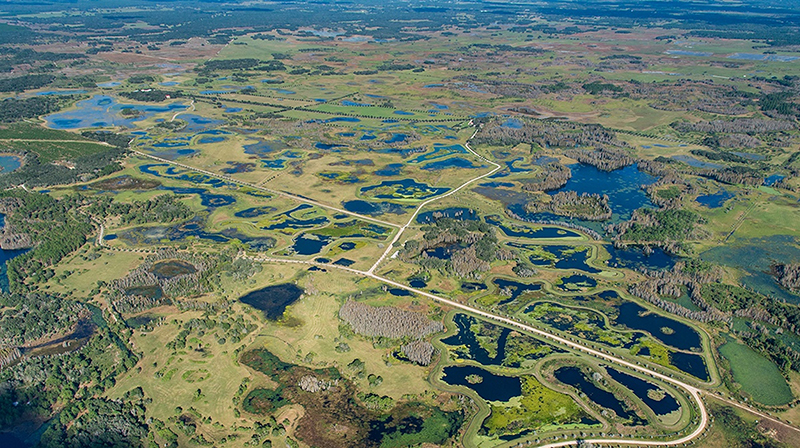
To scale, you have to go to surface flow wetlands. They look like natural marshes, and you can make them huge, like hundreds of acres. Some of the big ones are over 1000 acres. Jim Bays [an ecologist, formerly with CH2M Hill and Jacobs and currently president of the nonprofit Steward our Urban Lakes] was a leader in the constructed wetland field from its inception, and he led me through what I needed to learn to do big wetlands.
We learned that if you put in oxygen super saturated water (there is a special technology called Speece cones to do that and recirculate that water through the wetland) you can shrink the footprint for nitrification—the conversion of ammonia to nitrate, which is critical—by 95%. That’s massive; literally an order of magnitude improvement. In fact, it made it so that the nitrification rate no longer figured in the sizing of the wetland.
[Using this new knowledge] we built a wetland for an industrial system in Michigan, and it worked perfectly. The client was a major industrial firm that had acquired a company that had been putting ammonia in the groundwater from an industrial facility.
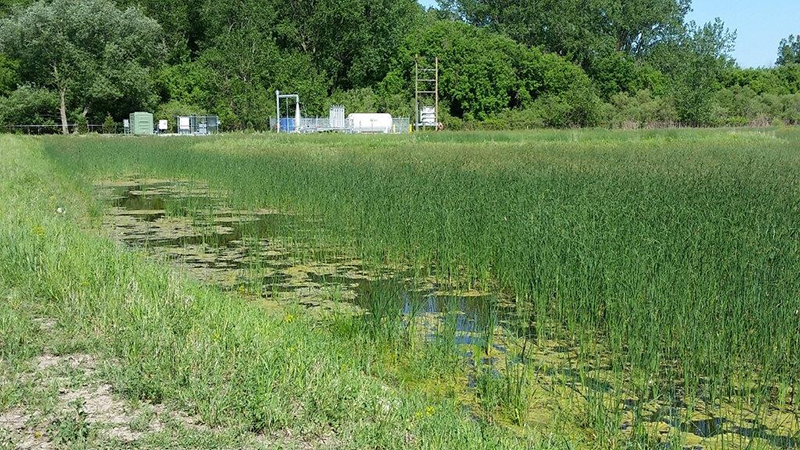
There was a groundwater plume that was contaminated by ammonia. It was going to seep into surface water. So, you pump the plume to create a reverse gradient. You slope the surface of the groundwater away from surface water. That water has to be treated. The client, who was progressive and innovative, had acquired this property and had to fix the problems of the previous owner.
So, back to the plume contaminated with ammonia…
Once you pump it out, what do you do with it? The surface flow constructed wetland was the simple solution. We did it and it worked. We also proved that you can nitrify wastewater in the winter. We were nitrifying just fine when the water was .5 degrees centigrade and there was a foot of ice on top. We also found that we got an order of magnitude improvement in phosphorus removal by using a technique called geochemical augmentation. You put in a continuous “kiss” of aluminum—way below any kind of toxic threshold—and it creates a geochemistry that scavenges phosphorus out of the water and makes it go permanently into sediments.
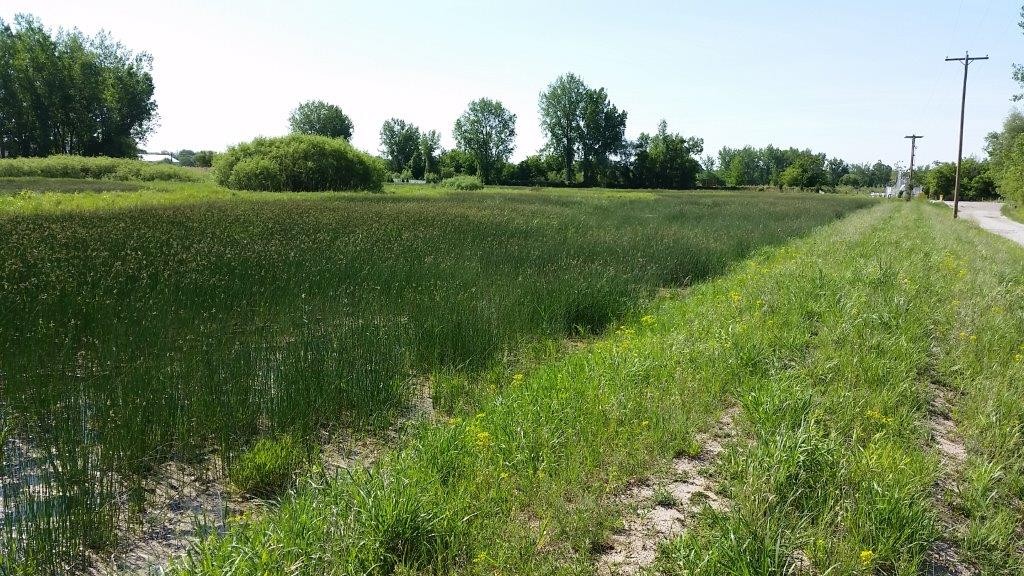
A second [constructed wetland industrial wastewater treatment system like the one in Michigan] is being built in Florida, and it is on the state of Florida’s list of approved treatment methods.
How are the challenges of using constructed wetlands to treat domestic wastewater different from those of using constructed wetlands to treat industrial wastewater?
My standard joke is that when you sign the contract with your industrial client, you are already 60 days behind before the ink dries. With municipal clients, the project is typically very planned, to the point where you can enter dates for each phase in your calendar. When an industrial client says, “We have a problem we need to solve right now, and it’s a big one,” the correct answer is, “We’re on it.” There is often a scramble to solve these problems. Every client, whether a municipality or an industrial client, is different. But what is true for all clients is that you must get to know the people and listen to them. This stuff is very technical, but it is also very human. These are real people who have real responsibilities.
Are there also some key differences worth mentioning in terms of the pollutants and concentrations you are dealing with, and the corresponding wetland technologies?
Whenever there is a reason to hide the water we use media-based wetlands (subsurface flow). Reasons to hide it vary. For example, airports need to treat glycol used for deicing. Technically, a treatment marsh (surface flow wetland) would work very well with an oxygenation system. But wetlands attract birds, and birds and airplanes don’t mix. So, we make sure there is no water to attract waterfowl.
We use treatment marshes for anything large. A huge, media-based system might be one or two acres. A tiny treatment marsh is around 10 acres and they can be much, much larger. There are treatment wetlands in Florida over 1,000 acres in size
Many clients may be unfamiliar with constructed wetlands for wastewater treatment. What have you found to be an effective way to explain how they work and why they are a good solution for certain challenges?
It varies. I publish papers in peer reviewed journals, and I do this because I feel that if I learn something that I think is important for the industry, I need to communicate it to the industry—both my academic buddies and my competition.
Lift all ships.
Exactly. Sometimes a client will get in touch because they read one of my papers and see that I may have a solution to one of their problems. A lot of clients are extremely sophisticated. They may be PhD level scientists and engineers who come to you with a great store of knowledge. Then there are others who have a problem but no intellectual tools to solve it. I love geeking out with fellow geeks, but I have learned that you don’t need to geek out to explain complex things. You just need to have good conversations. Some people in the field, especially academics, worry too much about being perceived as insufficiently sophisticated. They think, “If I’m not super-duper rigorous, someone is going to call me out.” The work must be rigorous. The report must have all the equations and graphs and all that stuff. You’ve got to nail it. But you don’t need all of that to have an intelligent conversation with people. People are smart. If there are things they don’t understand, you stop and explain them. Studied patience is necessary. Stay friendly, stay professional, and keep the conversation going.
Many Leaf Litter readers may not work in the built environment or may be unfamiliar with constructed wetlands, but they are involved in addressing issues like climate change, biodiversity, and environmental justice. What role can constructed wetlands can play in addressing those challenges?
That is a big question. It all gets down to the means available to improve water quality and the benefits of that water quality. It is becoming increasingly clear that in Europe and the U.S., every field of science and engineering needs periodic framework updates for things like nutrient management. What we need is to shift focus from the watershed to points on the landscape where water comes together and can be treated in natural systems. Are we reaching a point of diminishing returns? If so, we need other means, like supplementary technologies, to make sure we actually achieve water quality goals. Part of my role is to explain when the opportunity arises to use [constructed wetlands] to meet goals that are not being met today, and at the same time create these marshes, which are amazing places.
It turns out that the geeky, chemistry-intensive, wastewater engineer side of the design process is the easiest part. The harder part is making the ecology fit the location and creating the benefits. As a result, we [at Jacobs ] have been heavily involved in treatment wetland parks. We built our first one back in 1996 in Wakodahatchee, Palm Beach, Florida.
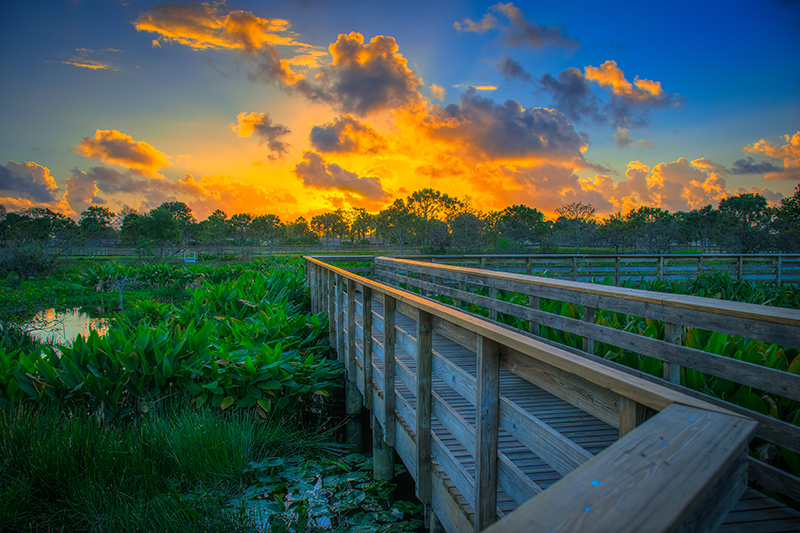
These parks are wildly popular, and they bring people close to nature. If you put a boardwalk through the wetland, people can walk through a mini wilderness and—here’s an interesting thing—the wildlife actually gets habituated to human beings. Effectively, if humans are confined to boardwalks, it’s like they’re in a cage, and the animals understand that people will not move outside of this cage. There might be a tree next to the boardwalk, and you might be 10 feet away from a bird that you normally have to look through binoculars to see. Building a boardwalk through a natural wetland can be done, but it requires a whole lot of public hearings and permits. But if you are a utility putting in a 100-acre constructed wetland, you can build whatever you want in it, so why not build a park?
What research do you think is needed around constructed wetlands so that they could have even more of an impact on the climate and biodiversity crises?
The low hanging fruit is for wetlands to take out nitrate. Think about the dead zone in the Gulf of Mexico, which is primarily because of excess nitrogen (mostly in the form of nitrate) that makes its way down from the upper Mississippi River Basin to the Gulf, where it fuels algal blooms. When the algae settle to the bottom and die, they consume oxygen. Well, wetlands are limited in nitrate removal; they have inherent rate limitations, especially in the winter. It turns out that if you were to run a very low electrical current through the wetland, you would cook off a massive increase in nitrogen removal. Picture a wetland that spans hundreds of acres. You’ve got a photovoltaic array in there that is putting very small amounts of electricity into the wetland during daylight and getting order of magnitude improvements on nitrate removal. This is a direction the technology could go. It hasn’t done it yet at scale, but we do know it works at very small scales. At Jacobs we are skilled at translating small scale demonstrations into big projects. It’s one of the very fun parts of being a technology developer. There are monster opportunities out there.
Where is the technology now in terms of constructed wetlands for treating trace constituents and newer pollutants?
That is a wide-open field. I can’t talk about the research we’re doing right now, but we are working with a client researching all of these emerging contaminants of concern, including PFAS. We’re trying to understand how to design wetlands to go after them. I can’t predict how we’re going to do, but here’s a general observation: this seems to be a very mature field, but it isn’t. The proof is that we just sort of waded in and with two constituents, ammonia and phosphorus, and got order of magnitude improvements with technology tweaks. In a mature field, you’re happy to get 10% improvement.
How can our readers track and learn about findings from that research?
That question brings up a fundamental challenge we have with the dissemination of information. There is communication of knowledge from academia to industry, but not industry back to academia. Something like 80 to 90% of published research happens in the context of academia. But academics, because of reasons of budget and timeline, do not have access to the big projects we have in industry.
I’m always looking for an opportunity to bring in a university, and every few years I get a chance to do it. But sometimes I’ll have everything is ready and the client says, “You know what? We’re going to do this project next year instead of this year.” If you’ve recruited a graduate student and all of a sudden, they can’t get started for a year, that doesn’t work.
In industry, we write big technical reports, and we hand them in to the client for review. You go through this rigorous process, and then what? You go to a conference to deliver a PowerPoint presentation, and you’re done. That ends up in what’s called the gray literature, which can be very hard to find and not necessarily discoverable on the web. I understand it’s the nature of reality, but boy, I would like a fairy godmother to come in and fix that.
Where else in the world do you see leaders emerging in constructed wetland applications?
Europe is a hotbed of media-based wetland research. There are thousands and thousands of constructed wetlands in Europe and certain designs are very good; indeed brilliant. But those are small, less than an acre. They’re not doing any surface flow wetlands to speak of. Small, media-based wetlands are great, but they don’t scale up beyond a certain size because of economics. The opposite is true for treatment marshes. There are monster stormwater treatment wetlands in South Florida and they’re mind-blowing wildlife areas. I’ve never seen so many birds, alligators and turtles in one spot. But they don’t scale down because they short circuit. Ecology does all kinds of vexing things that get in the way of all your good ideas. Ecology cooperates when the wetlands are big, but when they’re small, ecology can be most uncooperative. Muskrats might move in and eat all your plants, for example, and suddenly you no longer have a wetland. Academics don’t study those surface flow wetlands because they don’t have access to the projects. I would like to see more academic attention on figuring out how to scale down the big wetlands, which is a tremendous challenge. I think future leadership will be exploring this domain of continued improvements on media-based wetlands and trying to figure out how to close the gap in the scale between the two.
Any new applications that you see potential for, but nobody’s tried yet?
The biggest opportunity is with all of these small towns that have aging lagoon systems or treatment plants and stricter discharge standards. There are hundreds of them out there, and they have the space for what we call “intensified wetlands’ [wetlands with a smaller footprint]. Jacobs typically serves larger communities, and the academics, extension programs and small regional firms don’t always have the expertise to serve smaller towns. There’s opportunity for hundreds of these systems to be built but there is also a technology gap. Once you find a new area of application and get your first dozen projects you learn a lot, and soon you have another dozen. Sometimes you make mistakes and you correct them, but mostly success leads you to wondering if you could do even better. That is a practical application of constructed wetlands that will create new areas of knowledge once it is penetrated.
Small projects are easier to do and fix if there is a problem. The learning cycle is fast and effective. In contrast, large projects have to proceed very deliberately because there is very little tolerance for error. For example, a small project might need a small wetland, say ten acres. It doesn’t cost much more to make it fifteen acres because so much of cost is tied up in mobilization at that scale. So, you overdesign and stay out of trouble. But if the wetland looks like it is going to be 200 acres, you just can’t toss in another 100 acres. You have to really know that it will be 200 acres. When there are questions about sizing because the problem is novel, the project often has a pilot scale first to study the issues before going to the 200-acre design. Compare schedules. In the time it takes to do a pilot project, you can design and build that 15-acre wetland. By the time the 200-acre wetland is built you can design and build a few more 15 acre wetlands.
I have a certain nostalgia for small projects because I love the tight project cycling and since doing is learning, you learn a lot.
Any final thoughts to share with our readers about constructed wetlands?
Constructed wetlands have a great future. A lot has been discovered, but it is also true that there’s great opportunity to advance the technology. To graduate students who are entering into the field, I would say, “Don’t think that all of the low-hanging fruit has been picked before your time because there is still a lot out there. Go find it and pick it. If you’re ambitious and you want to make a mark, there is plenty of work to be done.”
*Patents: US 6,811,700, US 6,830,688, US 6,863,816, US 6,896,805,US 7,029,586, US 7,087,169, US 7,214,317, US 7,320,752, US 7,378,021,US 7,056,438