Biohabitats Projects, Places, & People
By Quinn Caralle
Projects
Constructed Wetlands by Biohabitats
Birds love them, bird watchers love them, we love them. Constructed wetlands are a big deal! Over the past several weeks, we’ve been highlighting some of our constructed wetland projects on social media. Get a preview below and check the links for the platform of your choice for more information on each project!
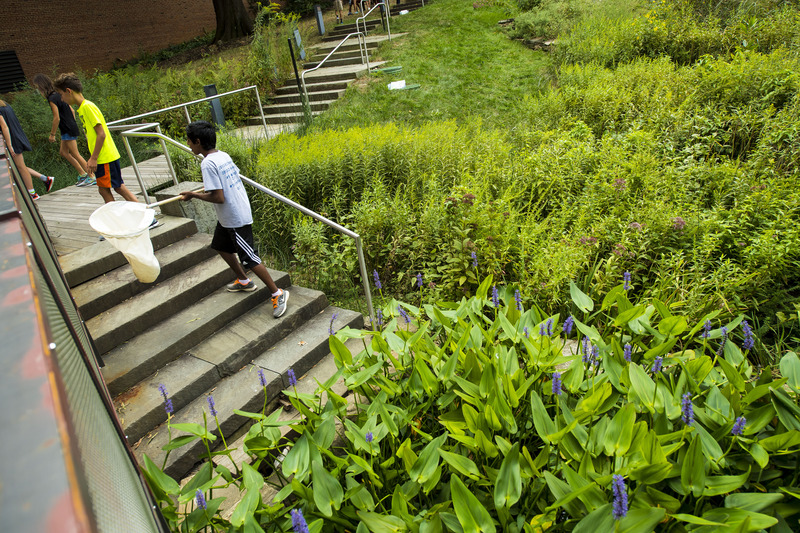
The Sidwell Friends School building in Washington, D.C., an iconic example of educational architecture and site and water design, just turned 20 years old! Opened in 2006 as the first LEED Platinum K-12 building, it has set the pace for integrated design that embraces water at its core. Learn more and share: LinkedIn – Facebook – Instagram
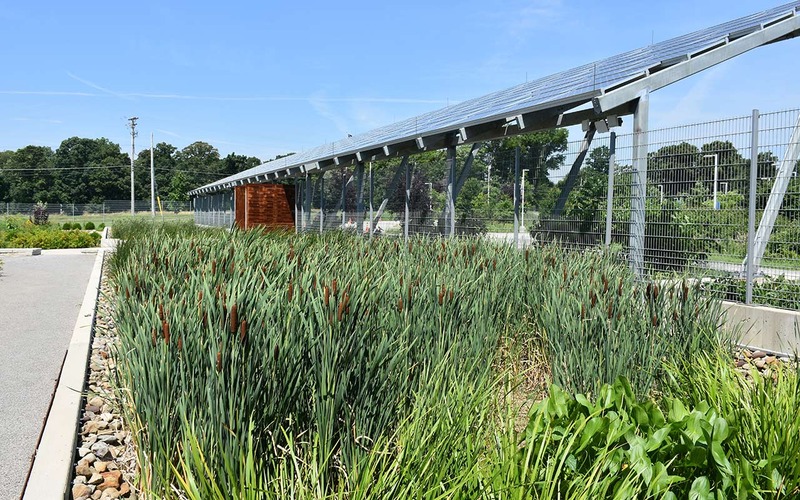
A constructed wetland is an important natural component of the advanced onsite wastewater treatment system at Chatham University’s Eden Hall Campus, removing nitrogen and helping filter up to 6,000 gallons of campus wastewater per day—enough to be reused for toilet flushing. Learn more and share: LinkedIn – Facebook – Instagram
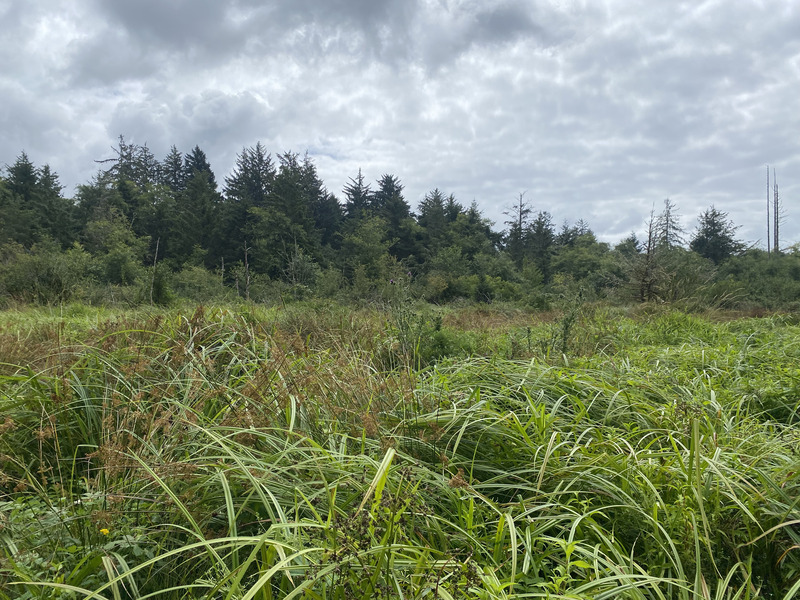
Treated effluent from the City of Cannon Beach’s wastewater treatment plant flows through two constructed wetlands that “polish” the water before being discharged into Ecola Creek and ultimately flowing into the Pacific Ocean. Learn more and share: LinkedIn – Facebook – Instagram
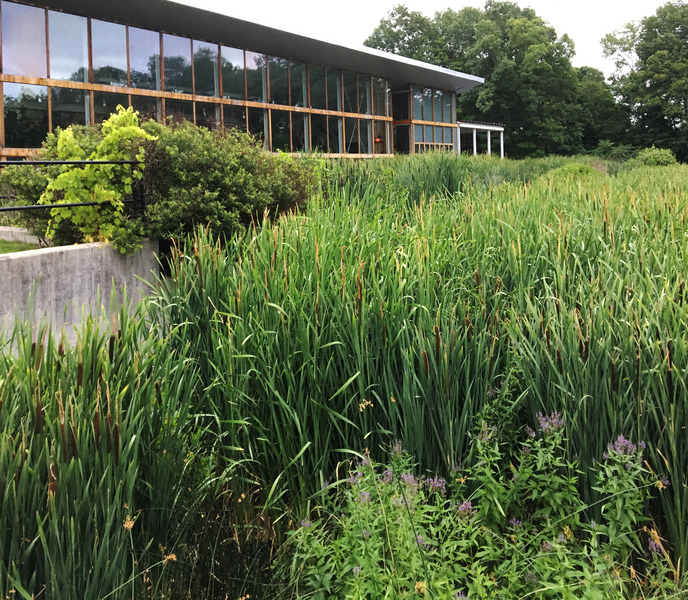
The Omega Center for Sustainable Living was dubbed “The World’s Most Beautiful Wastewater Treatment Plant” by treehugger.com. Admittedly a low bar, but this is a beautiful system in every sense of the word. Contained within and around one of the world’s first certified Living Buildings and winner of an AIA COTE Top 10 Award, it treats up to 52,000 gallons of wastewater per day from the Omega Center, a holistic wellness and education center designed by BNIM in Rhinebeck, New York. Learn more and share: LinkedIn – Facebook – Instagram
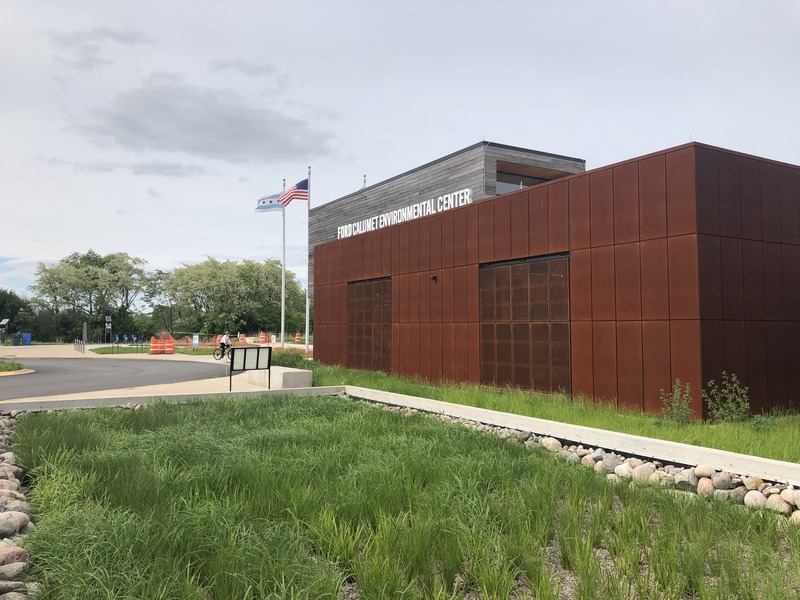
In addition to connecting Southside communities with nature, the Ford Calumet Environmental Center (designed by a team led by Valerio Dewalt Train) is making sure that all water used on its premises leaves it clean, without the need to be connected to Chicago’s sewer system. Learn more and share: LinkedIn – Facebook – Instagram
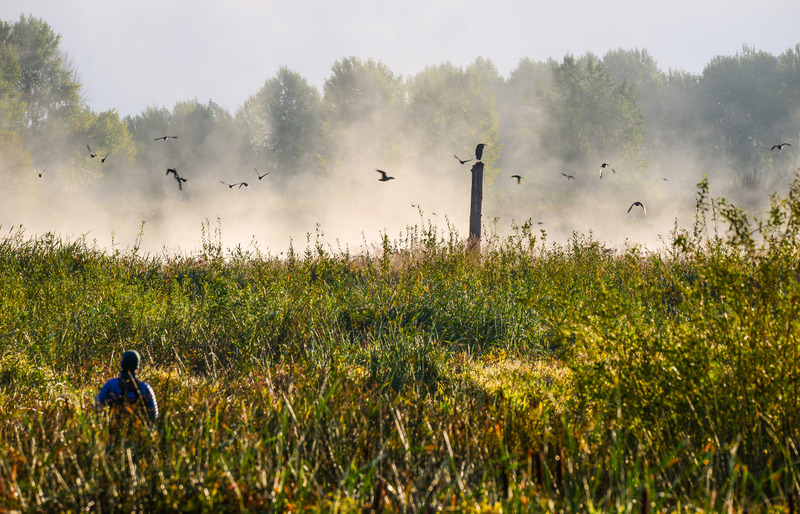
Beginning in 2013, we helped Clean Water Services transform 90 acres of obsolete sewage lagoons into a mosaic of functioning wetlands. These wetlands not only cool, remove nutrients from, and enhance the quality of treated effluent returning to the Tualatin River; they also provide open water, mudflat, emergent marsh, scrub-shrub, and upland habitat for wildlife. Learn more and share: LinkedIn – Facebook – Instagram
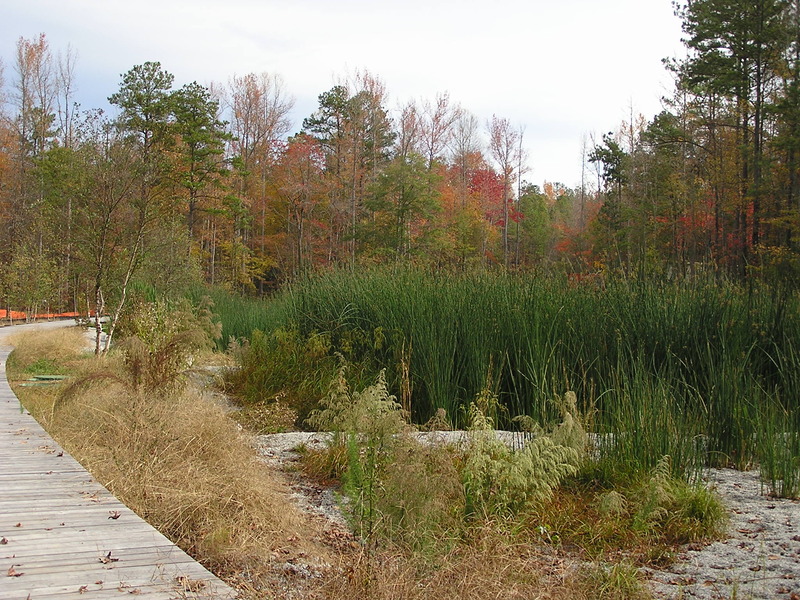
Located in Georgia’s Chattahoochee Hill Country, Serenbe is an award-winning agrihood community. With 70% of its land preserved as open space, and natural amenities like a 25-acre organic farm, a lake, a wildflower meadow, and miles of forest trails, Serenbe offers a variety of stunning settings. Yet one of the community’s most gorgeous and most photographed spots is actually part of its wastewater treatment plant! Learn more and share: LinkedIn – Facebook – Instagram
Advancing Action on the Climate & Biodiversity Crises
The American Society of Landscape Architecture (ASLA) developed Landscape Architecture 2040: Climate and Biodiversity Action Plan (CBAP) to act as a resource for landscape architecture firms and organizations as they work to address the interconnected crises of biodiversity loss and climate change. Our work often focuses on addressing these challenges at a range of different scales. Get a closer look at two projects that are advancing the goals of the ASLA CBAP:
Biohabitats is leading the effort to restore House Creek and its tributary within the heart of North Carolina Museum of Art ‘s beloved Museum Park. Learn more about this critical component of the Museum Park Vision Plan with Senior Landscape Architect Martha Eberle.
Reimagine Middle Branch and the Middle Branch Resiliency Initiative (MBRI) aim to reverse a legacy of degradation and environmental injustice by restoring habitat, flood resilience, and human connection to 11 miles of urban waterfront. Learn more from Senior Landscape Architect Justin Park about an MBRI project that is improving biodiversity and climate resilience in Baltimore. On September 30th, you can join the Maryland Stream Restoration Association (MSRA) and GreenVest for a tour of completed and under construction MBRI sites! Register to attend on the MSRA website. For more information on Biohabitats’ role, contact Learning & Innovation Leader Chris Streb.
Dam Good Engineers
“Mother Nature has a way of reclaiming her land.” -Stacey Rusher, director of Parks Projects for the Conservancy for Cuyahoga Valley National Park, via Spectrum News 1
When it comes to wetland restoration, beavers know best, and we’re happy to have these experts on the Haskell Run project site! Shortly before construction began, the human members of the project team saw evidence of some fuzzier ecological engineers who were already hard at work.
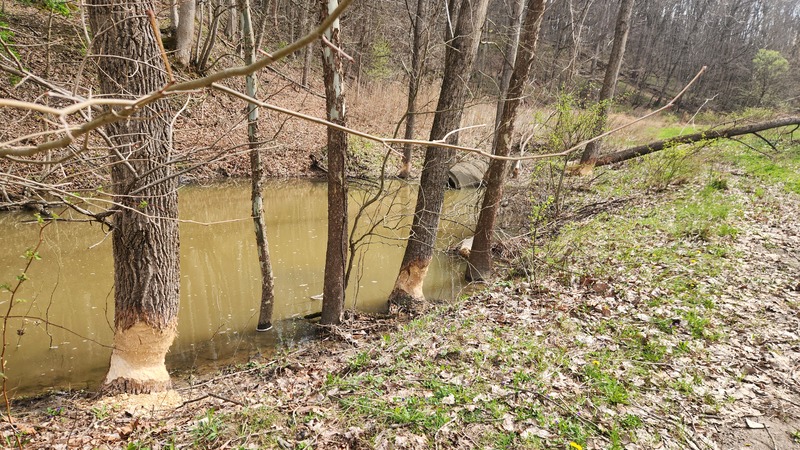
Haskell Run flows through the former Brandywine golf course in Akron, Ohio, on its way to the Cuyahoga River. When the golf course was constructed in the 1960s, Haskell Run was pushed to the edge of the valley, and after being dammed, channelized, and in some spots, buried and piped, the stream became severely eroded. Drain tile installation and the piping of smaller tributaries exacerbated these issues, degrading habitat and increasing the flow of harmful sediment into the Cuyahoga, and ultimately, Lake Erie.
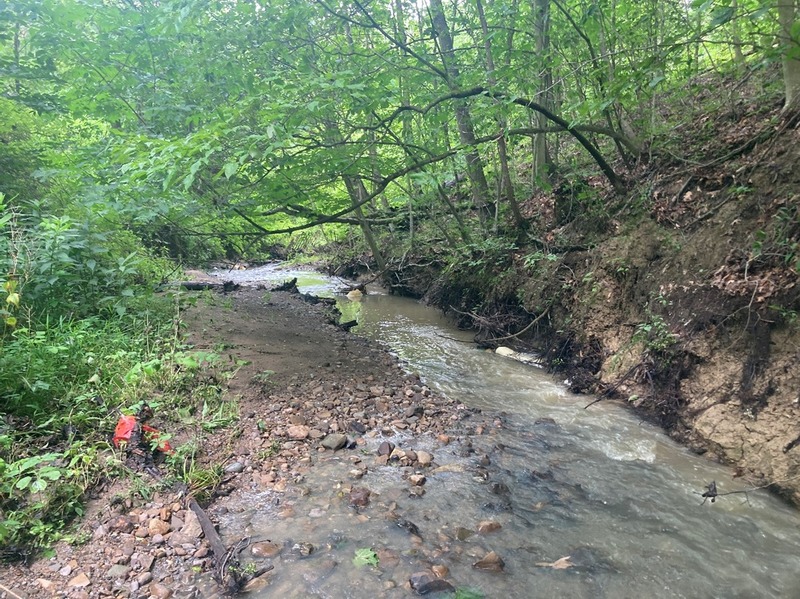
After the golf course closed, the land was saved from redevelopment and remediated by the Conservancy for Cuyahoga Valley National Park before ownership was transferred to the National Park Service (NPS) for maintenance and management. With support from Biohabitats, the Conservancy procured a grant from the state’s H2Ohio Rivers Program to implement the restoration of Haskell Run as the first stage of a larger scale effort to improve ecology within the park. Working closely with the Conservancy, Biohabitats developed a design to restore and regenerate approximately 600 LF of Haskell Run by raising the stream bed, creating a Stage 0 channel, and reconnecting it to a new floodplain and riparian forest. Biohabitats will also lead the construction of the project with design-build partners Meadville Land Service. Team members Kevin Grieser (Biohabitats), Stacy Rusher (the Conservancy) and Chris Davis (NPS) share details about the project in this segment from Spectrum News 1 Ohio. For even more information, contact Senior Ecological Designer Suzanne Hoehne.
Neis Ditch Stream Restoration
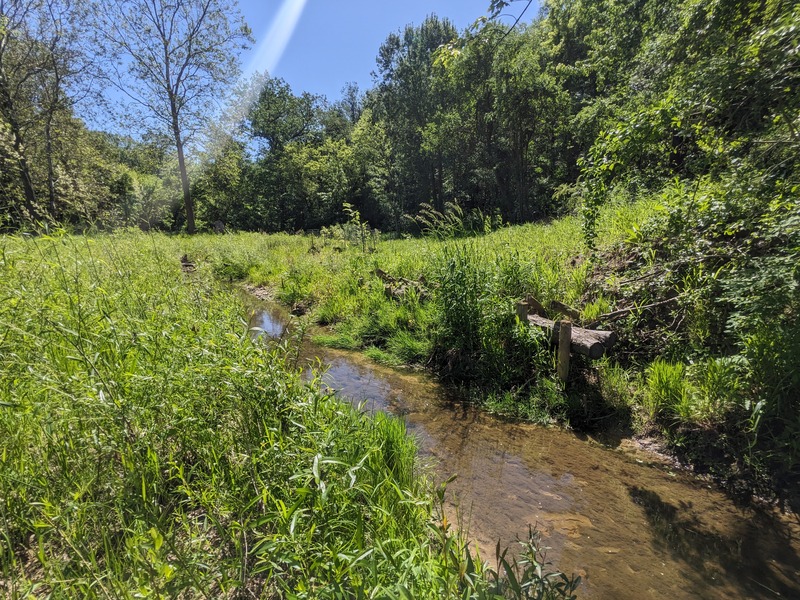
This Spring, Water Resources Engineers Chaya Wilks and Erin Jennings visited the central work area for the Metroparks Toledo Neis Ditch Stream Restoration. They’ve reported back that the site looks great, and that it was amazing to see the vegetative diversity and the reconnected floodplain of Neis Ditch. There was a lot of water, the live stakes were taking off, and the off-channel wetland was activated. They even heard some happy spring peepers singing!
Biohabitats has been restoring aquatic habitat for fish and benthos in this confined and highly impacted channel. Streams in the Oak Openings region are very low gradient, so our team had to do this without raising the overall grade of the stream. We experimented with several different in-stream structures, including rocky substrate, woody debris deflectors, root wads, log sills, and more.
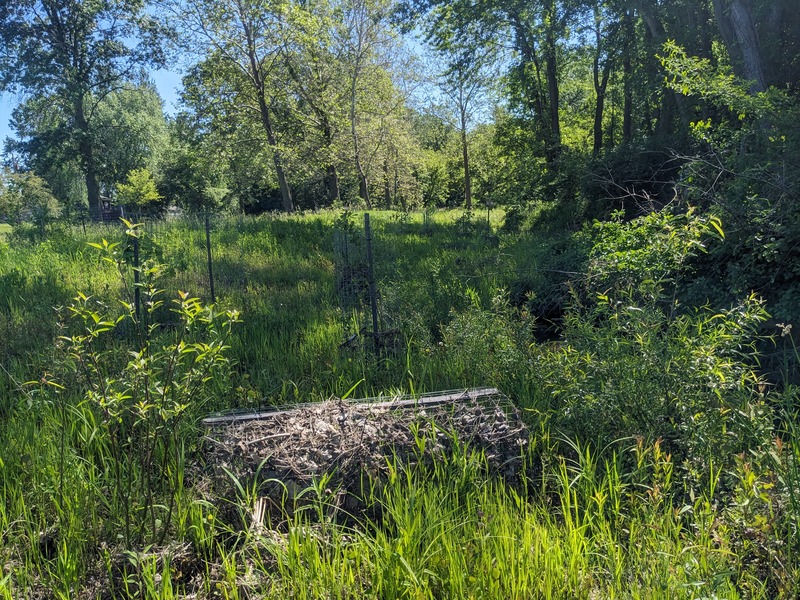
The stream is a sand bed system, and dealing with the high bedload was a significant challenge. To prevent the sand from burying all the newly installed habitat features, we restored connectivity of the stream channel to the floodplain at frequent flood intervals to ensure the sand was deposited outside of the channel. For more information about this project, contact Senior Restoration Ecologist Rachel Spadafore.
Leaping Forward: Tiny Frogs Thrive in Left Hand Canyon
Note: this story originally appeared in the August 2026 issue of Currents, the newsletter of The Watershed Center. We were thrilled to see this evidence of the positive ripple effect of ecological restoration at a site we had the honor of helping to restore after devastating flooding in 2013. The article is republished here with permission from The Watershed Center.
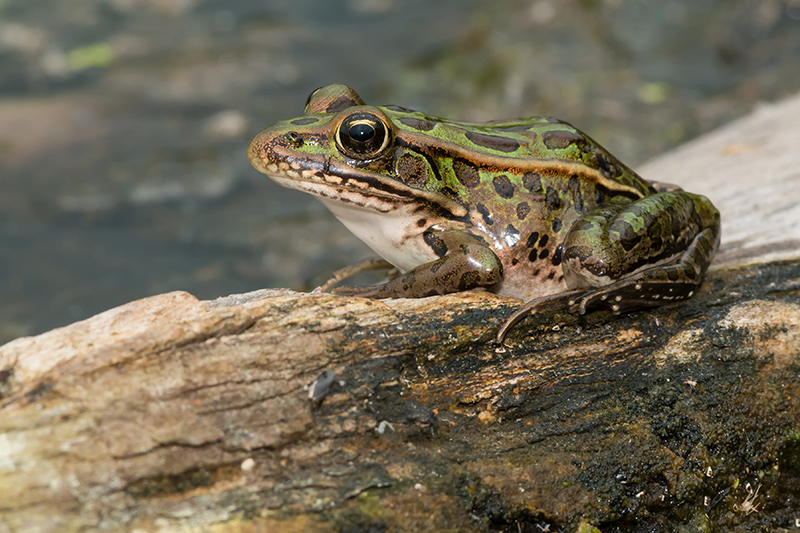
Earlier this summer, more than 200 northern leopard frog tadpoles were introduced to their new home in a pond near the mouth of Lefthand Canyon—the latest step in a conservation effort that began in 2018.
Northern leopard frogs were once common across Colorado, but their numbers have declined as wetlands have disappeared or changed. Disease, drought, invasive species, and nonnative bullfrogs (a major predator of leopard frogs!) have also taken their toll, and Colorado Parks and Wildlife now considers the northern leopard frog a Tier 1 Species of Greatest Conservation Need.
Finding the right place to help these frogs recover took years of careful planning. Experts from Boulder County, City of Boulder, Colorado Parks and Wildlife, and The Watershed Center studied ponds from the plains to the foothills before selecting this site for a pilot reintroduction.
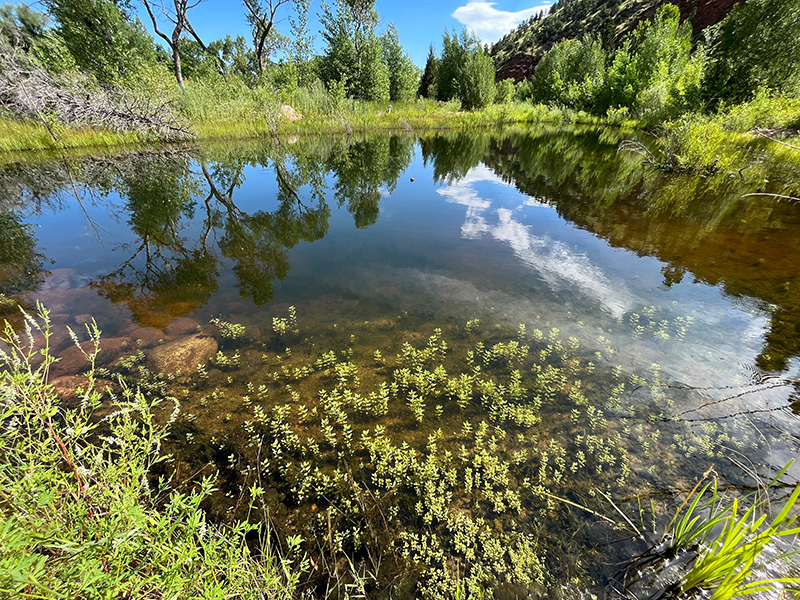
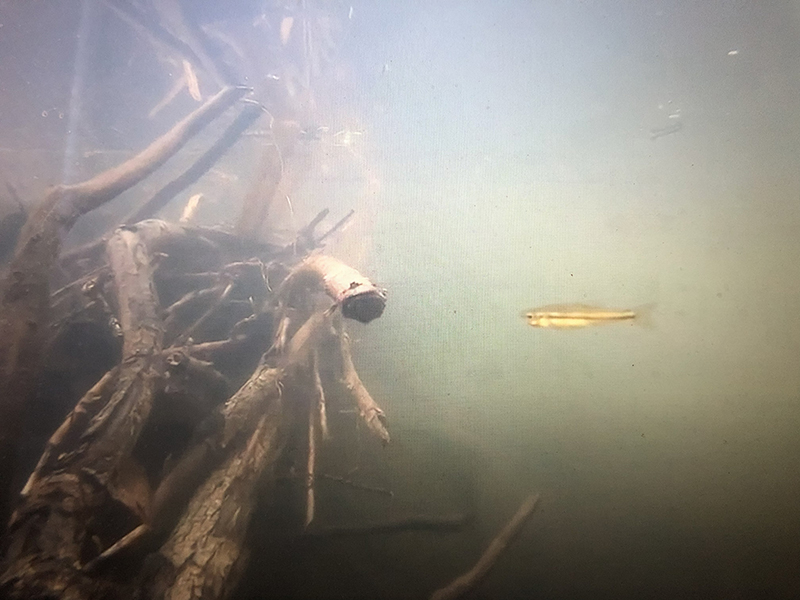
The pond has several things working in the frogs’ favor. It is fed by groundwater, helping it stay wet year-round, and there are no bullfrogs in the area. It is also close to other wetlands that the frogs may eventually reach as they travel during warmer months in search of food and mates. Restored following the 2013 floods, the pond includes shallow and deep water, native wetland plants, and woody habitat. Volunteers helped build and place bundles of woody branches in the water, creating small pockets of shelter where tadpoles and other aquatic animals could feed, hide from predators, and grow.
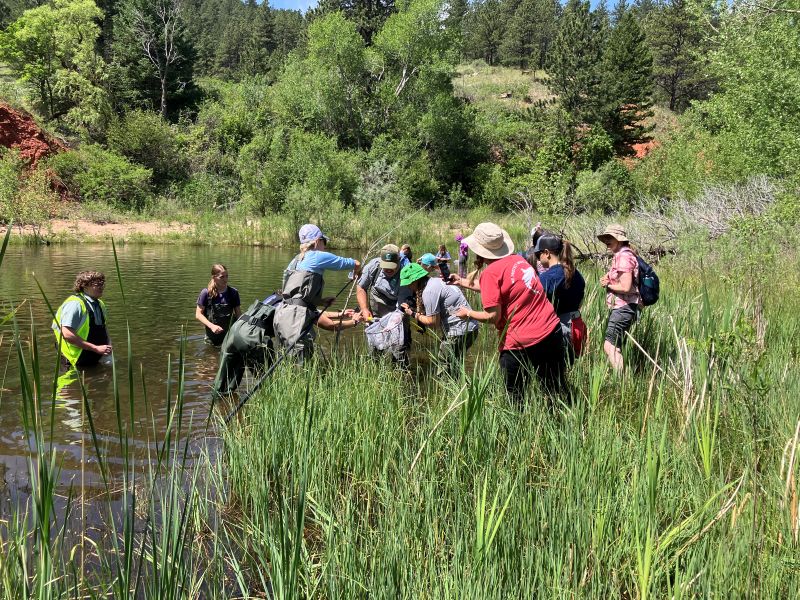
But the tadpoles’ journey begins well before they reach the pond. Each year, students at the Innovation Center of St. Vrain Valley Schools help raise northern leopard frogs for release. Working alongside wildlife professionals from Boulder County, City of Boulder, Colorado Parks and Wildlife, and Ocean First Institute, students care for the developing frogs until they are ready for their new home. Frogs come from different Front Range populations, helping build the genetic diversity needed to adapt to future changes.
Since the first tadpoles were released here in 2023, project partners have returned regularly to watch and listen for frogs. Each year has brought encouraging signs that some are surviving the winter. Then, in 2025, the team discovered the first egg masses—an especially exciting milestone showing that the frogs were beginning to reproduce on their own.
With each new generation, this young population moves closer to the ultimate goal: a healthy, self-sustaining population of northern leopard frogs once again thriving in this restored wetland.
The Watershed Center thanks its many project partners that have made this work possible.
Award-Winning Projects
Dale Morris Ecological Park
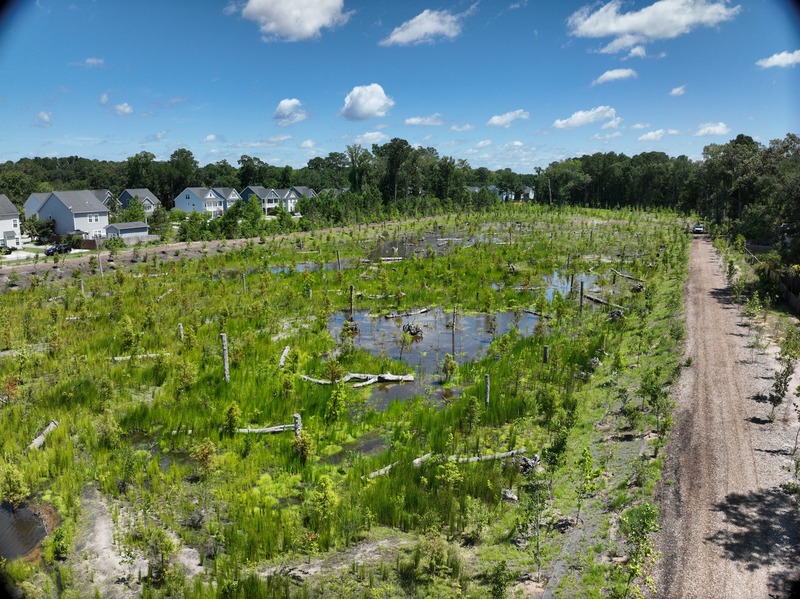
Not only is Dale Morris Ecological Park in Charleston, SC officially open, but it’s also officially the 2026 Project of the Year according to the South Carolina American Public Works Association! Since 2005, the neighborhoods of Barberry Woods and The Cottages at Johns Island experienced flooding during significant storms; undersized infrastructure was unable to handle runoff from the 574-acre watershed. On a team led by Ardurra, Biohabitats helped the City of Charleston transform the infrastructure into a functioning ecosystem that alleviates flooding while enhancing climate resiliency, community protection, and connectivity. The new “park with a purpose” is the largest nature-based solution to flooding in South Carolina to date, and models a paradigm shift away from grey infrastructure to an approach that prioritizes nature-based strategies that provide multiple ecological and community benefits. Learn more about the project in this video from WCSC-TV Live 5 News, and on our website. For more information about this project, contact Southeast Atlantic Bioregion Team Leader, Meghan Gloyd.
FDR Park
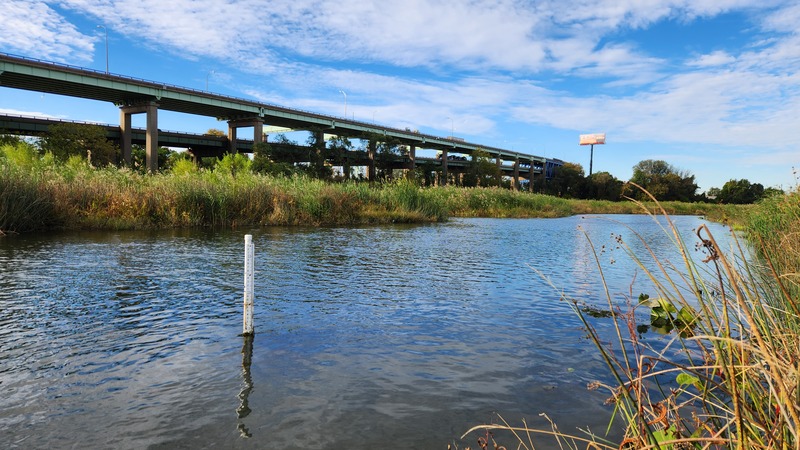
We’re excited to share that the FDR Park Tidal Wetland project was honored with a 2026 Governor’s Award for Environmental Excellence from the Pennsylvania Department of Environmental Protection! Led by Fairmount Park Conservancy with partners Philadelphia International Airport and Philadelphia Parks & Recreation, this project created 33 acres of rare forested tidal wetland at Philadelphia’s doorstep while enhancing climate resilience for historic, low-lying FDR Park. Congratulations to our project collaborators, WRT, Meliora Design, and KS Engineers! For mor information on this project, contact Principal Restoration Ecologist Michael Trumbauer.
Sustainably Built for Students
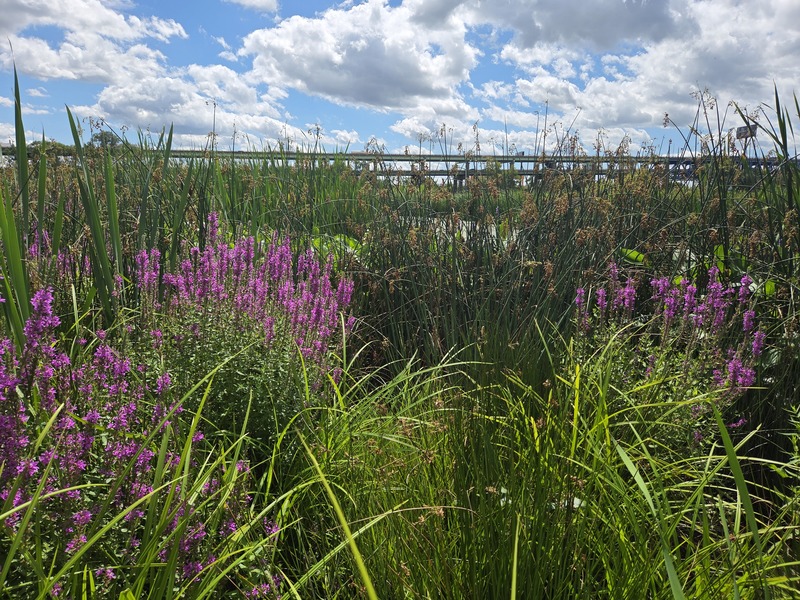
Congratulations to the team behind the Henrico County Center for Environmental Studies and Sustainability. Construction had only just begun when the project was recognized as an Unbuilt Project finalist in the 2026 Metropolis Planet Positive Awards. As part of the Perkins&Will team, Biohabitats investigated, analyzed, and designed water re-use opportunities for the Henrico County Center for Environmental Studies and Sustainability. To learn more about this project, contact Practice Leader Erin English.
Raccoon Creek
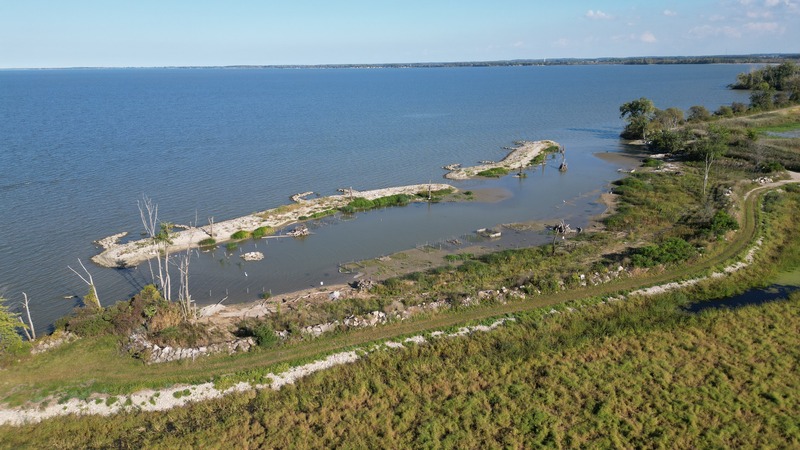
The Raccoon Creek Nature-Based Barrier Wetland Project is an American Shore and Beach Preservation Association 2026 Best Restored Shore! As part of the broader Sandusky Bay Restoration Initiative, Ohio DNR partnered with The Nature Conservancy to protect this 900-ft stretch of shoreline on Lake Erie. After restoration, there has been a significant increase in the amount of coastal bird species, including shorebirds, herons, Bald eagles, and waterfowl using the site. For more information about this project, contact Senior Ecologist Kevin Nunnery.
Places
Rosemont Community BioBlitz
For the low-lying Charleston, SC community of Rosemont tidal marshes are more than habitat. They are a first line of defense against the escalating threats of storm surge, flooding, and sea level rise. This spring, Landscape Architect Charlotte Kennedy, Water Resources Engineer Katie Ellis, and Conservation Biologist Nolan Schillerstrom led a BioBlitz with the Sustainability Institute, our client on the Rosemont Marsh Resiliency Study.
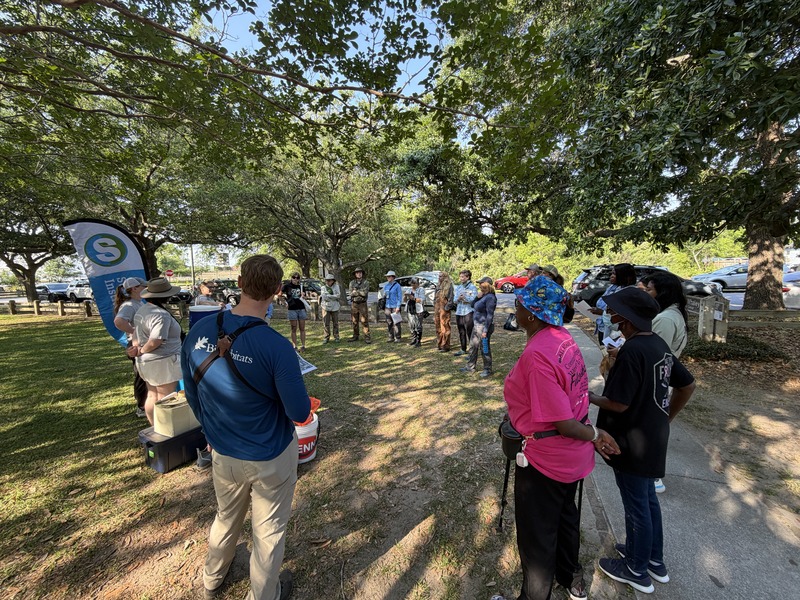
They were joined by over a dozen local naturalists and wildlife experts, who worked alongside Rosemont community members to documenting plants and animals across the coastal neighborhood.
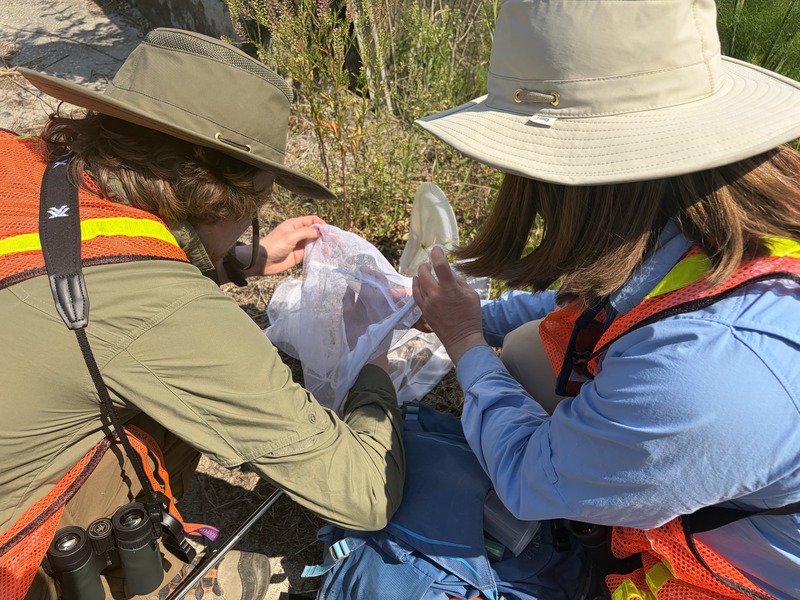
It was a great step toward building a more complete understanding of existing conditions and helped us gather more evidence to advocate for positive change for this historically disinvested community and its adjacent salt marsh. For more information about our role in the Rosemont Marsh Resiliency Study, contact Principal Restoration Ecologist Mike Trumbauer.
Safety First
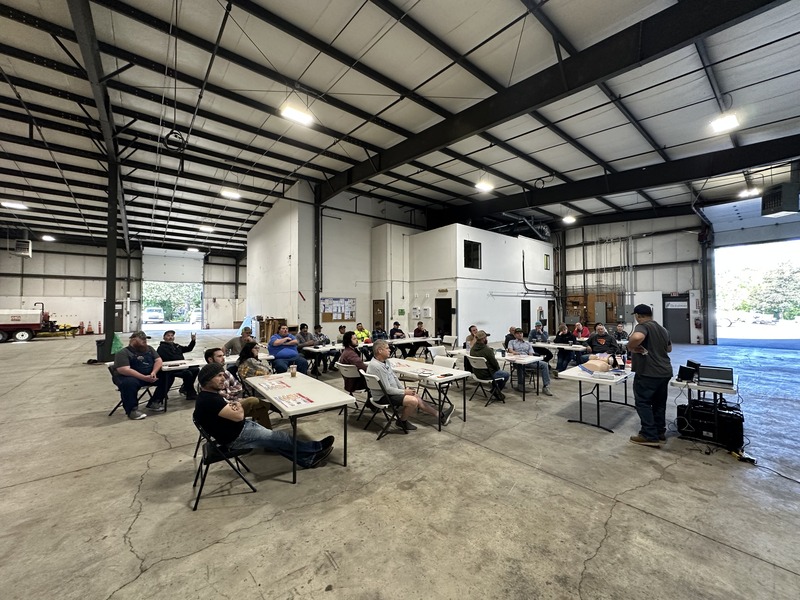
Our construction team often works in remote areas with no cell phone coverage and keeps an automated external defibrillator in every truck, so they need to be prepared and on top of their safety game! In Spring 2026, the Biohabitats Construction team completed First Aid CPR training at their new facility.
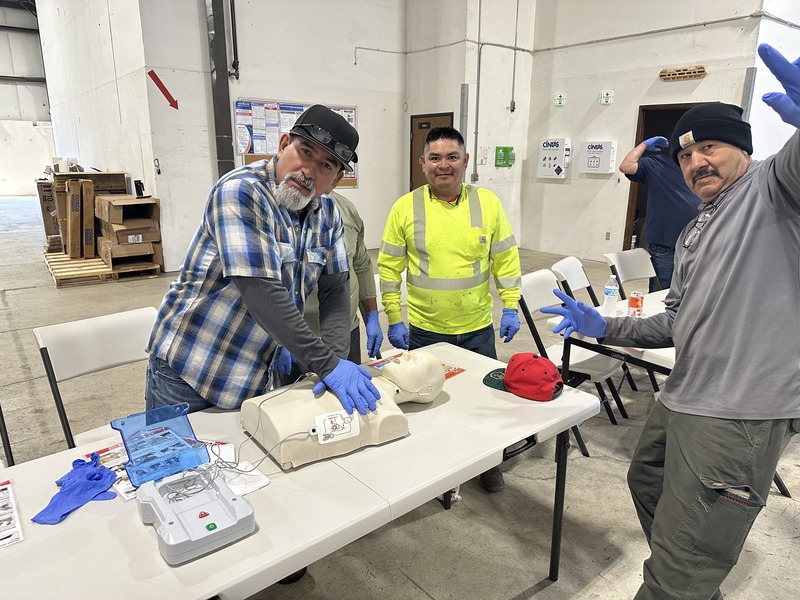
25 people attended the class taught by Chet Casey of First Aid Safety Training Inc., and we’re grateful that we have such a dedicated team and a space like this for us to gather and learn!
Steward the Grill
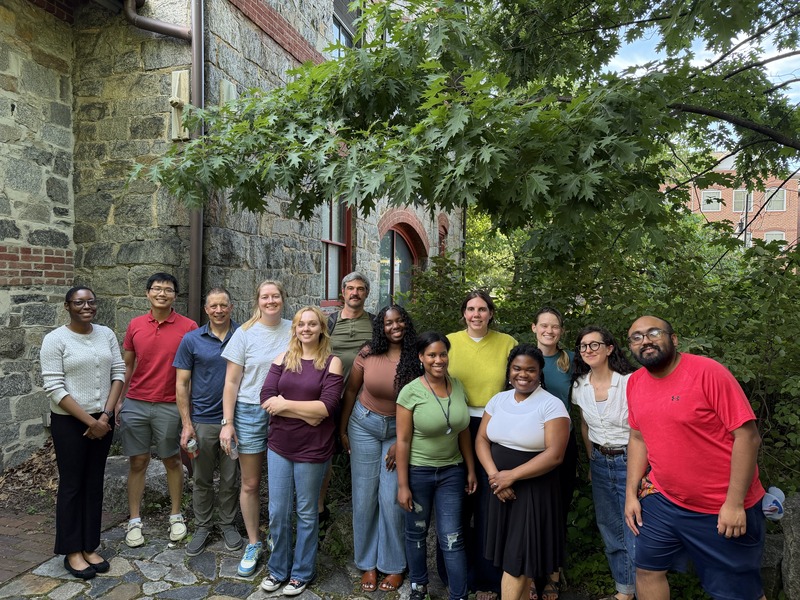
As summer comes to a close, we’re feeling nostalgic about our Chesapeake cookout!
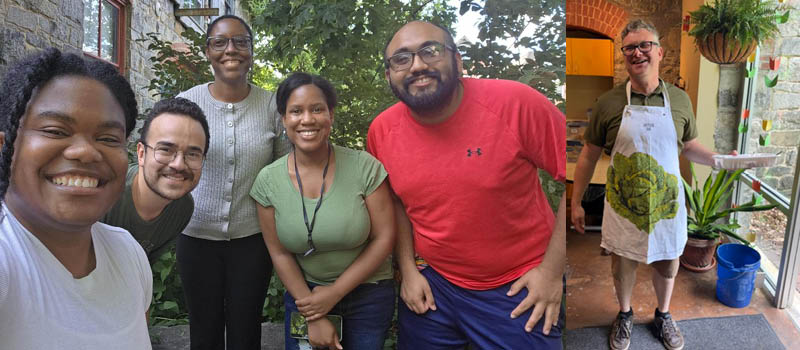
It felt like the kids threw a party while the parents were out of town. We had past interns visit the office, amazing food grilled up by Brett Long, palm readings by Allison Axsmith Midgett, and watermelon slushies to ring in the season.
State of the Watershed
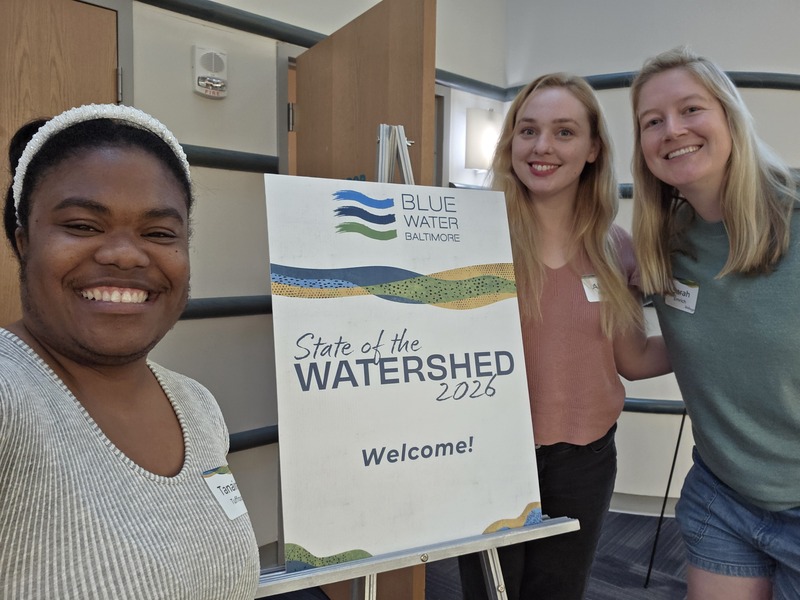
Senior Environmental Scientist Tanaira Tuffour and Water Resources Engineers Sarah Emrich and Allison Axsmith Midgett had a great time at the Blue Water Baltimore (BWB) State of the Watershed! May’s event at the Institute for Marine and Environmental Technology explored the last 15 years’ worth of data collected across the Baltimore Harbor watershed, and we’re honored to have been a sponsor.
BWB monitors turbidity, water clarity, water temperature, salinity, total nitrogen, total phosphorus, conductivity, dissolved oxygen, chlorophyll, and fecal bacteria parameters within the watershed. Each gets their own score, and the good news is that fecal bacteria numbers—mostly linked to sanitary sewer overflows—are decreasing in general. Water clarity is improving, total nitrogen (TN) is decreasing, and we’re seeing less algal blooms. Water quality overall is declining due to stormwater issues like warming water temperatures caused by impervious surfaces; salinity is increasing mainly due to road salt during winter weather events; and total phosphorous is increasing, which is tied to wastewater, sediment in the water column, and other pollutants like TN.
The watershed is seeing improvements, but we still have a ways to go. Open water areas are doing better than our closed off bodies of water like the harbor itself; and our more rural and forested areas are doing better than our urban and suburban areas. For a more in-depth look at the 2025 data, the first combined annual report and water quality report is available to read on the BWB website.
Cullowhee Native Plant Conference
We love the Cullowhee Native Plant Conference! Hosted by Western Carolina University, the Cullowhee Native Plant Conference is all about increasing the interest and knowledge of propagating and preserving native southeastern plant species in the landscape.
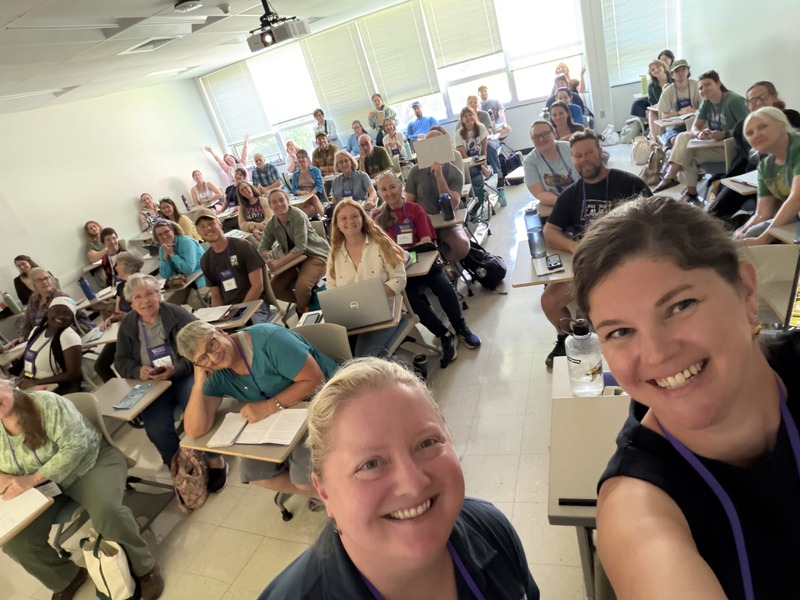
There was such a great turnout for Water Resources Engineer Katie Ellis and Landscape Architect Martha Eberle’s talk on building climate resiliency in the Southeast through cross-disciplinary collaboration. Using recent project experience, they unpacked the role of ecological restoration in making the Carolinas stronger and more resilient for both humans and non-humans alike. Everyone who attended had such engaged, thoughtful questions and positive feedback!
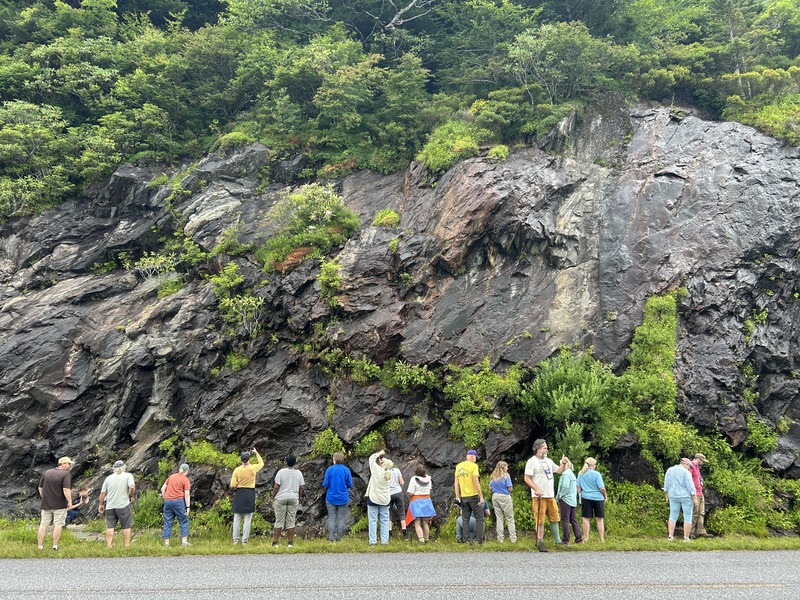
The field trip to see plant communities on the Blue Ridge Parkway and evening moth-tenting event wouldn’t have been the same without such a great group of people. It was inspiring to spend time with friends and colleagues with so much knowledge and passion for protecting our native plants, and we can’t wait for next year!
Inner Harbor Kayak Launch
“Projects like this build on years of progress toward a healthier harbor.” – Adam Lindquist, Vice President of the Waterfront Partnership of Baltimore (WPB), via WBAL.
Bring your kayaks down to Baltimore’s Inner Harbor, hon; the new launch is open! This August, we celebrated the opening of the first public, ADA-accessible kayak and paddlecraft launch in Baltimore’s Inner Harbor. Adam Lindquist and Dan Taylor from Waterfront Partnership of Baltimore were joined at the ribbon cutting event by Mayor Brandon Scott, local leaders, and the people and organizations who made the new access point possible.
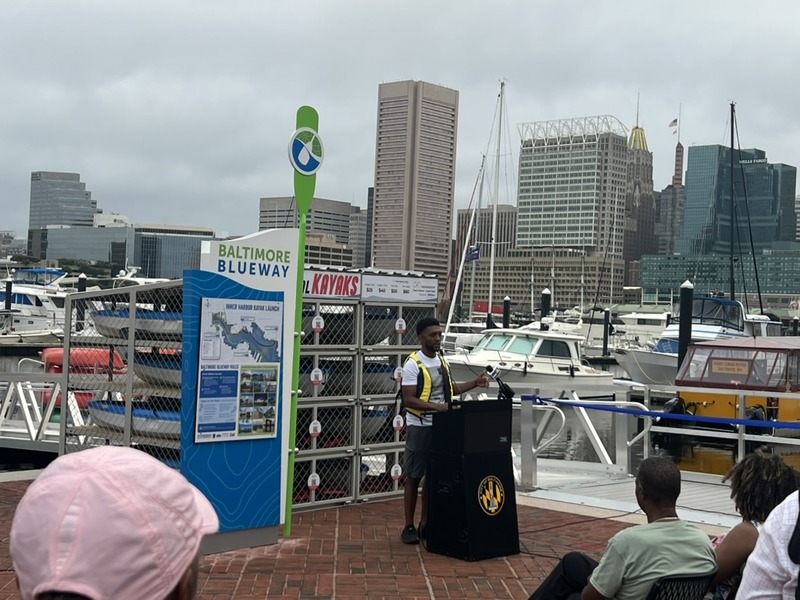
You can BYOK or rent one from the Canton Kayak Club dock or Rent.Fun kiosk located at the new launch at Rash Field Park. Paddle through the harbor on your own, get tickets for weekly Inner Harbor Kayak Tours with Baltimore City Recreation and Parks (BCRP), or check out other launch spots, classes, and tours.
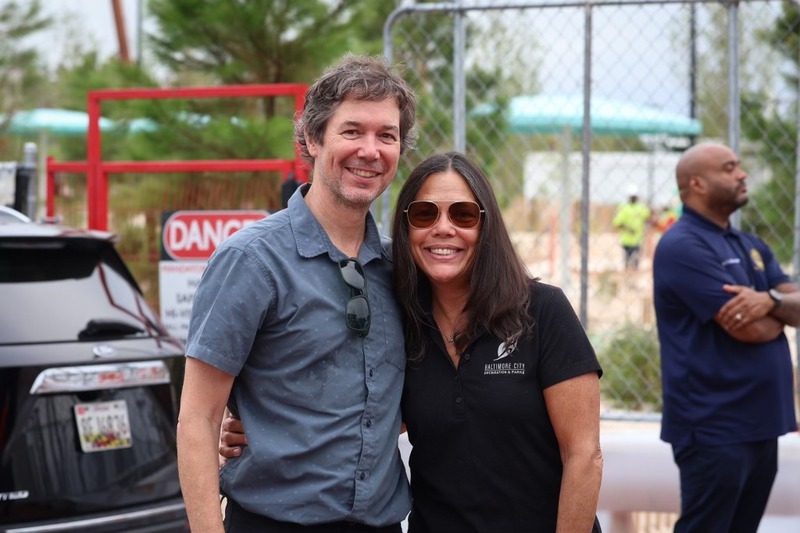
Biohabitats is honored to have worked alongside WPB for over a decade on projects that advance the goals of the Healthy Harbor Initiative, and it’s amazing to see the pieces of the Baltimore Blueway come together. Congratulations to WPB, Blue Water Baltimore, BCRP, and the communities of Baltimore who are committed to making our harbor healthy and accessible. For more information about our work with WPB, please reach out to Eastern Operations Leader & Senior Project Manager Rebecca Winer-Skonovd.
Hard Questions We Must Ask About Data Centers
As data centers rapidly expand across the country, communities are increasingly being confronted with industrial scaled development that can place substantial demands on land, water, energy, infrastructure, and nature. Biohabitats’ Applied Ecology Framework for Data Centers provides communities, local governments, and planning and design professionals with a tool to ask hard questions early — including whether a data center belongs in a particular landscape at all — and to advocate for decisions that better reflect community priorities and ecological integrity. In a recent article for ASLA’s The Dirt, Biohabitats’ Founder Keith Bowers explores the rapidly expanding footprint of data centers, and the role landscape architects and allied professions can play in shaping a more ecologically responsible future.
Upcoming Events
Living Water Cities
This September, Biomatrix Water is hosting Living Water Cities at the London Museum Docklands. This two-day international conference is dedicated to one of the most urgent challenges of our time: restoring nature to the full urban water cycle. Join Learning & Innovation Leader Chris Streb on September 24th at 11:55AM BST for his talk on Ecosystem Infrastructure – from Water Credits to Long-Term Frameworks. Chris will present a sustainable model for the on-going monitoring, maintenance, and optimization of floating wetlands and their application within the urban waterscape and nature-based water treatment works.
SER Mid-Atlantic Regional Conference
After nearly 10 years of planning, design, and construction, the natural rhythms of the tide once again ebb and flow through Philadelphia’s Franklin Delano Roosevelt (FDR) Park. Two years after construction, the wetland complex is a mosaic of tidally influenced coastal plain forest and tidal marsh, nourished by more than a mile of constructed tidal channels connected to a tidal storm drain. At the upcoming Society for Ecological Restoration Mid-Atlantic Regional Conference, Principal Restoration Ecologist Mike Trumbauer will provide an overview of the design and construction challenges, adaptive management approach, post-construction observations, and the evolution of public perception around this highly visible project in a popular park. Don’t miss his talk From Urban Fill to Tidal Wetland: Restoring Ecological Function at FDR Park on September 24th at 10 AM EST and join us on a field trip to the FDR Park tidal wetlands on September 25th at 8 AM.
Carpio-Sanguinette Park & Heron Pond Open Space Ribbon Cutting
Join us on September 26th for a free community event to celebrate the opening of Carpio-Sanguinette Park & Heron Pond Open Space!
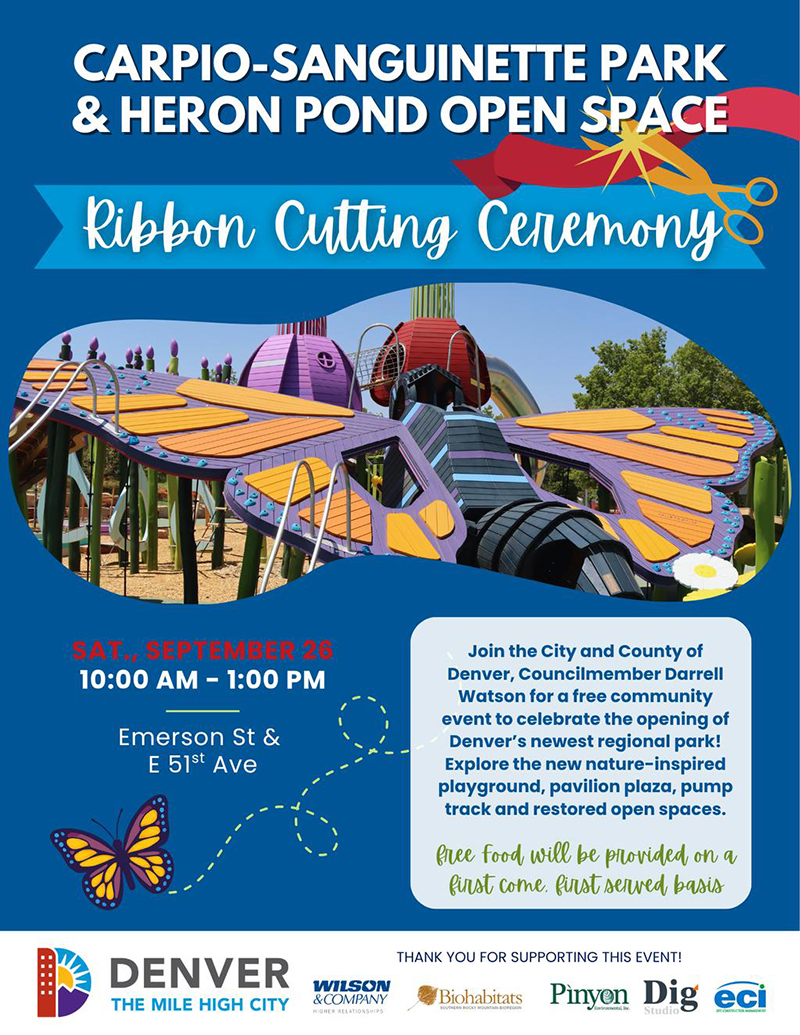
Biohabitats was part of the multidisciplinary project team that re-envisioned a former industrial brownfield into a vibrant park along the South Platte River and helped the project achieve SITES certification. It’s such a cool space, and we’re happy to see it complete and ready for visitors!
American Shore and Beach Preservation Association (ASBPA) National Coastal Conference
The Sawmill Creek projects propose the restoration of degraded tidal marsh and shoreline habitat within the Sawmill Creek Wildlife Management Area and builds on a strong foundation of restoration science and regional planning in the Meadowlands, leveraging established partnerships to ensure implementation success and long-term stewardship. On October 7th at 4:40PM EST at the ASBPA National Coastal Conference, Water Resources Engineer Wesley Richter and Senior Water Resources Engineer Bryan Arvai will explore the site history, assessment methodologies and findings, preliminary designs for the marsh island pilots, and the multi-agency collaboration that led to project initiation in their presentation Coastal Assessments to Inform Innovative Tidal Marsh Restoration in the Meadowlands.
Great Lakes Coastal Assembly Symposium
Join the Great Lakes Coastal Assembly for sessions, speakers, and activities focused on collaborative forward-looking strategies that support healthier, more resilient coastal ecosystems at the Great Lakes Coastal Assembly Symposium. On October 26th at 3:15 PM EST, Senior Project Manager & Ecologist Tom Denbow will cover the Sandusky Bay Restoration Initiative and the steps required to build support and move it from concept to implementation in his session Design Development Framework and Theory of Change. Register to attend by September 25th for the early bird rate, and don’t forget to reserve a spot for the Bird Walks, Stewardship Event, and Field Trips. Space for these events may be limited!
People
Bio Blogging
Plan to Adapt
How should we adapt to a changing shoreline? Expanding our coastal adaptation toolbox beyond renourishment and rethinking how we build along the coast are key. Learn more on the Rhizome blog in The Long-Term Costs of Beach Renourishment and Coastal Adaptation, by Conservation Biologist Nolan Schillerstrom.
The Enduring Gift of the Mad Farmer
“The way Berry wove together the interdependence and interconnectedness of people with land, water, wildlife, culture, communities, and economies opened an entirely new lens through which to view the world” – Keith Bowers
Wendell Berry touched the hearts and minds of many, including Biohabitats’ founder Keith Bowers. You can read Keith’s blog post, The Enduring Gift of the Mad Farmer: Still Remembering Wendell Berry, on our Rhizome blog.
What is Bioregionalism?
Biohabitats’ offices are defined by bioregions rather than political boundaries. This allows us to focus on local values and concerns, specific ecological and biophysical processes, and place-based solutions. Earlier this year, the Bioregional Coherence Circle, a collaborative network of grassroots organizations and ecological coalitions in the bioregion movement, framed September 2026 as “Global Bioregion Month.” But what really is bioregionalism, and how might things be different if more of the world’s organizations and systems operated from a bioregional perspective, like Biohabitats? Throughout September, Biohabitats founder Keith Bowers will explore these questions and share his thoughts on the promise of this truly place-based way of defining the spaces in which we exist. Keep an eye out on the Rhizome blog for posts from Keith this month!
Living Future Award
“What makes Biohabitats extraordinary is that community connection is built into their ownership model, their project work, and their business operations.” – Living Future
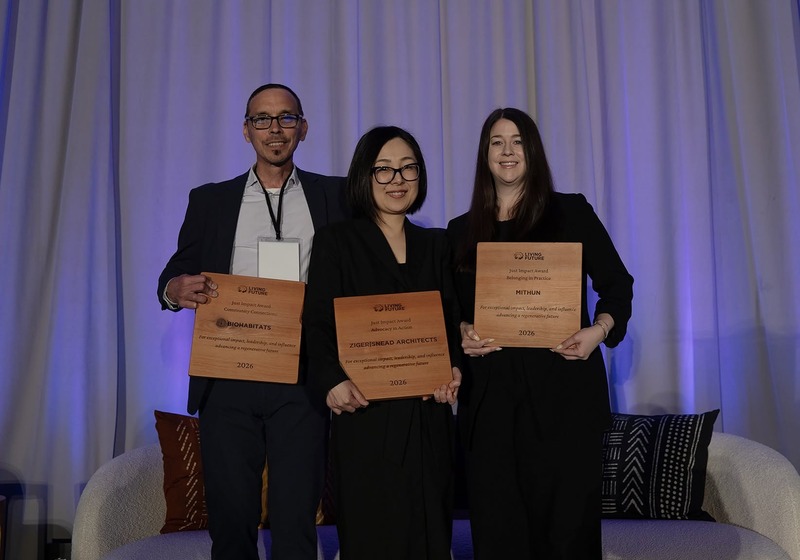
The climate-positive innovation shared at the Living Future conference leaves an impact on us every year. That’s why it is extra meaningful that Biohabitats was honored with a Living Future 2026 Just Impact Award in the Community Connections category! We’re grateful to have been recognized alongside other Impact Award winners Ziger/Snead Architects and Mithun this past April. Biohabitats will keep doing our best to pursue equity and justice in our work while staying accountable to nature and the people around us.
Blooming
As we evolve and grow, so do our people. We are proud of these team members and hope you’ll join us in celebrating their professional growth and accomplishments!
Jennifer Dowdell, FASLA
This spring, the American Society of Landscape Architects (ASLA) announced that Jennifer Dowdell, Biohabitats Practice Leader for Landscape Ecology, Planning & Design, was elected to the organization’s 2026 Council of Fellows. Jennifer has thoughtfully integrated the science of ecology into Biohabitats’ planning and design work for nearly two decades, and we are thrilled to see her honored in this way. Jennifer was recognized, along with other ASLA Fellows, at the ASLA’s annual meeting in Los Angeles, CA last week.
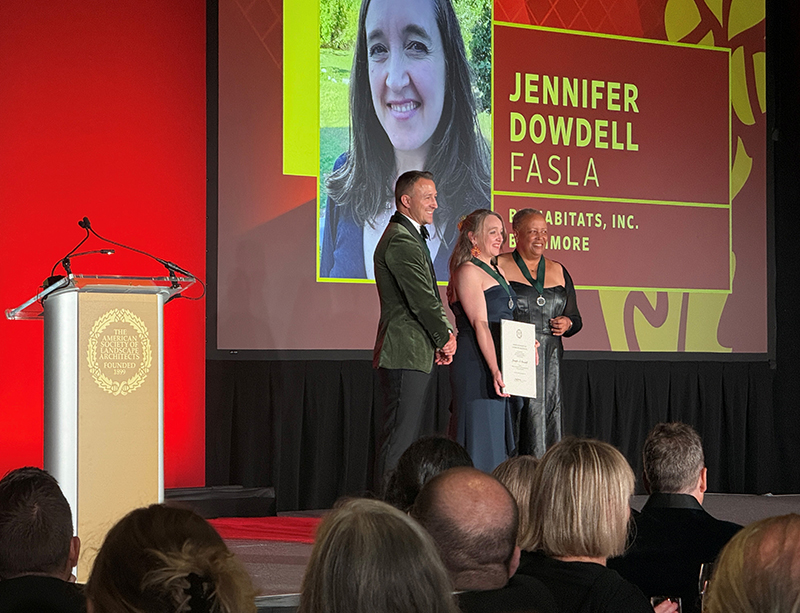
Throughout her career, Jennifer has been at the forefront of the landscape architecture profession’s mobilization to address the intertwined biodiversity and climate crises, and we’re excited to watch her continue to grow as she emerges as a thought leader within ASLA. Congratulations to Jennifer and all members of the 2026 ASLA Council of Fellows!
Tanaira Tuffour
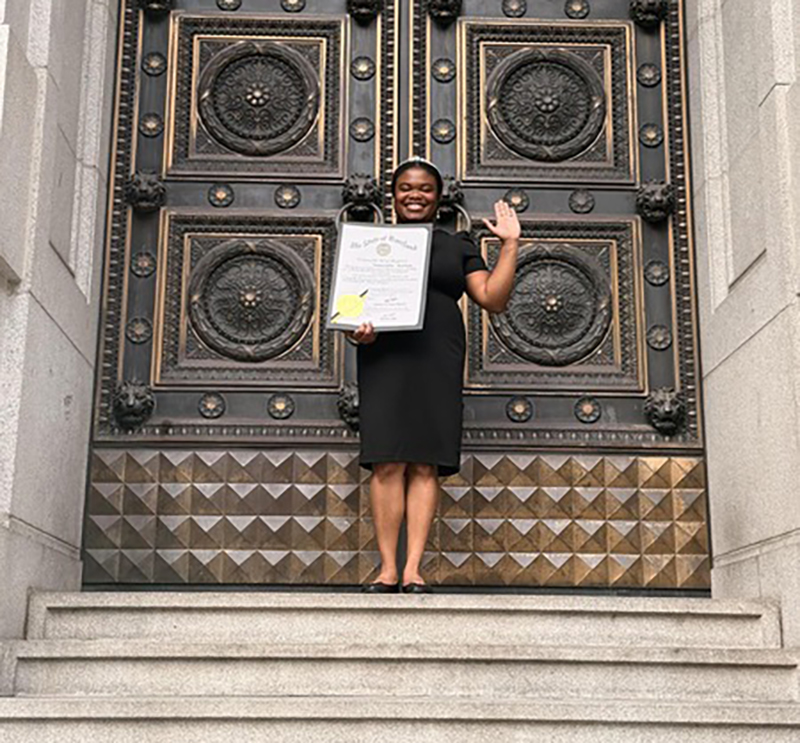
Biohabitats Senior Environmental Scientist Tanaira Tuffour was appointed to the CoastSmart Council! The council is responsible for the Coast Smart Construction Program, which provides guidelines for placement and design of buildings along Maryland’s coast to better ensure their protection against the effects of sea level rise. Tanaira brings her expansive range of experience as an environmental scientist, educator, and public speaker to the Council.
“I am excited to be on the council,” said Tanaira, “because the voice of nature and true scientific reasoning is often missing from the rooms where decisions are made about critical infrastructure and capital improvement projects in coastal areas impacted by sea level rise and coastal floods.”
Martha Eberle, PLA
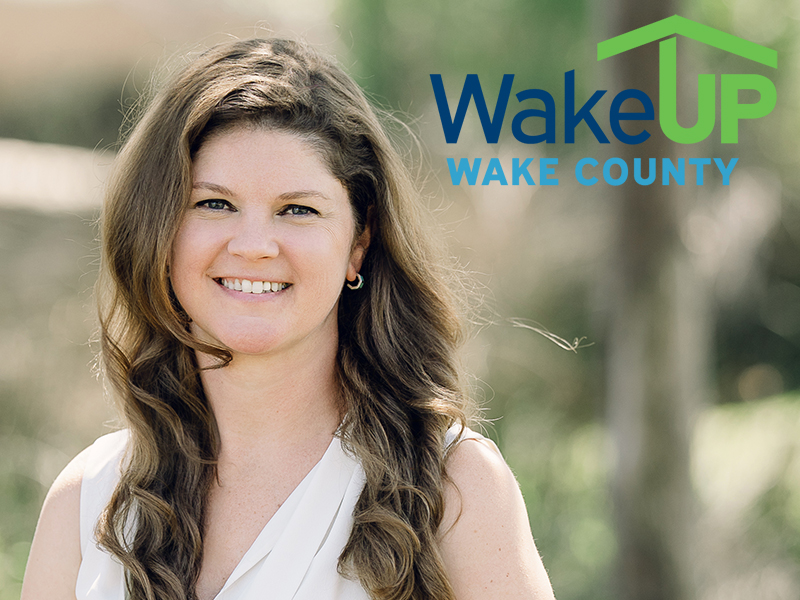
We’re excited to share the news that Martha Eberle joined the board of WakeUP Wake County! WakeUP is a board-led, nonprofit, nonpartisan advocacy organization that has been a leading voice in sustainable growth planning in the Triangle region of North Carolina since 2006. Martha is skilled at community engagement and passionate about creating high-functioning, equitable, and beautiful places rooted in ecology and community; making her uniquely suited to address land use issues on behalf of the citizens of Wake County and the wider Triangle Region of North Carolina. Congratulations, Martha!
Growing
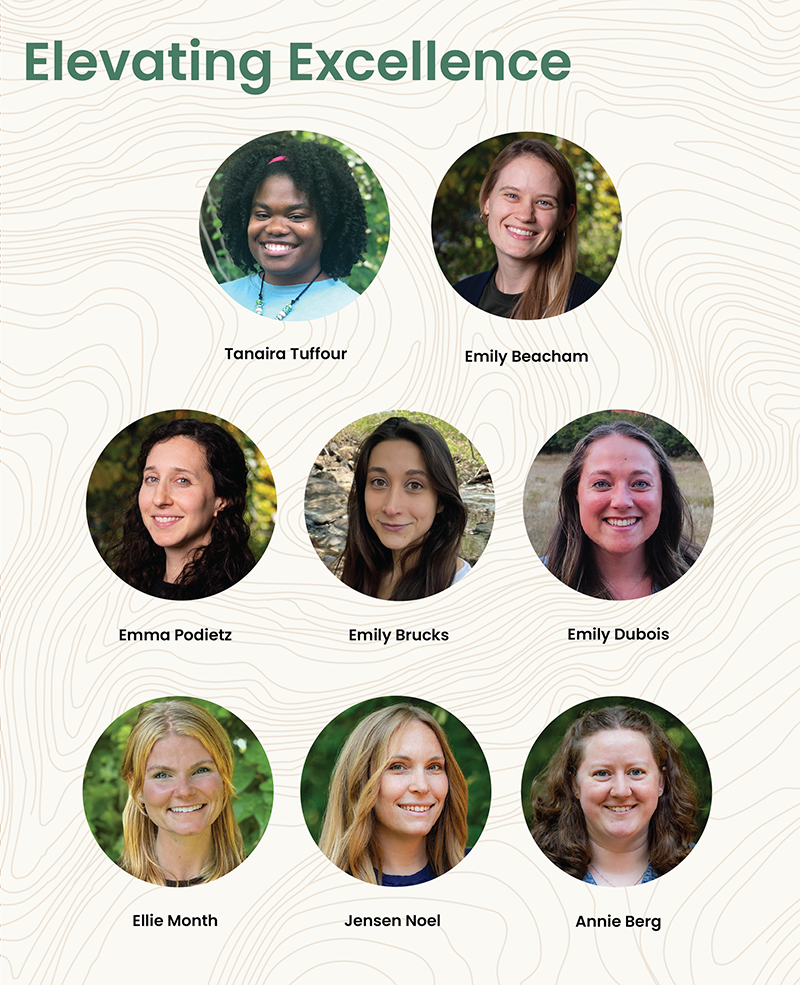
Several team members have advanced to the next level of their professions. Tanaira Tuffour is now a Senior Environmental Scientist, and Emily Beacham is now a Senior Engineer. Emma Podietz has advanced to the level of Landscape Architect II, and Emily Brucks, Emily Dubois, and Ellie Month have all advanced to the level of Engineer II. Jensen Noel is now Senior Operations Coordinator, and Annie Berg has moved to the position of Marketing Coordinator.
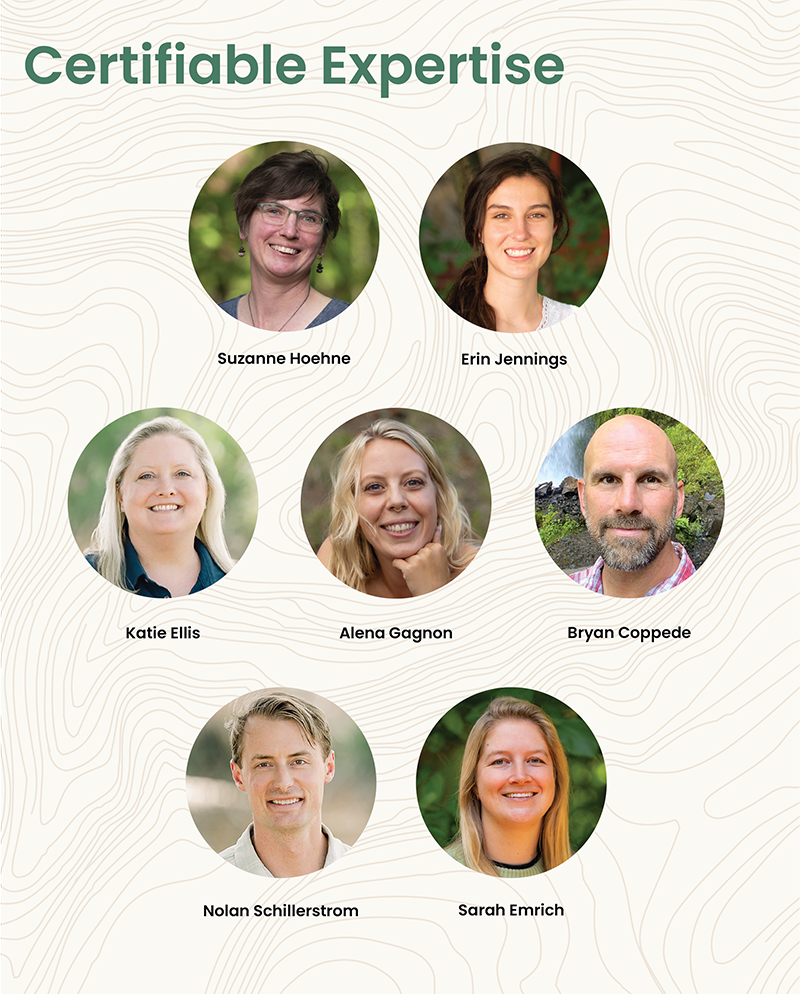
Suzanne Hoehne, Erin Jennings, and Katie Ellis passed the Professional Engineering exam. Geospatial Analyst & Landscape Architect, Alena Gagnon received her Landscape Architecture license. Restoration Ecologist, Bryan Coppede earned his International Society of Arboriculture (ISA) Certified Arborist® credential; Conservation Biologist, Nolan Schillerstrom became a Certified Wildlife Biologist; and Water Resources Engineer, Sarah Emrich earned her Living Future Accreditation.
Taking Root
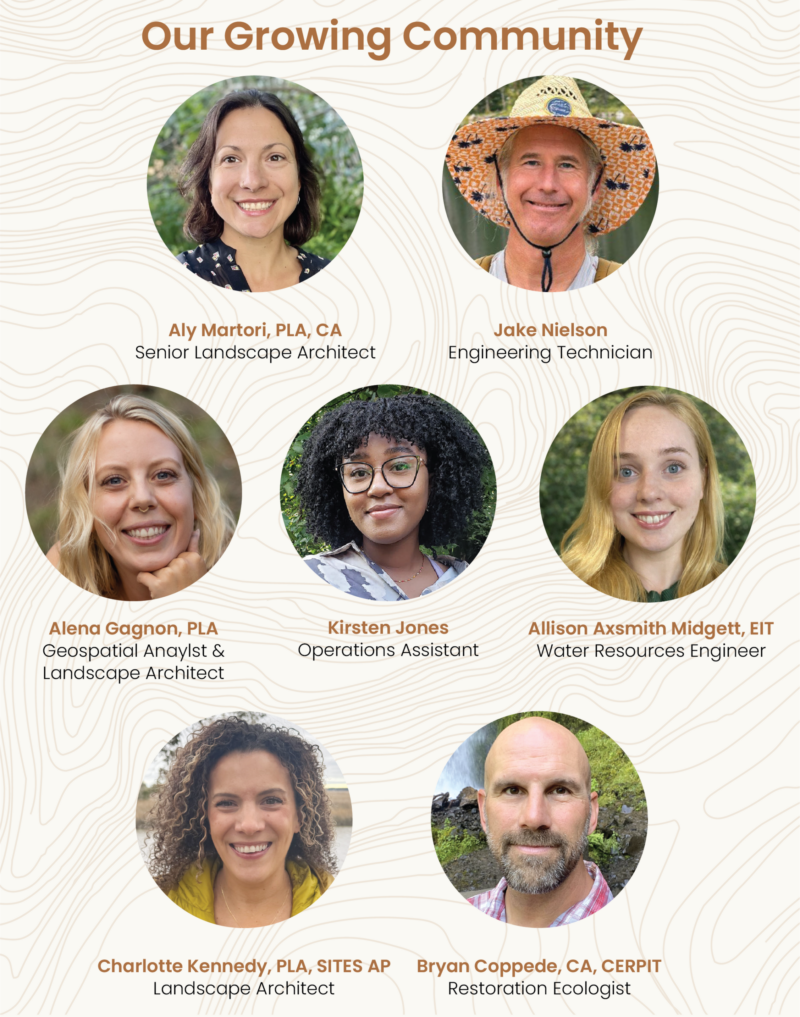
Five new team members have joined Biohabitats in 2026! We’re delighted to welcome Geospatial Analyst & Landscape Architect, Alena Gagon to the Southern Rocky Mountain Bioregion, Landscape Architect Charlotte Kennedy to our Southeast Atlantic Bioregion, and Operations Assistant Kirsten Jones, Water Resources Engineer Allison Midgett and Restoration Ecologist Bryan Coppede to our Chesapeake/Delaware Bays Bioregion.
Budding
Biohabitats’ Interdisciplinary Interns always infuse the firm with new ideas, insight, and energy, and this year was no exception. This summer’s interns included Dr. Nicholas Miwornunyuie, who recently earned his Ph.D. in Sustainable and Resilient Infrastructure Engineering from Morgan State University, is now conducting post-doctoral research in sustainable systems for waste treatment and energy recovery. Allyson Young. is a recent graduate of the University of Maryland, where she earned a B.S. in Environmental Science and Policy. Allyson returned to the University of Maryland in the fall to pursue her M.S. in GIS. Grace Layman joined us in August as our summer/fall intern. Grace recently graduated from the University of North Carolina Chapel Hill, where she studied environmental science and GIS.
Golden Acorn
Biohabitats’ quarterly Golden Acorn award is presented to a team member who has excelled in demonstrating our mission to “Restore the Earth and Inspire Ecological Stewardship.” The gold color symbolizes purity of purpose in protecting and defending nature, and the acorn symbolizes strength of resolve. Golden Acorn winners are awarded $1,000 to donate to non-profit organizations of their choice. The most recent Golden Acorn winners were Water Resources Engineer Erin Jennings from our Great Lakes Bioregion, Billing Team Leader Sunny Dood from our Cascadia Bioregion, and Conservation Biologist Nolan Schillerstrom from our Southeast Atlantic Bioregion.
Erin directed her donation to the Ohio Natural Areas & Preserves Association, and Sunny chose the Tualatin Riverkeepers as the recipient of her donation. Nolan is still choosing his organization. Congratulations to all our Golden Acorn winners!