Curiosity Takes Root in Constructed Wetlands
By Sarah Emrich
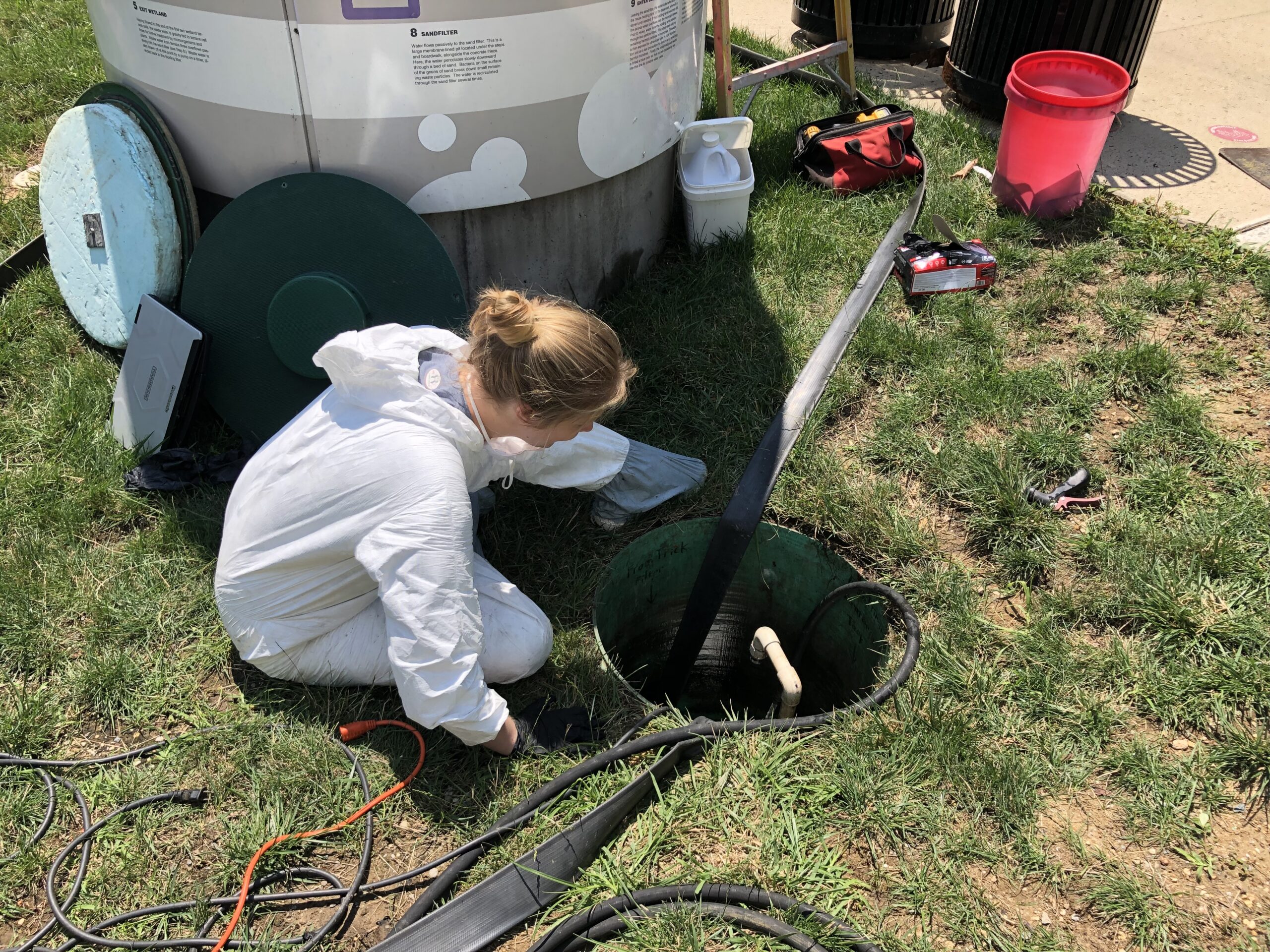
The sun is blazing overhead on a toasty summer day as I am deep in what some might call overgrown, but what we at Biohabitats call thriving vegetation. I am searching for a cleanout that will let me know where the water level stands in this constructed treatment wetland in the center of the Sidwell Friends Middle School campus in Washington, DC. The wetland is a key component (and my favorite component) of a 3,000 gallons-per-day wastewater treatment system designed by Biohabitats.
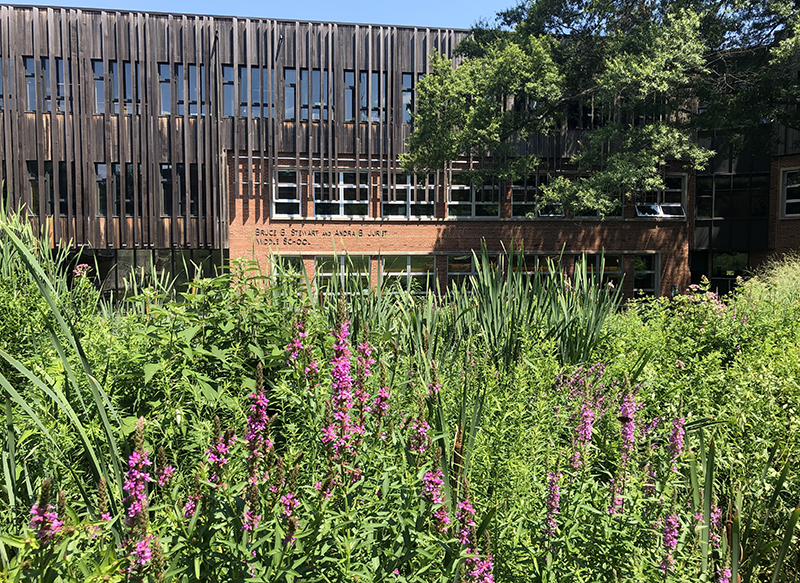
This closed loop system captures wastewater from the building, treats it on site, and recycles it for toilet flushing and cooling tower use, significantly reducing the school’s reliance on municipal water.
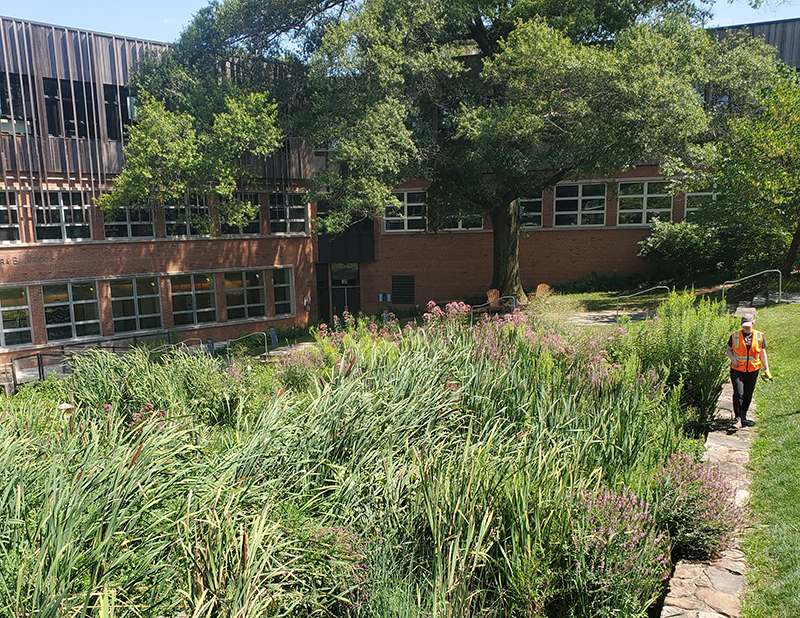
I am one of the lucky engineers that has the opportunity to visit the system multiple times a year to perform routine Operations & Maintenance on the system. I am doing just that on this particular summer day, and it is nearing the end of my maintenance visit. It’s a steamy day, and I’m tired, but the joyful voices of children who are on campus attending summer camp lift my spirits.
As I’m standing up to down a swig of water out of my bottle, I notice a small group of young girls crouched over the wall on the edge of the constructed wetland. I immediately hurry over to investigate, a wave of panic coming over me as I fear I left my drill or other not-ideal-for-summer-camp-children tool out for a curious hand to pick up.
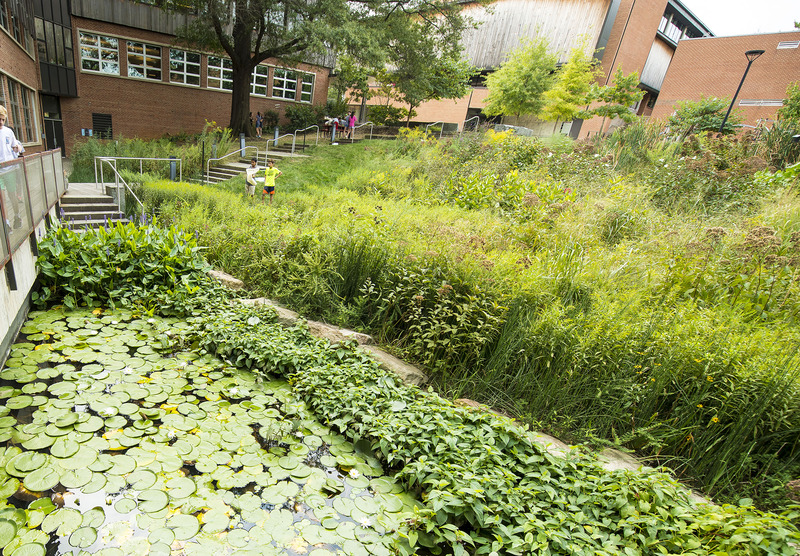
As I approach the girls, I notice that to my relief they have not picked up my drill but are curiously watching a pack of ants that are marching their way through some of the broad-leaved cattail plants in the system.
“What are they doing here?” one of the girls asks aloud.
I let out a small chuckle. “They live here! They are probably out foraging for food to bring back home to their family. Do you all know what this is?”
“It’s a garden. Duh.”
“Not just any garden,” I reply. “This is a constructed treatment wetland! The plants work to clean or ‘treat’ the water that comes out of the toilets in the building and then cycles it back through for it to be used again. It helps us to use less water and use nature to do what typically takes lots of chemicals and energy to do. And is a beautiful thing to have in the middle of campus!”
“That’s so cool. I didn’t know plants could clean water!”
“Constructed wetlands can do a lot of cool things!” I smile to myself. The water reuse nerd in me wanted to dazzle the kids with details about how constructed wetlands, when used as a component of onsite wastewater treatment systems, along with technologies such as UV disinfection, trickling filters and recirculating sand filters, can leverage the interactions of microorganisms, bacteria and plants to break down contaminants, transform pollutants and cycle nutrients.
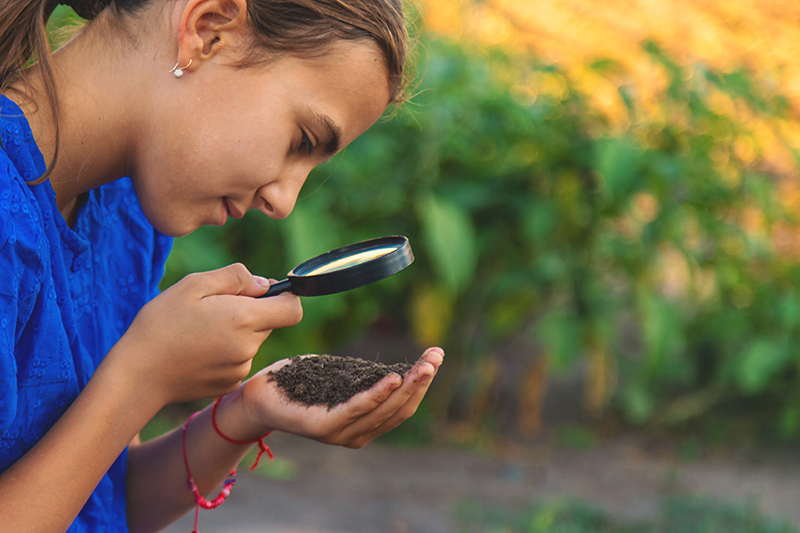
Remembering my audience, I tweaked my approach a little… “Tiny little critters that you can’t see live in the soil and break apart the dirty stuff in the water so it can be used as food and to feed the plants! The growing plants provide a great home for other critters, such as these ants. And, best of all, the water that flows out of this wetland leaves cleaner than when it flowed in!”
I’m reminded that moments like these are what keep me doing what I do. While I enjoy solving water related challenges within the built environment with other engineers, architects, environmental scientists, and other professionals, oftentimes my favorite part of the project life is engaging with the public. Whether with students on a campus or local community groups at public meetings, having the opportunity to share with them the why of what we do, and how this work relates to their lives, as well as those of people and wildlife living nearby and downstream is extremely important. Connecting people with the systems we design, specifically with constructed wetland systems since they can be so widely adapted, is a vital puzzle piece in solving ecological challenges.
It’s inspiring and motivating as a practitioner to see the incredible power of constructed wetlands, not only to treat and recycle wastewater but to also captivate people’s curiosity and deepen their connections with water and ecology. Especially in systems such as the one at Sidwell Friends, in which students and visitors are engaging with the system every day! It is encouraging to know that we are planting the seeds for future generations to come.