Expert Q&A: Harold Leverenz
By Amy Nelson
I understand that the technology of constructed wetlands for wastewater treatment began to be explored in the 1950s. How would you describe the state of the science today?
A lot of that early constructed wetland work developed around the same time and within the same framework as wastewater treatment lagoons. A lagoon system is basically an excavated basin: water flows through it, algae grow in it, natural processes happen, and the water comes out cleaner. In that way, the earliest constructed wetlands were more like a black box, in that they were developed largely by observation and empirical experience. With time, practitioners have developed loading criteria, performance models, alternative hydraulic design approaches, and design guidance for various treatment wetlands. The state of the science today is focused on achieving higher levels of performance and addressing emerging contaminants. Our projects increasingly require more reliable and predictable removal of nitrogen, pathogens, and emerging contaminants.
You say, “until recently.” What is changing?
Constructed wetlands are now viewed less as simple black boxes and more as complex hydraulic and biochemical systems. Our understanding of the reactions happening within treatment wetlands is improving dramatically in part due to university and industry research. As water moves through a wetland, suspended particles, including some microplastics, settle or are physically filtered by vegetation and media. Microorganisms growing on plant stems, roots, soil, and media transform organic matter and nitrogen through aerobic, anoxic, and anaerobic reactions. Dissolved constituents can be adsorbed onto or precipitated within the media, while pathogenic microorganisms can be reduced through filtration, sedimentation, attachment, predation, sunlight exposure, and natural die-off. People often look at constructed wetlands and think it’s a simple process, but the reality is that it is a natural system that incorporates many different treatment mechanisms. Further, these systems are constrained by available area and site constraints, with performance impacted by climate, wind, vegetation, and factors that cannot be controlled easily. A treatment wetland that produces reliable water quality given a variable influent can be a complicated system to engineer.
Older wetland designs were based on reducing bulk suspended particles and organic matter. At the same time, analytical and processing monitoring capabilities were limited. Nutrient removal is a good example of where the expectations for performance have changed. Wetlands have always transformed nutrients, but today we are commonly designing around specific ammonia, nitrate, or total nitrogen limits rather than accepting incidental removal.
At UC Davis, for example, we developed anoxic subsurface-flow wetlands using woodchips specifically for denitrification. This process is indicative of the direction of the field where, instead of treating a wetland as one generic process, we configure its hydraulics, media, vegetation, and operating conditions around specific treatment objectives. Current research is extending this approach to pathogens, microplastics, PFAS, advanced monitoring, and new technologies such as microbial fuel cells (MFC). For example, Biohabitats 2026 interdisciplinary intern Dr. Nicholas Miwornunyuie is studying the integration of constructed wetlands with MFC, which use wetland aerobic and anaerobic zones for simultaneous treatment and bioelectricity generation. This same MFC technology can be used for advanced wetland process monitoring. The next generation of treatment wetland technology will integrate real-time climate data, spectral and remote sensing information, advanced sensors, smart controls, and process automation.
Beyond wastewater treatment and water quality we are considering how treatment wetlands can be effective habitat areas. The Arcata Marsh is a classic example of deliberately integrating wastewater treatment and habitat, as well as the trade offs.
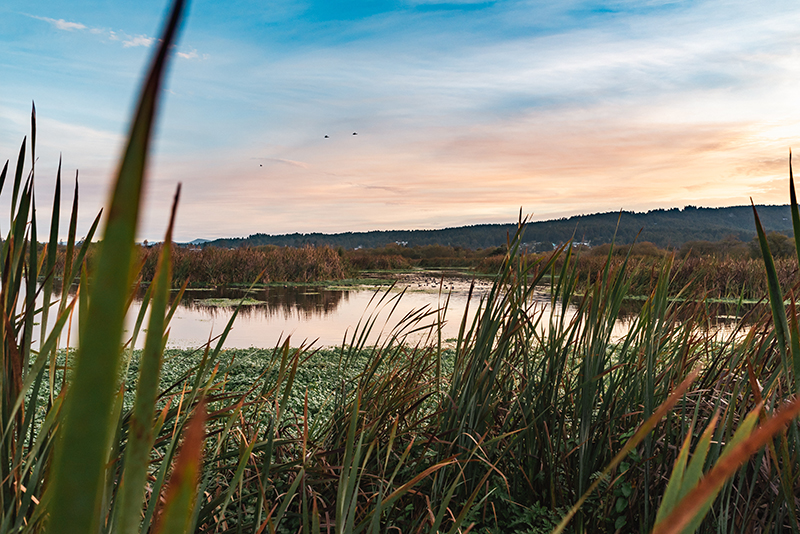
Free water surface (FWS) wetlands with substantial open-water habitat can behave more like ecosystems, with algae, suspended solids, wildlife, and microbial activity contributing to greater variability in effluent quality. Designing around habitat goals can result in variability in water quality and complicate the ability to meet stringent effluent standards. One challenge is designing for potential habitat benefits while making the treatment performance more predictable. The goal is not to separate treatment from ecology, but to understand relevant ecological processes well enough that habitat and treatment objectives can be designed together rather than assuming compatibility.
Another consideration is wetland operations and maintenance needs, such as the removal of invasive vegetation changes to the water level, or other activities that could disrupt habitat. We need to consider the potential for endangered species to be found in these systems and what impact that would have on permitting, operation, and maintenance. The wildlife concerns can be varied and may complicate meeting water quality goals.
Beyond treatment and habitat, wetlands can provide additional infrastructure functions. At Biohabitats, we are working on systems that combine treatment with flood management and effluent temperature control. In some projects, wetlands provide nutrient removal during the dry season and temporary storage of peak flows during wet-weather events.
Treatment wetlands are often configured and adapted to new contexts. In the San Francisco Bay Area, for example, we’re working on concepts that integrate treatment wetlands with shoreline adaptation. Rather than sending treated effluent directly to the Bay, future discharges could pass through treatment wetlands incorporated into the bayward levee landscape. These nature-based system designs will provide additional nutrient polishing while also contributing habitat and resilience to sea level rise.
We are also looking at different wetland configurations and media to target specific treatment processes. Wetlands can be saturated or unsaturated, with horizontal, downward, or upward flow, and can incorporate media that adsorb phosphorus or provide carbon for nitrate removal. By combining these configurations in sequence, we can create the conditions needed for different treatment processes rather than asking one wetland to do everything. As a conceptual example, a four-stage system for polishing nitrified effluent might begin with a saturated woodchip wetland for denitrification, followed by a FWS wetland for additional transformation and removal of residual organic matter and other constituents. A third stage containing iron- or aluminum-rich media could adsorb phosphorus, followed by a subsurface flow wetland for final filtration before discharge or integration into an ecological system.
In practice we’re mostly focused on adapting wetland systems for more reliable nutrient removal, as driven by more stringent effluent compliance requirements. But at the same time, there is a knowledge gap with respect to new and emerging constituents, new media and hydraulic configurations, and other innovations.
You are both researching these systems and applying them in the real world. How does that knowledge gap impact real world applications of constructed wetlands?
We’re a little conservative in the designs we do in the real world because of the knowledge gaps. At the same time, I’m trying to build a research program at UC Davis so we can continue pilot testing and validating performance and confirming design parameters. Without adequate validation, treatment wetlands will remain difficult for agencies and regulators to evaluate alongside more extensively documented mechanical treatment technologies. Better performance data would allow agencies to determine more confidently where wetlands can be an appropriate treatment option. This research will also reduce barriers to the implementation of innovative natural treatment systems for agencies or municipalities that must meet permit requirements.
In talking about different flow configurations, you mentioned that water can flow downwards or upwards in a constructed wetland. Can you explain what you mean by constructed wetlands with water that flows upward?
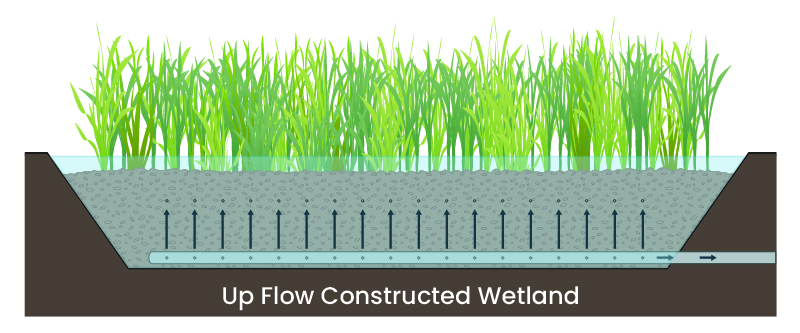
In an upflow system, water enters near the bottom of a porous wetland bed and moves upward through the media before being collected near the surface. That flow through the bed can be pump-driven or gravity-driven, depending on the hydraulic needs. If we fill the bed with gravel and woodchips and keep it saturated, oxygen transfer is limited and the media provides both surface area and organic carbon, creating favorable conditions for converting nitrate in water back into nitrogen gas in air.
You became interested in wastewater treatment as an agricultural engineering student, and that interest ultimately led you to UC Davis, where you studied under George Tchobanoglous, who is known for his groundbreaking work in environmental engineering and wastewater treatment and reuse. Is that where you first learned about constructed wetlands?
In a way, I did learn about constructed wetlands from George, but indirectly. When I was an undergraduate student at Michigan State University I got a copy of a book he had written, which had a chapter on constructed wetlands. (Wastewater Engineering 3rd ed., 1991) At the time, I was also working on golf courses, so when I read that chapter, I thought, “Why couldn’t we just design constructed wetlands into the golf course and make them part of the landscape?” Another professor at Michigan State, Dr. Ted Loudon, who was involved in constructed wetlands at that time, gave me a list of constructed wetlands that were near Michigan State. I drove out to those wetlands and started noticing that the water coming out of them was crystal clear. I was really impressed. I decided then that I was going to study more about the use of constructed wetlands and looked up George Tchobanoglous. At that time, I was also thinking about nutrient recovery because of my agricultural interests. I went to UC Davis and set up a meeting with George. We hit it off right away. He had been working on constructed wetlands back in the early 70s, before the Clean Water Act. UC Davis had a substantial natural systems research program in the 1970s and 1980s, but industry and research priorities shifted toward increasingly mechanized and controllable treatment processes.
George and I completed many research studies on all kinds of treatment processes, including treatment wetlands. George is good at evaluating a process like a treatment wetland and breaking it down using a mass-balance type engineering approach. I really appreciate George’s detailed organization and approaches to problem solving and modeling these processes, which we are now applying in the development of advanced computer simulation models. There are so many more computer modeling and simulation tools available now than there were even 10 years ago. At UC Davis, we’re working with colleagues toward more mechanistic simulation models that predict performance based on the underlying reactions and hydraulics using a method that we applied previously for treatment lagoons.
It sounds like the black box you described earlier is really being cracked open.
Historically, wetland design models had to simplify a very complicated biological and hydraulic system into a few equations and empirical coefficients. Today, greater computing power, better monitoring data, and improved process models allow us to represent more of those interacting mechanisms and compare many operating scenarios quickly. Much of our research is focused on opening up the black box – through developing the computer models, making them available for public use, and thereby improving the acceptance of treatment wetland technology.
What are some other important things we’ve learned about constructed wetlands for wastewater treatment in the years since those early experiments in the 1950s?
The wastewater itself is changing. Since the early 1990s, indoor water use in many communities has dropped from roughly 60 to 80 gallons per person per day to 40 gallons or less in some water efficient areas. The mass of nitrogen, salts, and other constituents generated per person does not decline proportionally, so wastewater becomes more concentrated. Total nitrogen that might historically have been in the 40 mg/L range can now reach 70 to 100 mg/L or more in high efficiency water systems. Today we’re also concerned with constituents such as PFAS and microplastics that weren’t part of the earlier design framework.
Zoos and aquaria are another interesting application because they continuously recirculate large volumes of water and have to manage nutrients and water quality to specific limits within each habitat.
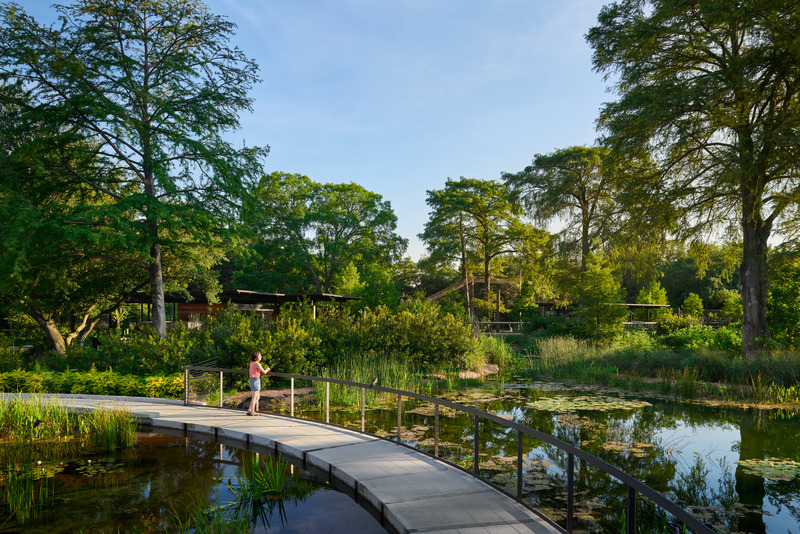
A constructed wetland can become part of the life support system (LSS) – providing filtration, nitrification or denitrification, and in some cases, habitat or landscape value as well. These applications are useful because they force us to think of the wetland not as a wastewater endpoint, but as a key process within a recirculating ecological system.
You and fellow researchers from UC Davis, Chico State University, and West Virginia University recently published a study in Water Science & Technology in which you evaluated nutrients in effluent from 1412 wastewater treatment lagoons that discharge into surface water in the U.S. What did you learn from this study as it relates to constructed wetlands?
The study was funded by the EPA, because in the U.S., there are more than 4000 lagoons that discharge into surface water and more than 4000 that discharge to land. The EPA regulates a lot of these systems, especially those that surface discharge, many of which are in small communities with small populations.
For many lagoon systems, there is a need to reduce ammonia loading to surface water because of sensitive downstream aquatic systems. But to reduce ammonia in the effluent, we may need to upgrade thousands of lagoons that discharge into surface water. For this study, the key question was to determine the best way to upgrade lagoons to remove nutrients, in terms of life cycle cost, carbon footprint, and proven performance. We did go through and analyze all available permit and monitoring data separated out by individual technologies. Then graduate researchers Ziya Jang at UC Davis and Denis Ruto at West Virginia University spent an enormous amount of time assembling and characterizing the permit and performance data. Through this analysis we found that there are some technologies that are effective at removing these constituents, but they’re expensive. In fact, for a small community, most available lagoon upgrade technologies are not affordable.
Wetlands were present at some lagoon facilities, but in the national dataset they did not emerge as a consistent nutrient removal technology. However, this doesn’t mean wetlands can’t remove ammonia or nitrate; it means the existing wetlands were highly variable and generally were not designed and operated specifically around those nutrient targets. It will take a hybrid design approach and years of performance data before treatment wetlands could be recognized as a feasible technology for lagoon upgrades.
Could treatment lagoons then present an opportunity to enhance municipal scale constructed wetlands for wastewater treatment?
Lagoon facilities are typically large, and consist of one or more open water lagoon cells. Lagoon facilities can be particularly well suited to wetland retrofits because they already contain large basins and hydraulic infrastructure. At Biohabitats, we sometimes use floating wetlands, for example, within lagoons. These lagoons typically produce a lot of algal growth within the water column. Floating treatment wetlands can shade part of the water column, provide extensive root and biofilm surface area, and intercept suspended algae and solids. With sufficient coverage, shading can suppress additional algal growth and encourage settling, while the root zone provides additional microbial treatment. So that is one way we could use a wetland to remove some nutrients to improve lagoon water quality, but there are different ways that constructed wetlands can be incorporated into existing lagoons. It really depends on the site, because some lagoons are regulated for ammonia, some for nitrate, and others for phosphate. Different nutrients require different approaches or wetland configurations. Wetlands have a role because they’re considered to be low maintenance, well adapted at fitting into an existing basin, and potentially low cost retrofit option to upgrade the effluent.
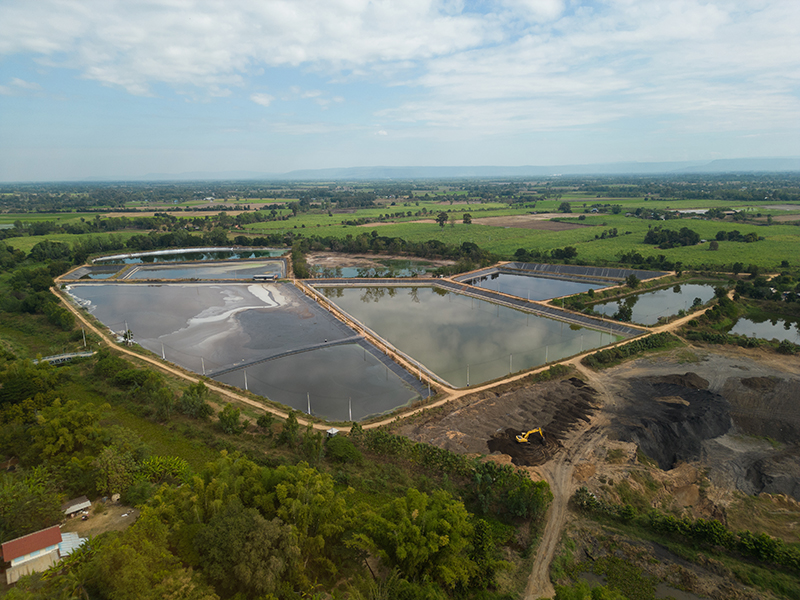
Climate has a major influence on these natural systems. In general, lagoon water temperature tracks seasonal air temperature, but with effects from solar radiation, depth and thermal storage. As water gets colder, biological rates, particularly algae growth, can slow dramatically, and many wetland plants become dormant or senesce. A design that performs well in California may not behave the same way in Minnesota. Solutions need to be region and site specific.
When we talked 10 years ago, you mentioned that you were working with the National Water Research Institute to develop a regulatory framework for non-potable water systems. In terms of water systems that include constructed wetlands, have there been any advances on that front? Has the permitting process for these systems become easier to navigate?
The research gap is a problem when it comes to permitting of constructed wetlands. Other technologies on the market have vendors behind them who have a lot of incentive and resources to ensure that their technologies can meet the regulatory framework and be approved by regulatory agencies. These companies invest in the validation testing and research required to document how their technology works so that it can be approved in treatment systems.
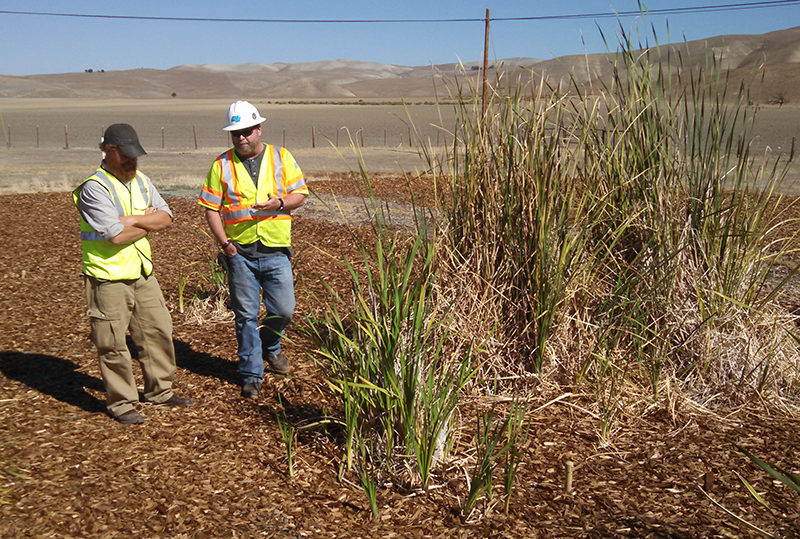
California’s new statewide onsite non-potable reuse regulations, which took effect in 2026, are based on the same risk-based pathogen control concepts we worked on in the 2017 framework. However, wetlands aren’t among the pre-approved treatment trains. We could potentially propose a wetland as part of an alternative train, but we would then need to demonstrate and validate its pathogen log-reduction performance and continuously verify that performance. The validation testing is a high hurdle when the necessary validation data do not yet exist. Ideally, treatment wetlands would be evaluated with the same rigor applied to other treatment technologies, so regulators and utilities have sufficient data to determine when they are suitable.
Let’s talk more about the research gap. What research related to constructed wetlands is most needed?
There is an important research gap around designing treatment wetlands that can reliably polish municipal effluent to low nutrient concentrations while also reducing other ecological stressors. Beyond nitrogen and phosphorus, we need to understand pathogen reduction, microplastics, PFAS, temperature, and the broader effects of passing highly treated wastewater through a functioning ecological system before it returns to a receiving water. This work is related to the concept of ‘rewilding water’ through contact with a natural system to protect downstream ecological systems.
Are there any other places in the world where there is more research going into constructed wetlands?
France is probably the clearest example. The French vertical-flow wetland system has been deployed at thousands of small community treatment plants, so they have a depth of full-scale operating experience that we don’t have in the U.S. There is also substantial work in Spain, Greece and elsewhere in the Mediterranean on wetland treatment coupled with water reuse.
If a giant pile of funding were to fall into your lap and it had to be used to advance any aspect of constructed wetlands, how would you would use it?
Short-term studies are useful for understanding individual processes, but they cannot answer many of the questions that determine long-term wetland performance. We need recent comprehensive and long-term datasets from full-scale wetland systems that are well characterized, from different climate zones and other regional and site effects. In addition to nutrients, microplastics, and PFAS, we are interested in the overall greenhouse-gas and carbon balance. For example, how much carbon is stored in biomass and soil? How much methane is emitted from anaerobic zones? How much nitrous oxide is produced during nitrogen transformations? What energy and chemical emissions are avoided compared with conventional treatment? One key question is whether the overall system is a net greenhouse-gas source or sink on a CO₂-equivalent basis.
Harvesting and reusing nutrients for agricultural fertilizer has long been an interest of yours. Is there any intersection of that with constructed wetlands?
While wetlands are good for effluent polishing water with low levels of nutrients, when we have concentrated nutrients, we first consider extraction and harvesting of those nutrients. Because when we go through a wetland, we’re not harvesting nutrients anymore. With nitrogen, denitrification can return it to the atmosphere as nitrogen gas. With phosphorus, we’re generally retaining it in sediment, media, and biomass, so long term storage capacity and management are important.
The nutrient recovery work focuses on concentrated waste streams. Neat urine is a concentrated waste stream that we would like to recover nutrients from because the nitrogen concentration is approximately 10 gram per liter. After nutrient extraction, there are still some nutrients left over at such low concentrations that cannot be easily recovered. This residual nutrient flow could be processed using treatment wetlands. In fact, most of the nutrients in municipal wastewater originate from urine and, even after conventional treatment, many effluents still contain residual nitrogen and phosphorus. Some facilities already have stringent nutrient limits, particularly where receiving waters are sensitive, but many do not remove nutrients down to concentrations that would eliminate their ecological effect. That’s where we see a potentially important role for wetland effluent polishing.
Our research objective is to document and advance research on using wetlands for effluent polishing to: reduce nutrients to very low concentrations; quantify and improve pathogen removal; capture microplastics and understand their long-term fate; evaluate whether particular wetland configurations and media can attenuate PFAS without simply transferring the problem into accumulated biomass or substrate; and, where appropriate, moderate effluent temperature and create habitat.
We see effluent polishing as an important application of treatment wetlands because of the multiple benefits and desire to reduce environmental nutrients and contaminants.
At UC Davis, we are setting up mesocosm basins to determine the best configuration of these processes to maximize nutrient reduction and microplastics removal. We have a study plan that’s going to take a couple of years. If the mesocosm work is successful, a longer term goal would be to evaluate the feasibility of a full-scale demonstration at UC Davis. One concept would be to polish some or potentially all of the campus wastewater effluent before it enters the Arboretum Waterway. A full-scale system could provide a valuable research platform while helping establish the performance data needed for application elsewhere. We also hope to publish a manual for designing constructed wetlands for effluent nutrient polishing.
You are a practitioner as well as a researcher, so you get to see some real-world applications of constructed wetlands. Can you share an example of a situation where it was particularly rewarding to see the impact of your research put into practice?
One rewarding thing for me is seeing concepts that we study at pilot scale becoming part of full-scale projects. Many years ago at UC Davis, we were experimenting with woodchip-filled anoxic wetlands to understand nitrate removal and develop design kinetics. Today I’m working on municipal-scale treatment wetlands where we’re deliberately creating aerobic and anoxic zones, selecting media for particular reactions, and designing around specific nutrient targets. It’s great to see the progression from research to infrastructure that a community may operate for decades.