One month ago, Spain defeated Argentina 1-0 to become the 2026 World Cup champions. It was the 39th and final day of a viral contagion that strikes the globe every four years: World Cup fever. The 2026 edition of this fever spread to one of the most unlikely places: me. Having never really followed soccer/football, I considered myself immune, but I caught it while traveling. I was on Amtrak’s Northeast Regional, heading north from Newark to Connecticut. On board with me were hundreds of Scottish soccer fans on their way to Boston’s Gillette Stadium, where their team would play their first World Cup match in 28 years. I was seated one car away from the cafe car, and for the entire trip, hordes of Scottish fans lined the aisle on their way into and out of the cafe car, their faces bright and beaming and their arms loaded with snacks and beverages. The train’s bland interior was brightened by blue jerseys and enlivened by the chorus of the Tartan Army. Kilts and sporrans swayed; smiles spread. What began as a train ride transformed into a joyful party. Even those wearing the colors of other nations, or those who just happened to be on the train heading to a destination entirely non-soccer related, seemed to put their worries aside and join in the joy. We all caught the fever.
For the next several weeks, I devoted more minutes to watching soccer than I had my entire life (including when my own children played the sport). During one of those minutes, I was reminded of a moment that occurred over 15 years ago, when I had my mind blown in the conference room of Biohabitats’ Chesapeake/Delaware Bays Bioregion office. I know what you’re thinking: what can a soccer match have to do with Biohabitats? Stay with me…
That conference room moment occurred in 2010, as Biohabitats was in the early stages of acquiring Natural Systems International (NSI), a Santa Fe, NM-based firm dedicated to the reuse and restoration of water, wastewater, and stormwater. NSI’s president, Michael Ogden, visited Biohabitats’ headquarters in Baltimore to meet team members and share information about NSI’s history, expertise, and impressive portfolio of projects.
One project in that portfolio was a wastewater treatment and reuse system NSI had designed for Estadio Akron (formerly named Omnilife Stadium) in Guadalajara, Mexico. With a seating capacity of 48,850 at the time, it was one of Mexico’s largest stadiums.

When it comes to wastewater, Michael explained, stadiums are unique places, especially those designed for fast-moving sports like soccer. The dynamic of a match can quickly change hundreds of times throughout play. A goal can be scored at almost any moment, and true fans do not want to miss any action. Imagine the restrooms at halftime! A flush of flushing. A tsunami of water and nutrients!
The onsite system that NSI designed not only treats up to 136,000 gallons of wastewater during each game, it recycles the treated water back into the stadium to be used for toilet flushing, irrigation, and post-game washdowns. This decentralized system allows the stadium to reduce its burden on the surrounding community’s limited wastewater sewage infrastructure, protecting the environment along the way. Michael explained that all of that wastewater is equalized and metered out at 30,400 gallons per day into a system that uses trickling filters, constructed wetlands, and sand filters to purify the water. Treated water is disinfected with ultraviolet light before reuse. He then shared a picture of the constructed wetland. I was shocked to see that a) it looked lush, green, and beautiful and b) it was located right outside of the stadium!
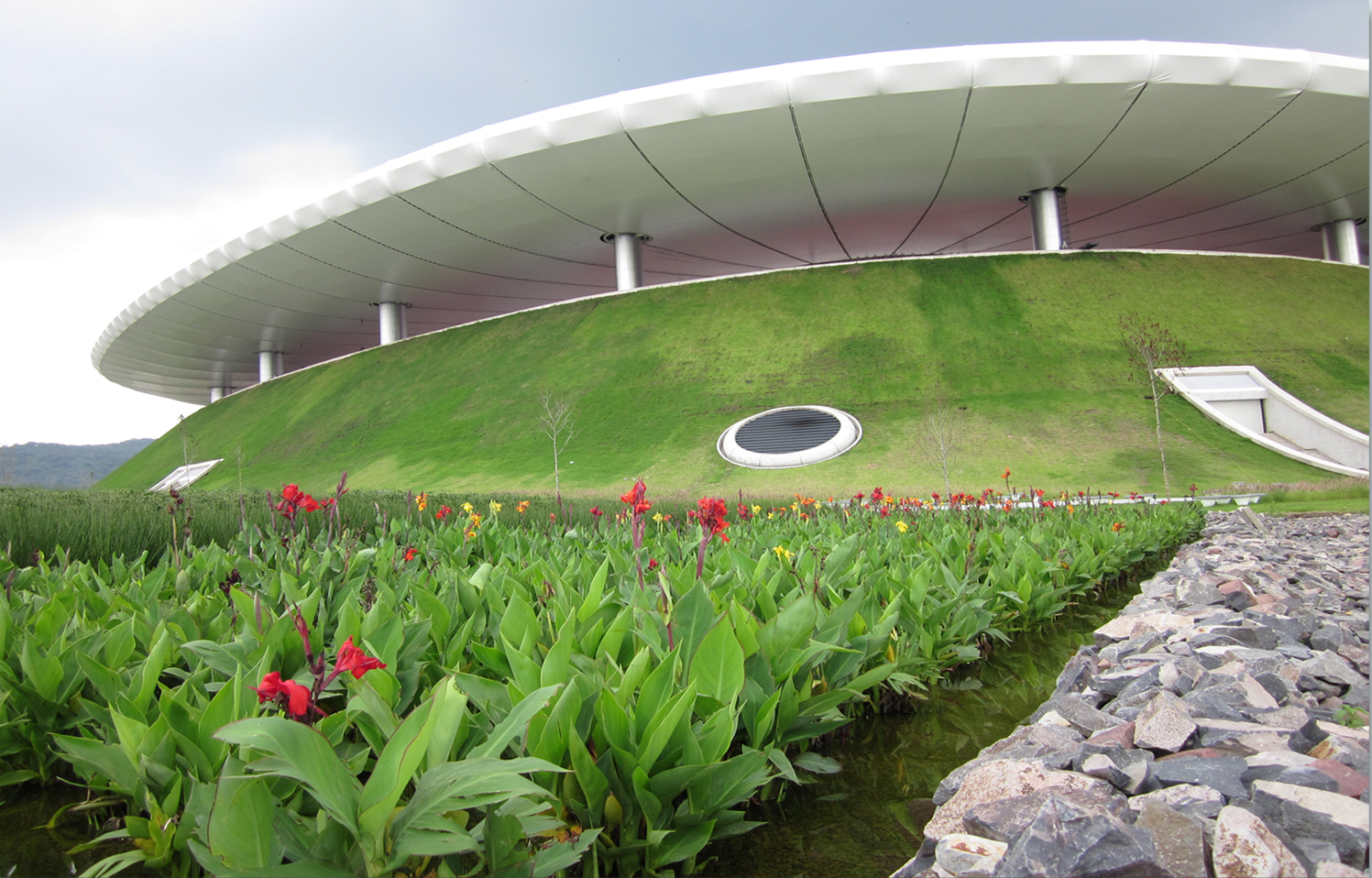
“So that wetland, which people pass on their way in and out of the stadium, is actively treating thousands of peoples’ pee? And poop?” I asked, incredulous. “Doesn’t it smell?”
Michael likely realized at that moment that I was from the marketing department, and not a scientist or engineer like most of my colleagues at the time.
After a brief, and conference-room-wide round of snorts and giggles, Michael explained that when designed, operated, and maintained properly, constructed wetlands of this type for wastewater treatment do not smell, because the water is processed beneath the surface of this rich ecosystem of plants and treatment media, with no water exposed at the surface. The plants and microbes in the wetlands digest and remove the contaminants, rendering the effluent clear and low in odors.
In the 15+ years that have passed since then, I have had the opportunity to visit several constructed wetlands designed to treat and reuse wastewater on site in a variety of urban and rural locations. It is true. They don’t smell. They are also so beautiful it can be hard to believe that they are actually critical components of some incredibly powerful water treatment and reuse systems! I have also learned that they do much more than filter and conserve water. They provide habitat; they can help bring nature and biodiversity to places that need both; and they really captivate people.
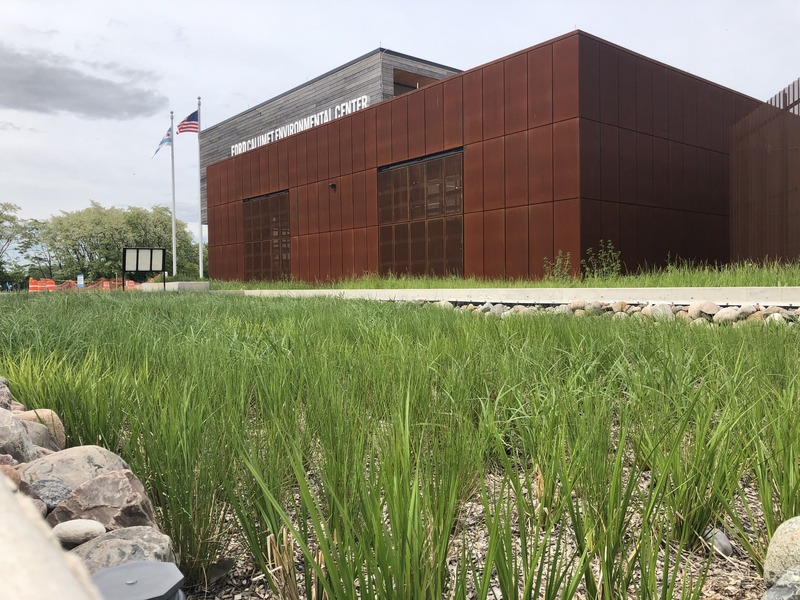
While visiting a constructed wetland that is treating wastewater outside of the Ford Calumet Environmental Center at Big Marsh Bike Park in Chicago, I saw people picnicking beside one! Not far from Atlanta, in Serenbe, an intentional community and beautiful model of sustainable living and biophilic design, the photographed location is a constructed wetland that is part of a system treating household wastewater. People even use it as a backdrop for their wedding photos.
Its interesting, the things that surprise, delight, and connect us.