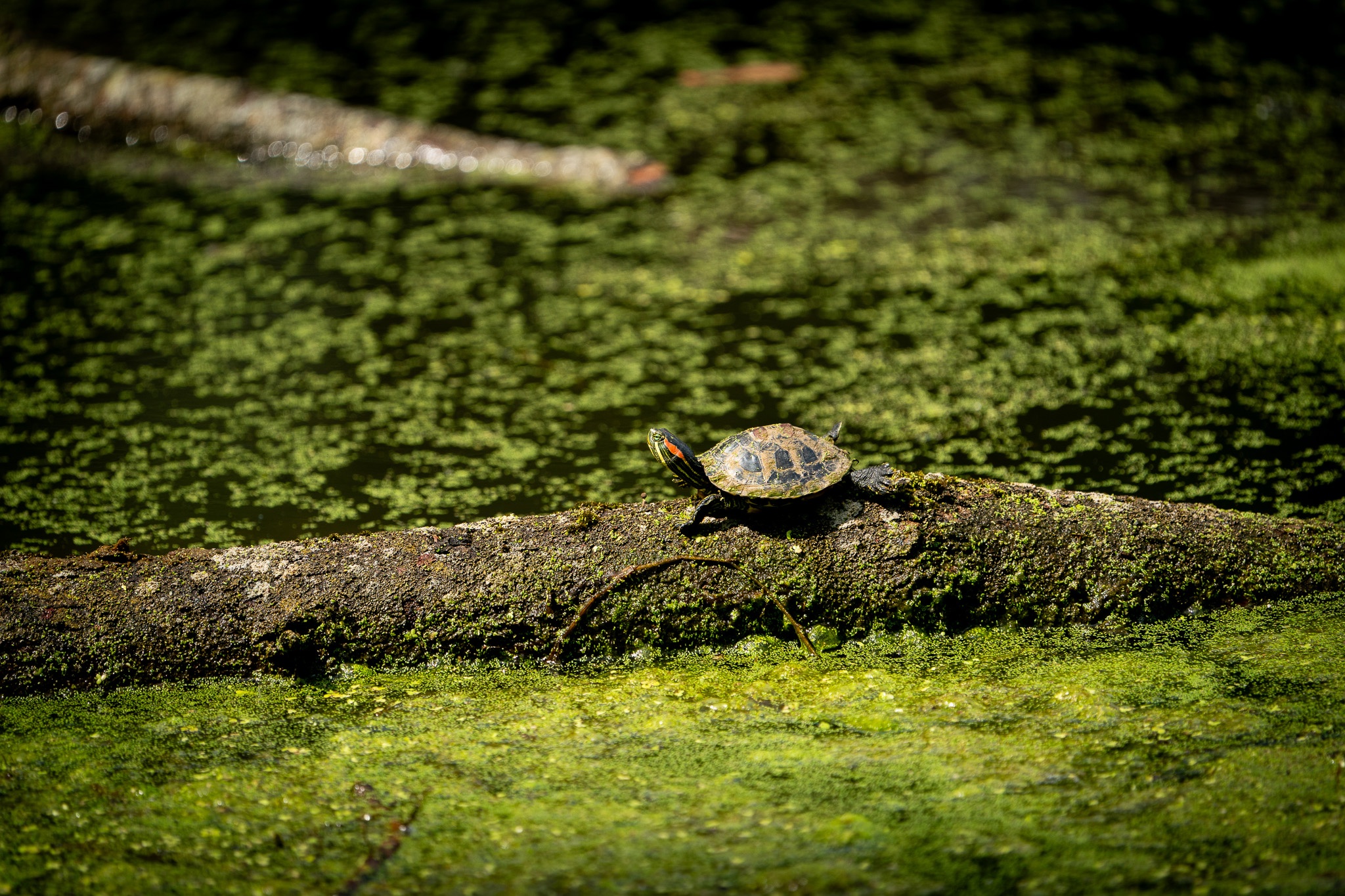
Allyson Young is a recent graduate from the University of Maryland’s School of Agriculture and Natural Resources and majored in Environmental Science and Policy. She also minored in Geographic Information Science. In the fall, she is returning to the University of Maryland to pursue a master’s degree in Geospatial Information Science.
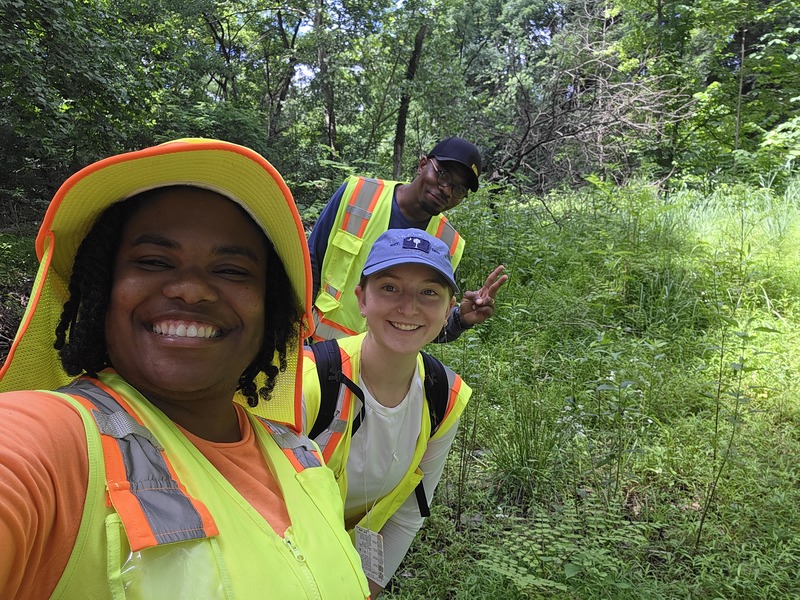
In the spring, I graduated from the Environmental Science and Policy program at UMD. I have always been dedicated to the science of improving the quality of local ecosystems. As an interdisciplinary intern this summer, I worked on various projects that reaffirmed my abilities as a growing environmental scientist. I strengthened skills during my time as an intern including vegetation identification, soil coloration, wetland delineation, and ArcGIS programs, while also learning how to install wells, perform pebble counts, inspect MS4 BMPs, and measure bank pins. My time at Biohabitats this summer has been nothing short of amazing, and I am confident about my career in environmental science!
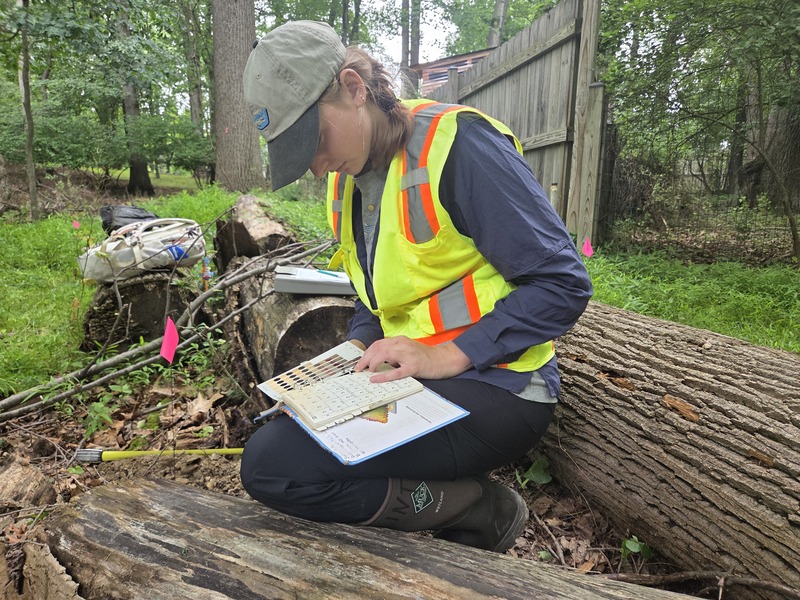
As I enter this next step in my educational journey, I am a more confident student and learner. I spent this summer alongside experienced scientists including Tanaira Tuffour, Sarah Roberts, and Austin Vong, who allowed me to be curious about the ecosystems Biohabitats monitors and showed me the importance of restoration in and around predominately urban environments. I am grateful to be able to absorb knowledge from people who are enthusiastic and passionate about preserving and protecting the environment. Additionally, I was encouraged to take time to familiarize myself with ArcGIS Pro and the map creation process. The ability to have creational freedom, while being able to ask for guidance or recommendations, was extremely beneficial in furthering my confidence in those computational skills.
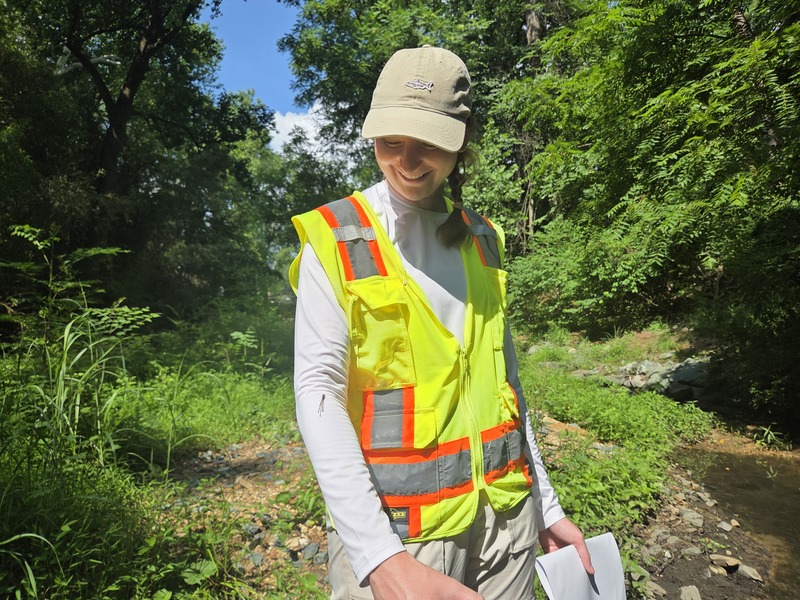
Previous wetland courses at UMD introduced me to a couple of Bio’s projects including the Middle Branch and Top Golf marshes. I was fortunate enough to guide my final project in a direction that allowed me to make this internship a full-circle moment! With the help of Justin Park and Bryon Salladin, we created an updated biological benchmark (bio-benchmark) for tidal marshes in Baltimore. Using the Emlid Reach RS2+ base and rover — a GPS system — we collected coordinates with elevations to understand the current topographic range for low marsh vegetation. The data collected was compared to the standard set by NOAA’s National Tidal Datum Epoch (NTDE), which is based on data collected from 1983-2001. The current NTDE states mean low water is located around 0.2’, however our findings suggest that the baseline shifted to at least 0.5’ based on the points collected. This is vital information for tidal restoration projects because designing within the NTDE standard could decrease the success of low marsh plant survival and even the overall success of the project, but without bio-benchmark data, it would be difficult to veer from the standard followed by regulators.
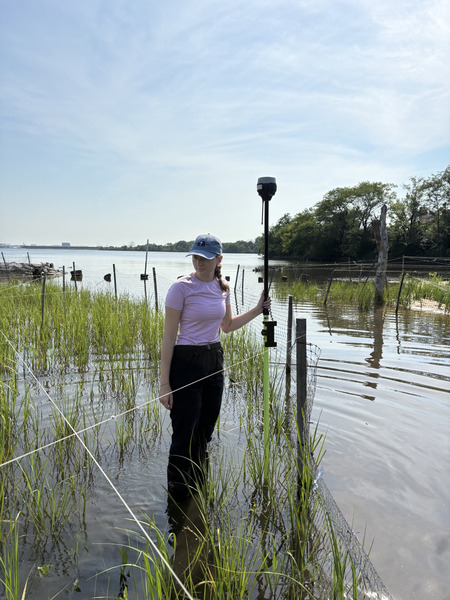
Other than collecting and analyzing data for my final project, my most memorable part of this internship was being out in the field and working on various projects! I really enjoy when field work is super hands-on, like digging and installing wells at Long Branch because there was a visible result of the work I was doing. Also, projects that involve plant identification or wetland delineation excite me because I learned herbaceous plant identification and soil coloration in prior courses at UMD. Using what I learned in undergrad while in the field this summer reaffirmed the importance of my education and validated my ability to identify ecological conditions in local environments.
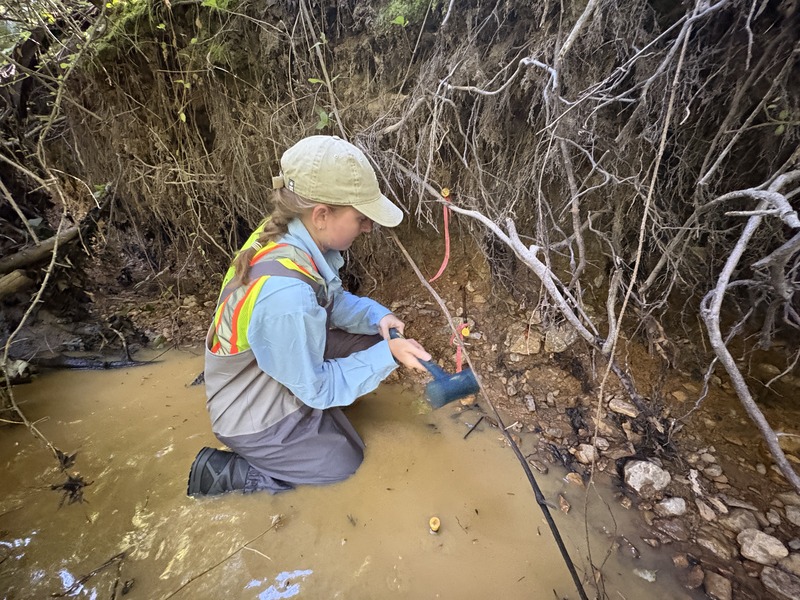
Consulting was not something I originally considered, but Biohabitats’ interdisciplinary approach really stuck out to me and changed my mind. The involvement on all sides of projects from scientists, engineers, and landscape architects opened my eyes to the sheer amount of work required to obtain and maintain projects. After completing my master’s degree, I will begin my career as an environmental scientist! There is so much environmental work needed in the Chesapeake Bay watershed and that is where I plan to stay, especially because I am most interested in coastal ecosystems and wetlands. I am looking forward to starting my career as an environmental scientist to help restore and protect the integrity of our ecosystems.