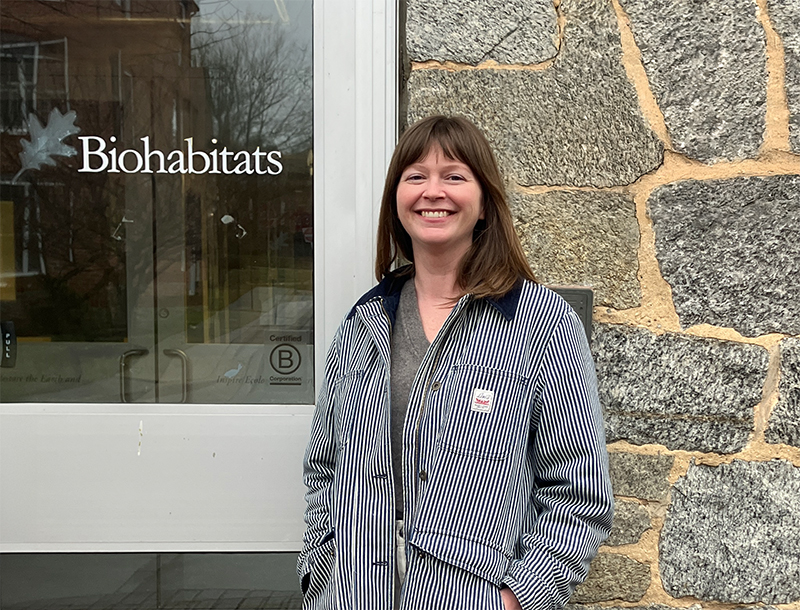
My name is Katherine Townsend, and I am a Master of Landscape Architecture student at the University of Virginia. In early January, I joined Biohabitats for a one-week externship to deepen my understanding of ecological restoration and conservation planning. I was also able to observe how Biohabitats facilitates collaboration across the fields of landscape architecture, environmental science, and engineering.
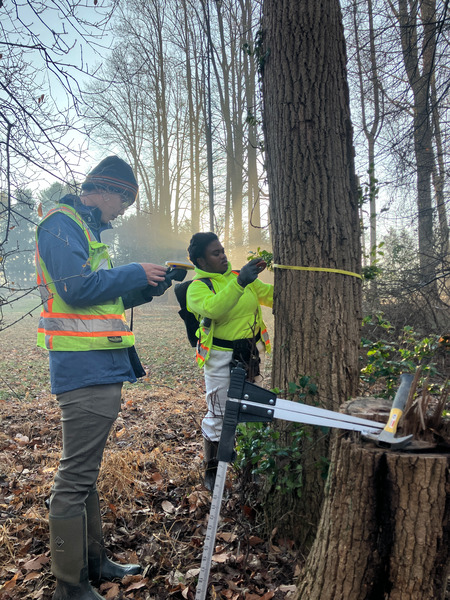
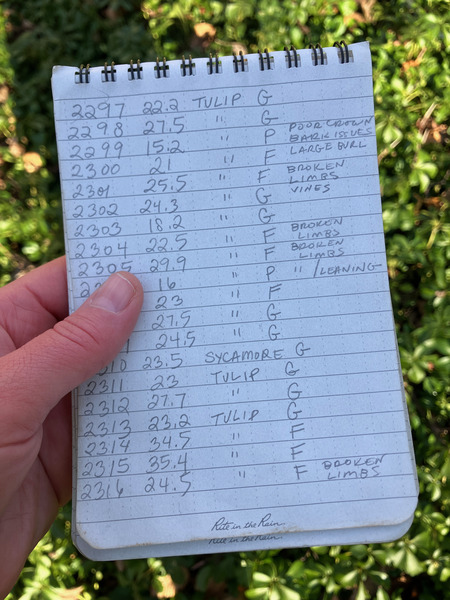
On my second day, I joined environmental scientists Tanaira Tuffour and Austin Vong to inventory trees at a future stream restoration site. I practiced my plant identification skills as we documented tree species, size, and health. Our inventory results will inform the site layout and construction access for the stream restoration.
Back at the office, Sarah Emrich, a water resources engineer, walked me through how an engineer and landscape architect would evaluate the site conditions for a stream design. The designers use nature-based solutions to restore riparian habitat and will place riffles and pools to slow down the flow of water. After a stream path is laid out, plantings are carefully selected to match the area’s ecological community. Ultimately, the design aims to reduce erosion and sediment load in the stream and improve water quality.
Information on the various aspects of the site such as stakeholder relationships, site conditions, documentation, and design is shared easily in-house between the three core disciplines at Biohabitats. Several colleagues mentioned the necessity of iteration and conversation for successful ecological restoration designs.
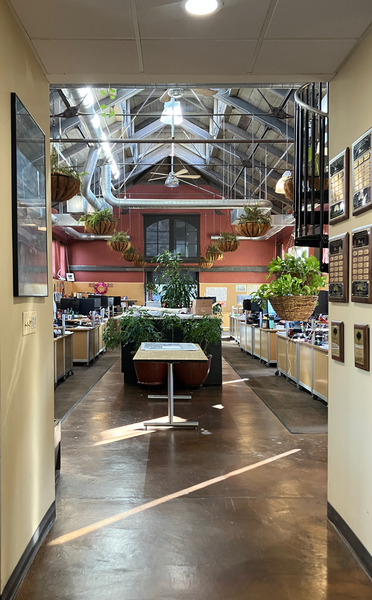
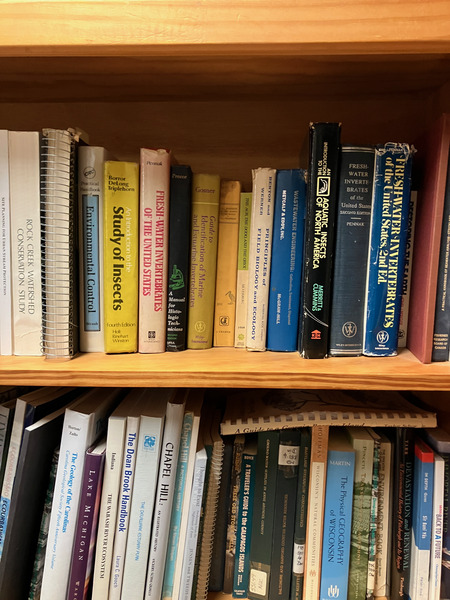
During my time at Biohabitats, I also had one-on-one conversations with the members of the landscape architecture team. They shared their areas of expertise, including successional planting strategies, nature-based solutions for coastline design, pollinator habitat research, and ecological frameworks for planning. I’m excited to explore these topics more in my graduate studies.
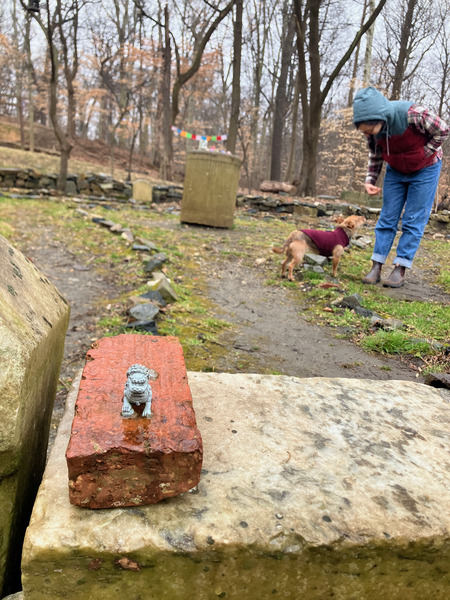
On my last afternoon, I took a rainy walk with a few colleagues to the nearby Zen garden. The garden was built by community members in a repurposed corner of Druid Hill Park; an attempt to manifest their own harmonious space in the city. It felt like a fitting end to my time at Biohabitats; I was leaving Baltimore inspired and ready to experiment with new design tools.