It’s not often in this day and age that we have the opportunity to build a city from the ground up. But there have been some opportunities of late, many to do with rebuilding in the aftermath of disaster or in locations where rapid development is driving change. It is a time ripe for innovation, but also for introspection, for considering all the opportunities we have to create cities that are responsive to their natural context, embracing the ecological systems that lie before us, and the myriad of services they can provide.
Christchurch is the second largest city in New Zealand and the South Island’s largest port. Also known as the Garden City, it is home to a vibrant arts and cultural life and gateway to travel across the South Island and to sites further afield, including Antarctica. On September 4, 2010 a 7.1 magnitude earthquake struck just around 4:30 AM. Miraculously, there were no deaths and damage to buildings, bridges, and electric, sewer, and water infrastructure systems were scattered and manageable. But that was before the aftershocks. Tens of thousands of aftershocks were reported in the wake of this quake, and in February of 2011 a 6.3 magnitude aftershock struck very close to the center of Christchurch (and only 5 km below the surface) at 12.51 pm on a summer’s afternoon. One hundred eighty five people perished in that aftershock, and the Center City was decimated. Seventy percent of the buildings in the central business district were damaged. Historic buildings and cultural sites were destroyed and 50,000 people who worked in the CBD were displaced. The total cost of the rebuild is estimated to be $40billion (NZD), 15% of national GDP.
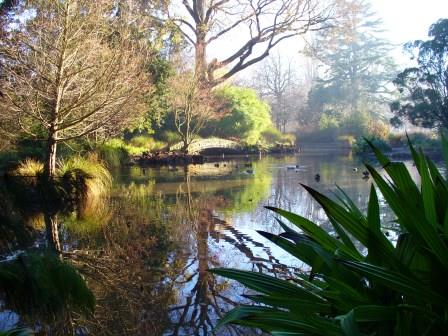
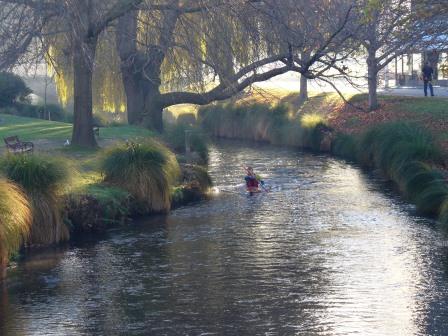
A friend who lives and works in Christchurch remembers that day, rushing from his office with colleagues and gathering along the bank of the Avon River, which flows through the city, feeling that along with the nearby Hagley Park and Victoria Park , the river was one of the safest, most stable places to be as further aftershocks rocked the city and many buildings crumbled.
In the aftermath of the quake, the city and national government, along with the Ngai Tahu and Ngai Tuahuriri (the traditional Maori inhabitants of the area) worked together to progress the rebuild effort. Despite the devastation they caused, the earthquakes were seen as providing an unprecedented opportunity to revitalize and renew Christchurch’s central city. A rebuild offered the chance to add to the city’s social and cultural capital, while drawing on its rich natural and cultural heritage. Christchurch’s efforts were an opportunity to rethink city-building and what that meant for community and country.
In 2011, the community of Christchurch was invited by the Christchurch City Council to participate in a share-an-idea campaign. The main themes which emerged from the community’s 106,000 ideas were: (1) a green city; (2) a city with a strong and resilient built identity; (3) a compact core with well-designed and accessible streetscapes; (4) a city where one lives, works, learns and visits; (5) an accessible city for all ages and abilities; (6) and a city that embraces cultural values and history.
In 2012, the Christchurch Central Development Unit, which is the development arm of the Government’s Canterbury Earthquake Recovery Authority engaged a multidisciplinary consortium group of international consultants to develop a blueprint for the 1480 acres which make up the Central City. What is inspiring is that at the heart of this plan for revitalization and recovery is an acknowledgement from both the community and its government that the ecosystem that lies at the heart of the city and its cultural heritage must be a key focus of the Rebuild. The Avon River (Te Papa Otakaro) and its associated wetlands have always been highly regarded by the Maori people as an important food source (Mahinga Kai). Don Miskell, General Manager of Planning and Design for the Christchurch Central Development Unit, explained that in 1861 Maori leader Pita Te Hori from Ngai Tuahuriri instructed his successors to “kai atawhai kit e tangata” – “care for the people”. Don explained that “those of us involved in the rebuild process have been inspired by his wisdom and guidance. We are seeking to rebuild our city for our people and our visitors. We want to be generous, warm and caring hosts and thoughtful stewards of the land.”
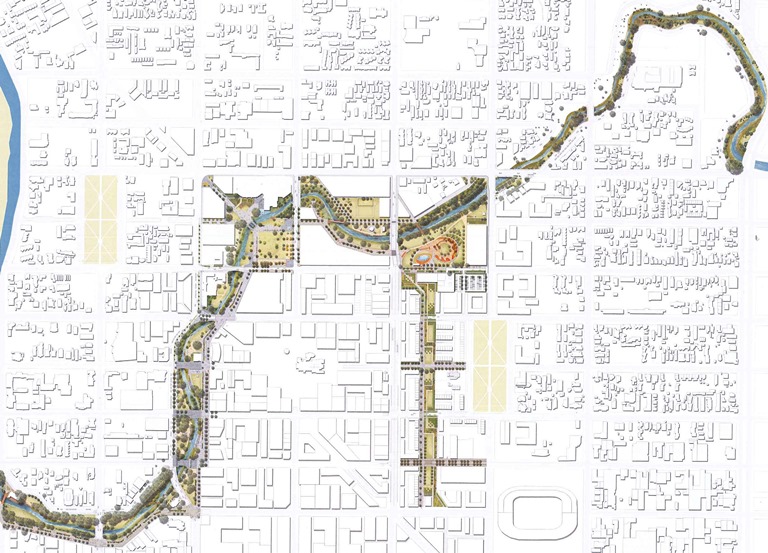
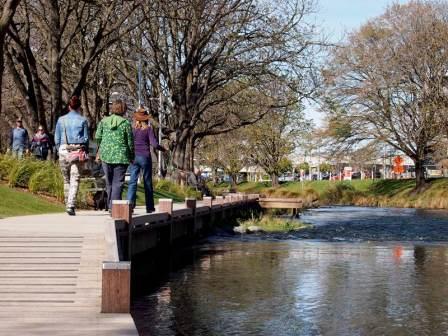
The Rebuild includes a series of 16 anchor projects that are intended to help kick-start the redevelopment efforts and to build confidence in the future of the city center. The first anchor project to break ground was the Avon River Precinct – a decision which underlies the importance of this natural feature to the resilience of the city. The River project includes a 1.9 mile (3.2 km) waterfront revitalization that weaves together natural and cultural values, integrates river restoration initiatives to improve habitat and water quality, a provides a continuous promenade for walking and cycling, and renewed civic and gathering spaces. The river corridor restoration includes indigenous riparian plants to invite more native birds (like the bell bird that was once common in the lowlands around the Christchurch area), and improvements to the morphology and texture of the river bottoms (clearing silt and cleaning the gravels that serve as habitat for fish, eel, whitebait and other key species). Along with the river, other anchor projects that focus on urban ecology, include an open space corridor lined with new residential development, and facilities for education, research and innovation, are proposed within a frame that helps define a more compact center city and a connected community.
While Christchurch is unique in its inclusion of an ecosystem at the heart of its rebuild it is not alone in celebrating the importance of urban ecology in rebuild efforts after disaster. In Greensburg, Kansas, in the wake of an EF5 tornado that destroyed 95% of the town and displaced 1500 people, a unique master planning effort was led by Bob Berkabile and BNIM Architects. The plan features a citywide stormwater strategy that integrates with a park system and trail network, and furthers an objective to make Greensburg a green city based on goals of economic, social and environmental sustainability, (with all new buildings built to LEED platinum standards). And as New York and New Jersey continue to contemplate long-term considerations for the coastal communities battered by Hurricane Sandy there is an acknowledgement that the dynamism of natural systems may be the key to understanding long-term resilience in light of climate change and severe weather events.
Even in the case of building new cities, there is a growing focus on ecological systems, and what they can provide in urban design. A Master Plan for Lavasa Hill Station near Pune, India was completed recently as a collaboration between HOK architects and the Biomimicry Guild. Janine Benyus, a biologist and cofounder of the Biomimicry Guild, explained that in considering the design of this new city they used a three part process: (1) understanding what makes the place tick from an ecological perspective; (2) examining and understanding the practices of the site’s native flora and fauna, to see how their survival has been sustained in this unique system; and finally (3) developing ecological performance standards using nature as a measure.
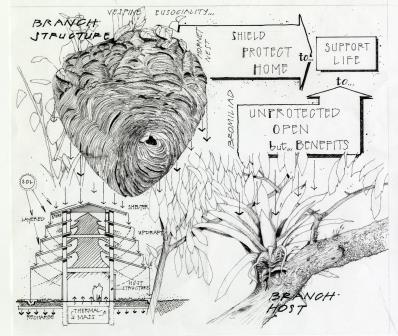
In Lavasa, Benyus explained that their main focus was on water and its role in the native moist deciduous woods in the region. Lavasa had seen a loss of its native forest so in envisioning a new city they wanted to restore the key functions of the forest, even if the forest couldn’t be fully restored. From examining the curves and slopes of the native harvester ant mounds to the functions of the tree canopy in promoting transpiration, they were able to create a design for the town that could begin to function again like the native moist deciduous forest, while incorporating a mixed-use development footprint.
Though the design of brand new cities is not something that happens every day, and though we hope the redesign of cities in the wake of disasters does not become a regular occurrence, it is clear that urban ecology may actually be the key to resilience and sustainability for the next generation of cities.
Resources:
Thanks to Don Miskell and Janine Benyus for taking the time to speak about their design projects and process.
Christchurch Central Recovery Plan: https://ccdu.govt.nz/sites/ccdu.govt.nz/files/documents/christchurch-central-recovery-plan.pdf
Avon River precinct: https://ccdu.govt.nz/projects-and-precincts/te-papa-otakaro-avon-river-precinct
Biomimicry 3.8: http://biomimicry.net/
Greensburg, KS: http://www.greensburggreentown.org/
Greensburg Master Plan: http://www.asla.org/sustainablelandscapes/greensburg.html
Lavasa Hill Station Master Plan: http://www.hok.com/design/region/india/lavasa-hill-station-master-plan/