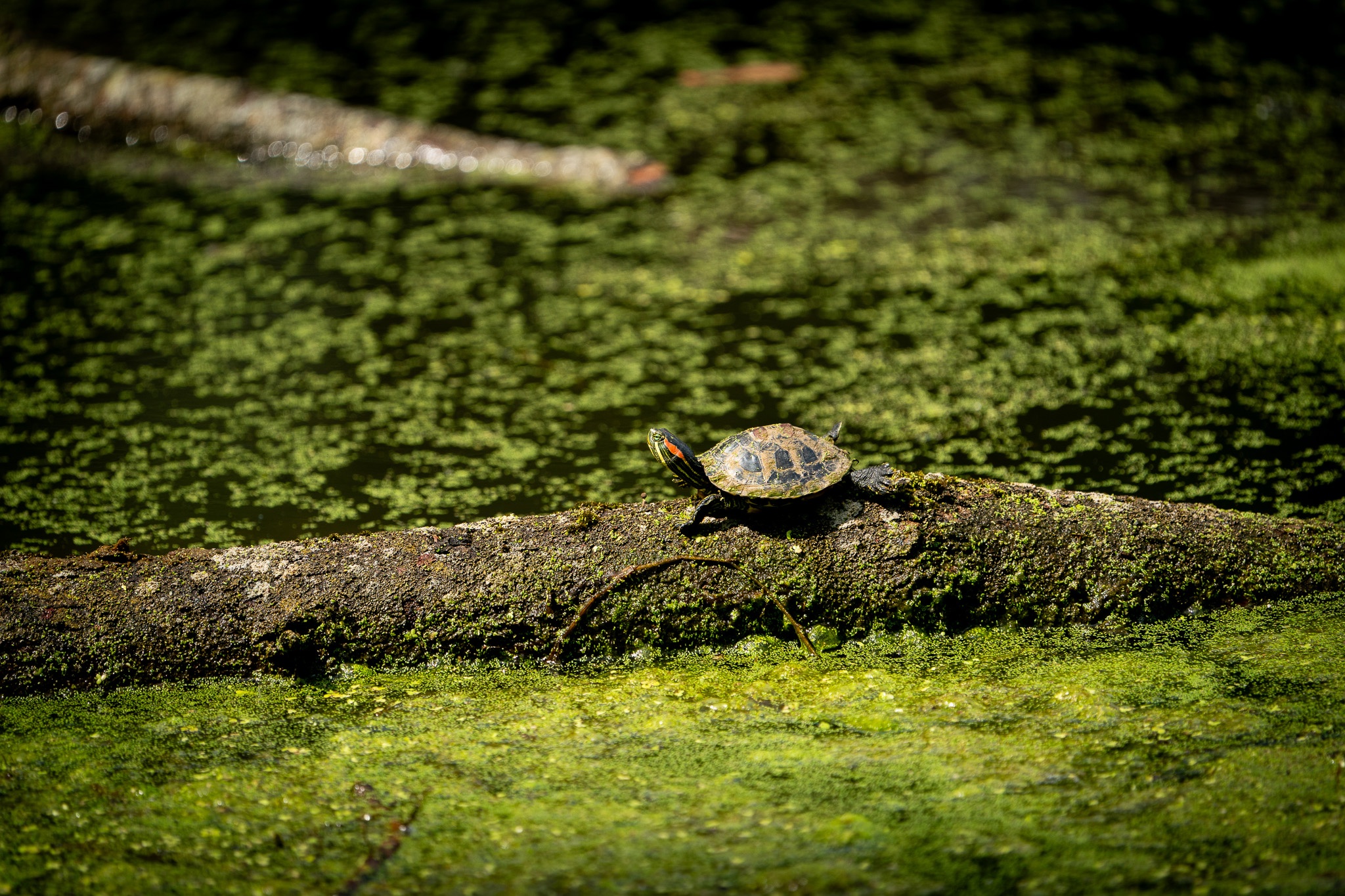
Penn State University Park Duck Pond
- State College
- Pennsylvania
- United States
The potential for a campus pond to deliver improved water quality and ecosystem services is revealed.
The Duck Pond is located along the eastern edge of Pennsylvania State University’s property along the southern side of East College Ave. Three stormwater outfalls feed the pond, which drains 844 acres of surrounding land, half of which are impervious. An artesian spring-fed stream, Thompson Run, is separated from the pond by a berm, but some of its water is diverted to the pond to prevent stagnation. Thompson Run was designated as a High-Quality Cold-Water Fishery by the Pennsylvania Department of Environmental Protection, but it had become degraded by runoff and siltation.
As part of a joint venture with NTM Engineering (NTM), Biohabitats helped Penn State evaluate the need to dredge the pond and determine how the pond site could best be used to manage stormwater and improve downstream water quality. After conducting a bathymetric survey to estimate the volume of sediment that needed to be dredged from the pond, Biohabitats evaluated a suite of restoration alternatives for the pond post-dredging. The restoration alternatives analysis prioritized improved stormwater treatment, while also considering the costs of long-term operations and maintenance, and the potential to enhance habitat and biodiversity.
NTM utilized the analysis to develop dredging plans, which yielded a recommended strategy that involved an initial dredge of the pond with longer term plans for a retrofit or conversion to green stormwater infrastructure for improved water quality treatment. NTM’s significant role also included preparing permits, specifications, and a bid package for the pond dredging.
TAGS
-
Owner: Penn State University
-
Bioregion: Chesapeake/Delaware Bays
-
Ecoregion: Northern Limestone/Dolomite Valleys
-
Physiographic province: Valley And Ridge
-
Watershed: Spring Creek
-
Collaborators: NTM Engineering, Dawood Engineering, EnviroScience