A New Angle on Invasive Blue Catfish
By Brett Long, PE
It was a beautiful fall afternoon, the first of November, and I was thrilled to be chugging out into the tidal Potomac River aboard the Miss Susie III, a 46-foot charter vessel. Joining me on deck were several of my Biohabitats teammates, along with their family members.

When it comes to charter fishing trips in the Chesapeake Bay region, the tidal Potomac River near Washington D.C. might seem like an odd choice. Most folks would likely target large striped bass (Morone saxatilis)—locally know as rockfish—in the open Bay. In recent years, however, the striped bass population has been in decline and the catch is currently limited. This limit has put a strain on charter fishing boats, but they’ve discovered that one fish in the Chesapeake Bay is not at all in short supply: the blue catfish (Ictalurus furcatus).

The Virginia Department of Wildlife Resources introduced blue cats into the James River, a major Chesapeake Bay tributary, in the 1970s, during another period when striped bass were in decline and their catch was limited. The intention was to provide an alternative recreational gamefish that could support the fishing economy while the striped bass could recover. As is the case with many biological interventions, the long-term ecological consequences of this introduction weren’t fully considered. The blue cats found their way into other fresh and brackish tributaries of the Bay, ultimately comprising a significant portion of the Bay’s fish biomass and threatening the native fishery and blue crab (Callinectes sapidus) population.
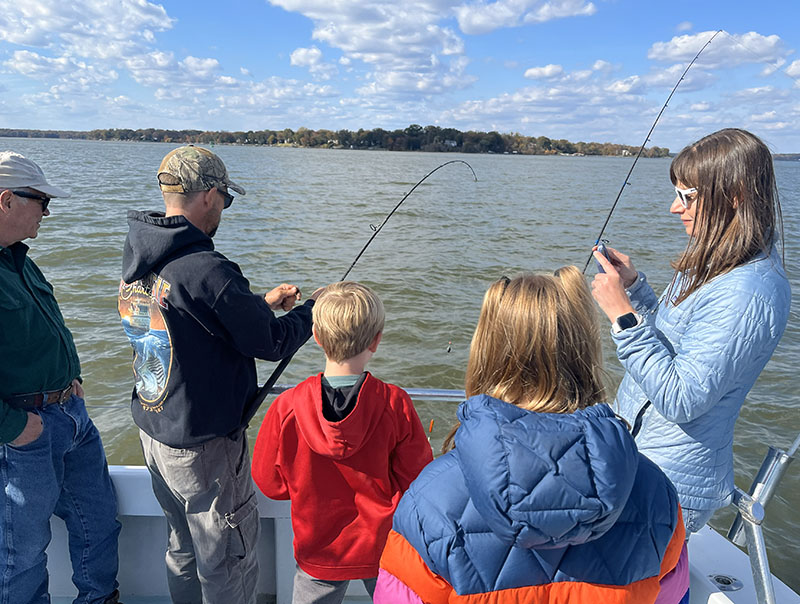
As we motored to our blue cat bottom fishing spot, Miss Susie’s mate cut ripe blue crab into chunks as these are known to be great bait for the larger blue cats. Blue cats are voracious feeders, vacuuming up many other Chesapeake keystone species, including eels, striped bass, clams, and white perch.
After reaching “the spot,” we had a quick walk through with the captain and mate about how to use our bottom fishing rigs. The minute the first lines dropped, we saw the rod tips start to bob and the chaos and excitement of reeling fish after fish began. The two youngest members of the group were the most animated, running down rods with biting fish and cranking them in—no easy task if it was big one.

In total, our group of eight boated 85 fish in four hours. While catching so many fish was a blast, it also shows the extent to which blue cats have overwhelmed the fish population in this area. The mate mentioned that blue cats are the majority of what they catch these days.
To help combat this overabundance, state fisheries agencies including the Maryland Department of Natural Resources are encouraging “catch and cook” programs to help combat the numbers. Recreational and commercial fisherman are being encouraged to keep these tasty fish for excellent, guilt free table fare. In our case, the trusty mate diligently filleted all 85 cats and bagged them up. One team member shared a fish taco recipe as folks made dinner plans for this local delicacy.
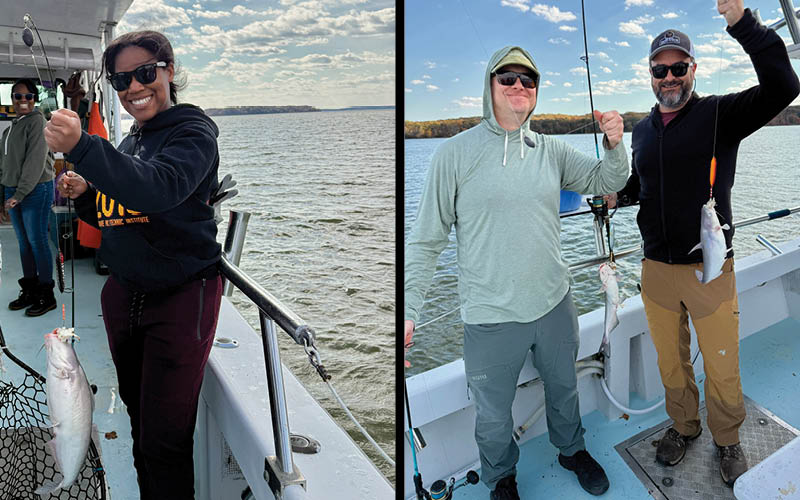
As our boat chugged back to the marina at dusk, we all surveyed the beauty of the Chesapeake Bay, the natural heart of our region… but we all know it is out of balance. We had some fun and hopefully provided a small, but important service in removing an invasive species and supporting a local fishing captain and mate who do this nearly every day. I know one thing for sure: I plan to be back with another group next year.