Nonprofit Spotlight: Institute for Applied Ecology
By Amy Nelson
With a mission to conserve native species and habitats, the nonprofit Institute for Applied Ecology (IAE) doesn’t mess around when it comes to invasive species.
As its name implies, the organization applies the science of ecology and an approach combining on-the-ground research, restoration, and education to address serious threats like invasive species, wildfire, and climate change.
“We’re very much a dirty boots kind of organization,” said IAE Founder and Chief Scientist, Dr. Tom Kaye. He is not exaggerating. Take, for example, a four-year study recently completed by IAE scientists to evaluate several management treatments for Italian arum (Arum italicum), a nonnative. One of the treatments they tested was “manual excavation,” which involved digging up and hand-removing every single tuber and daughter tuber within several plots at three different sites.
IAE also conducts on the ground restoration, cultivates a growing network of native seed and plant material providers, and hosts the annual National Native Seed Conference.
Operating out of offices in Oregon and New Mexico, IAE partners with communities, agencies, and organizations throughout the American Northwest and Southwest in pursuit of its mission. Since its founding more than a quarter century ago, IAE and its partners have advanced science, species recovery, native seed supplies, and the cultivation of tomorrow’s conservation practitioners.
IAE takes its work and mission very seriously. That does not, however, mean that they do not appreciate opportunities for fun. When it comes to invasive species, they eat them up. Literally.

In 2012, when IAE decided to throw a potluck dinner for a colleague who was retiring from a partnering agency, an IAE team member suggested that some people bring dishes made with nonnative species. Two tables were set up, one with traditional potluck fare and the other with food prepared with nonnative species. Some of the dishes on the nonnative table featured invasive species, while others used nonnative species that were not considered invasive, but were nonetheless becoming problematic. Such was the case with one of the dinner’s most popular dishes: wild turkey ravioli. Intentionally introduced in Oregon and Washington as a game bird in the 1960s, wild turkey (Meleagris gallopavo) has become a nuisance in the region, with large flocks that can encourage disease outbreaks.

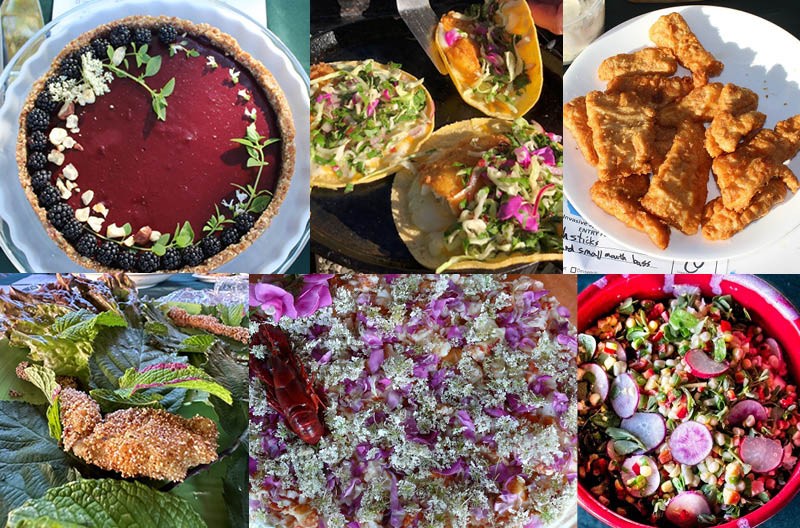
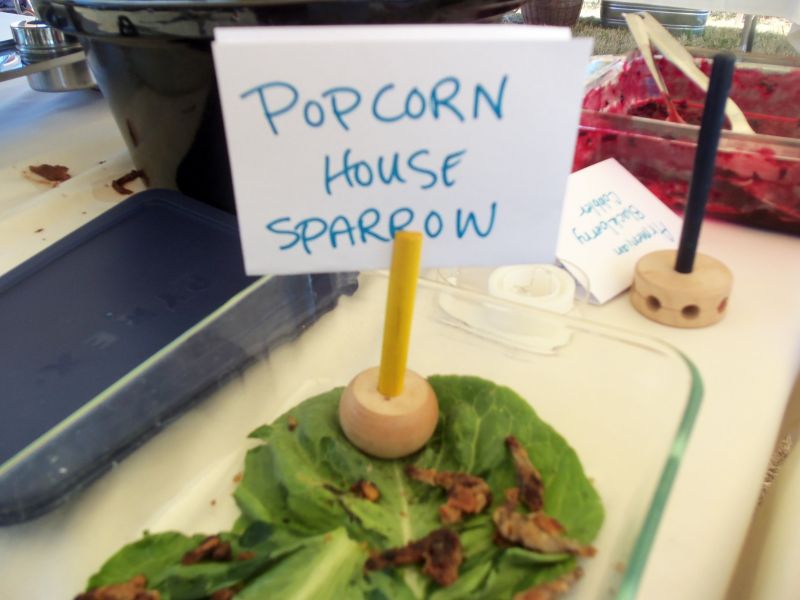
Other popular dishes were nutria kebobs and “popcorn” made with parts of the house sparrow (Passer domesticus), an aggressive, rapidly proliferating invasive bird that threatens native bird populations “House collected by local wildlife biologists and they dissected the legs and breasts and made miniature morsels.”
Responses to the nonnative species items at the potluck dinner were so positive that the following year, IAE decided to put together an invasive species meal as a fundraising gala for the organization. Rather than the potluck approach, however, they chose to have it catered by a local chef and restaurateur. The only guideline for the chef: every dish had to contain an invasive species.
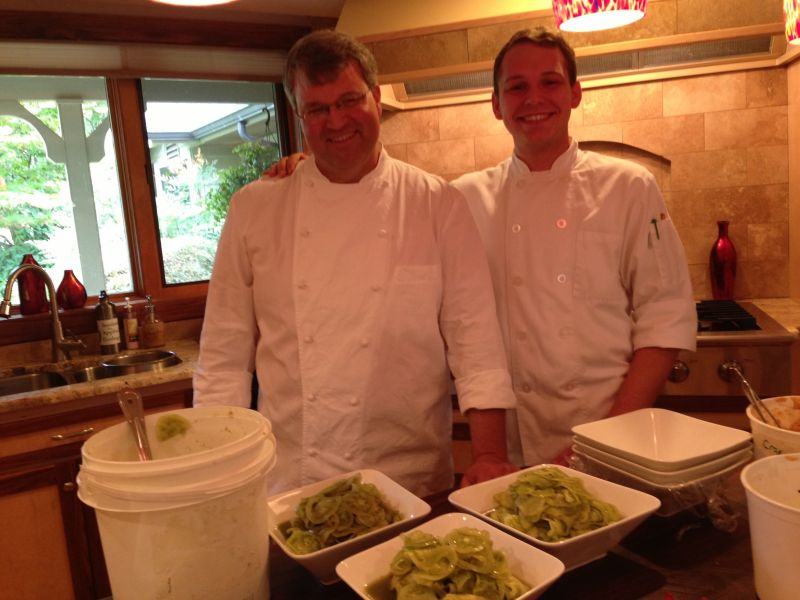
“This chef is very creative and he loved the idea,” said Kaye. Among the caterer’s offerings were dandelion spanakopita and frog leg potato salad.
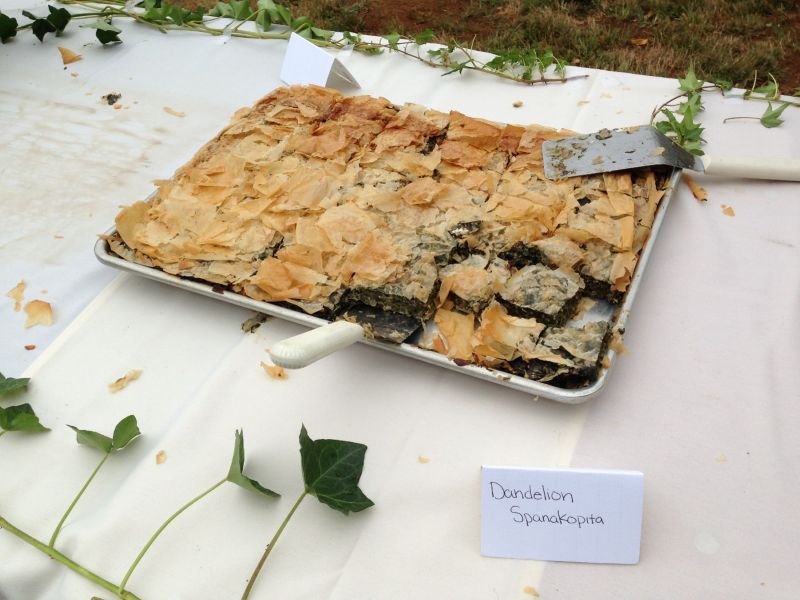
Roughly 200 people showed up to the gala. In addition to the gastronomic delights of invasive species, guests enjoyed live music, family-friendly activities, and opportunities to learn about regional invasive species at a table staffed by the Oregon Invasive Species Council.

One of the most exciting components of the event was an “Invasive Species Cookoff.” In addition to the event’s caterer, IAE invited several other local chefs to prepare dishes for a panel of invited judges. Chefs competed in four categories: savory vegetarian, savory meat, dessert, and beverages. Winners walked away with award certificates and some rather unique bragging rights.

The following year, IAE elevated the event and its cookoff component even more, holding it at a winery in Western Oregon. They flew in French-born Chef Phillipe Parola, a prominent culinary figure in New Orleans who advocates for the inclusion of invasive species in our diets.

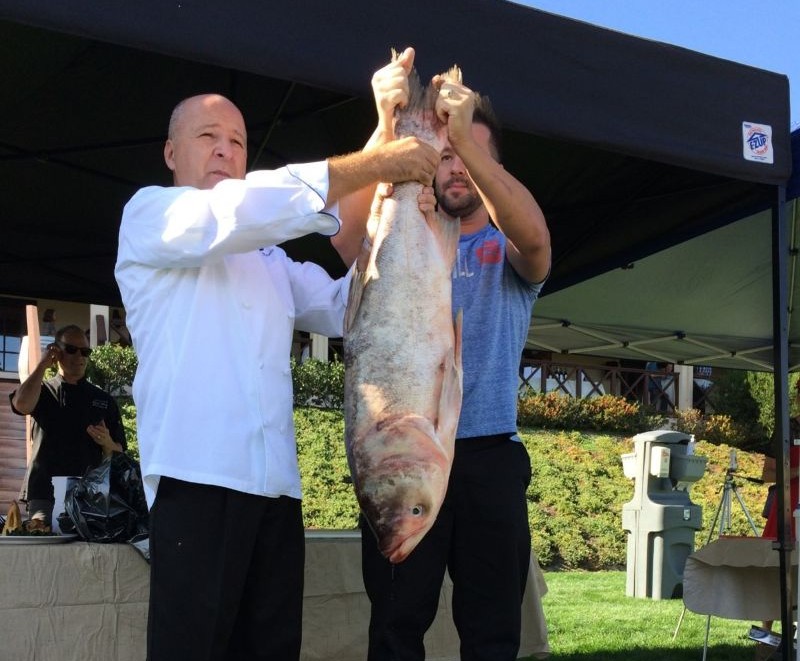
Chef Parola, who has since published a cookbook titled Can’t Beat ‘Em, Eat ‘Em, prepared dishes featuring invasive species and served as a celebrity judge for the cookoff. He also spoke to the crowd about invasive species in other parts of the U.S. and brought an invasive carp from the Mississippi River Basin, where they are disrupting the aquatic food web and affecting ecosystems and economies.
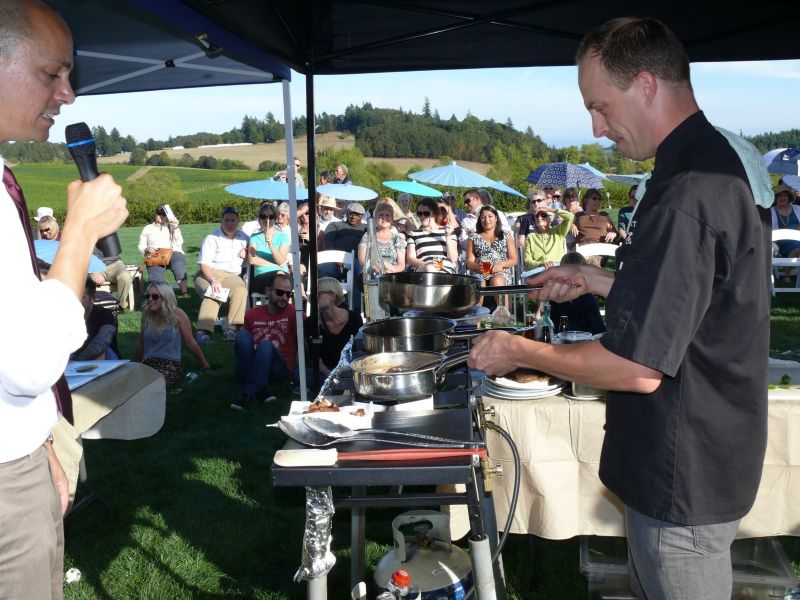
An emcee provided live, running commentary during the highly competitive cookoff, which yielded dishes such as wild boar chops, buttermilk fried frog legs, dandelion green salad, starling bacon kebabs, Himalayan blackberry muffins, and pesto made with mint and purslane. More imaginative dishes included the Invasive Species Triple Threat, which featured crawdad tails, nonnative pea flowers, and Queen Anne’s lace; and the invasive species version of turducken. The event even had its own logo featuring a bullfrog eating blackberries and the motto “Eradication by Mastication.” The event garnered significant media coverage, including by The Wallstreet Journal and L.A. Times.
According to Kaye, the scaled-up event was very successful in terms of raising awareness, but less so in raising funds because it was very costly to produce, so IAE ultimately returned to the potluck model—and in more recent years, a food truck approach—for its annual fundraiser. No one seemed to mind, and the Invasive Species Cookoff, as the event came to be known, continued to draw around 200 people every year.

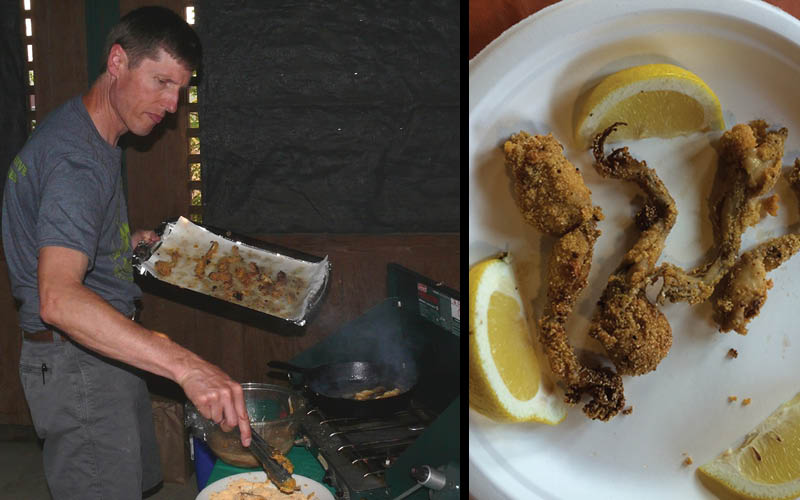
New dishes, such as sheep sorrel cheese puffs and an IAE staff member’s dark beer with purple varnish clams, continued to keep the cookoff exciting. Kaye himself even got into the competition, cooking bullfrog legs. “I wasn’t big on presentation,” he said of his dish, “but I won second prize many times!”
In 2025, however, IAE chose not to host the event, as they were both celebrating the organization’s 25th anniversary with another event and adjusting to the sudden and unexplained cancellation this fall of 30 federal awards the organization had been granted by agencies of the U.S. Department of the Interior. “We got DOGEd very hard,” said Kaye. In addition to having to make painful staff cuts, IAE had to temporarily suspend much of its education and outreach work. The cancellations also severely impacted research and restoration. As the organization stated in a press release following the award cancellations:
“Plants grown for now-defunded restoration projects are sitting in staging areas with nowhere to go. Hundreds of pounds of native seeds are falling to the ground in fields with no funding to pay for their harvest. These terminations will have a significant impact on our lands, our natural resources, and our communities… Our programs, 45 staff, and dozens of seasonal employees span seven states across the West… The indiscriminate cancellation of these grants is not only wasteful, given the return on investment from IAE’s work in conservation, but is harming everyday people who have dedicated their lives to serving these rural landscapes and communities.”

Despite the setbacks, IAE remains steadfast in its commitment to its mission. They are strengthening their seed partnerships, pursuing and procuring new types of grants, preparing for the 2026 National Native Seed Conference, restoring prairies and meadows, and cultivating the growing audience of its new podcast. They are also exploring new ways of educating Western communities about the region’s native species and habitats, and what they can do to help protect them from threats like invasive species.

Kaye is hopeful that IAE’s Invasive Species Cookoff will return. “It’s a way to literally bring people to the table to talk about an otherwise difficult and perhaps depressing topic in a lighthearted environment where we can have fun with it while also appreciating its severity,” he said.
There are likely hundreds of conservation supporters, adventurous eaters, and innovative chefs who hope it returns, too.
To support the Institute for Applied Ecology or learn more about their work, please visit their website.