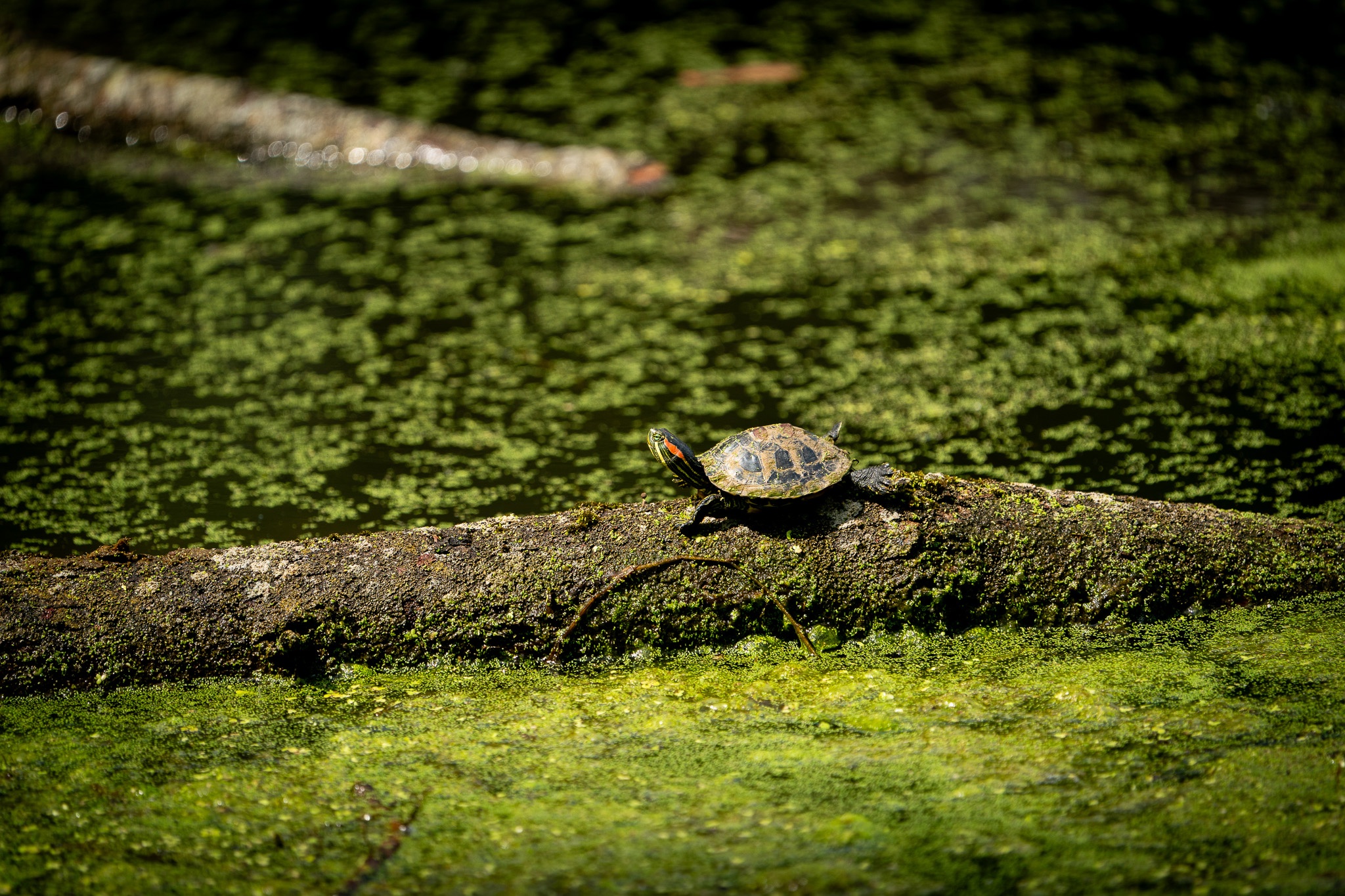
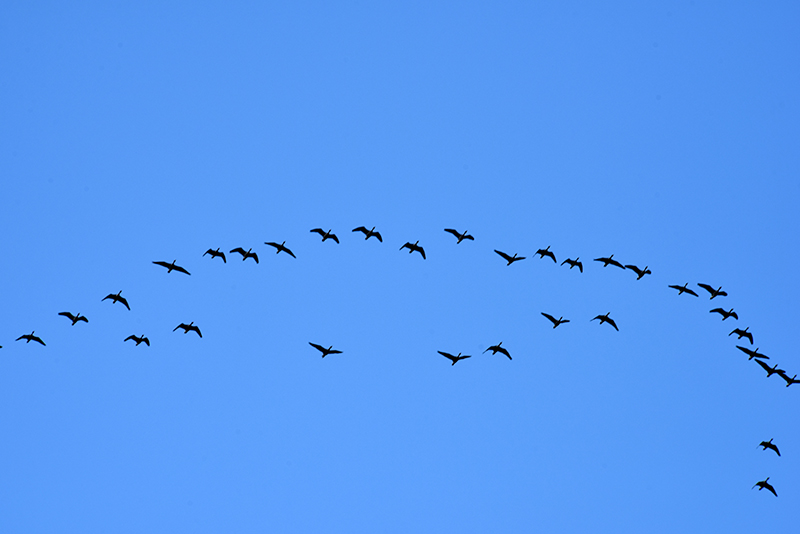
Quick, what is your address? Now, what is your ecoregion, physiographic province, or watershed? Name ten native species of trees. We can name our city, county, and country without hesitation, but ask where our drinking water originates, what soils lie beneath our feet, or which migratory species fill our skies each spring and fall, and the answers fall by the wayside. I believe this is the difference between occupying a place and inhabiting the land.
Bioregionalism asks us to organize our lives around the living systems that support us. These include watersheds, landforms, vegetation, soils, climate, wildlife, and the Indigenous and cultural histories rooted in relationship with the natural world. What defines a bioregion depends on our ability to be in-relationship with place. The Chesapeake Bay watershed, the Ozarks, and the short grass prairie can all define a bioregion.
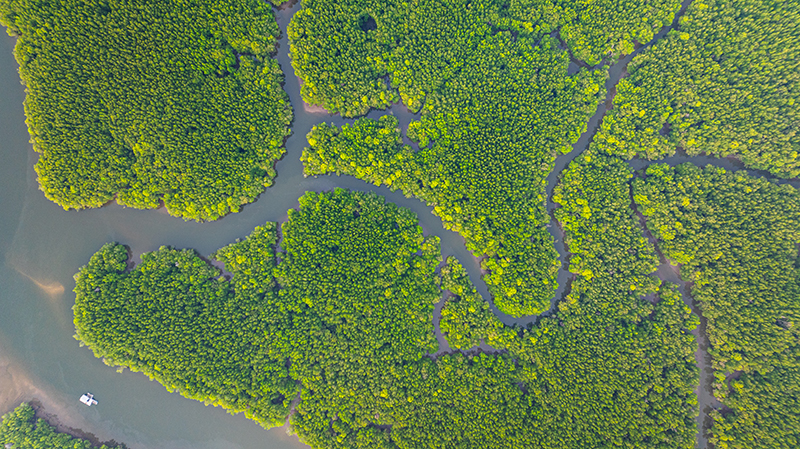
Bioregions sit within larger natural organizing systems as well. A watershed lies within an ecoregion, and an ecoregion is part of a larger biome. While a bioregion can be organized at the scale of an entire watershed, it can also be defined through the smaller, nested sub-watersheds within it. Each follows the story written by water and terrain, beginning in the headwaters, where water gathers in small streams and steep valleys, moving through a network of tributaries that carry water, sediment, nutrients, and life downstream, and eventually opening into broad floodplains, estuaries, or deltas.
Those boundaries are rarely precise. Nature does not organize herself with lines drawn neatly across a map. Forests blend into grasslands. Coastal plains rise toward piedmont. Rivers connect distant communities. Species move across bioregions throughout their lives, creating living connections that extend beyond ecological boundaries. Human cultures overlap these same landscapes in ways shaped by history, language, food, work, and memory. Bioregional boundaries are therefore porous and somewhat fluid, often containing transition zones that may extend for miles.
Language reflects this relationship well. Around the world, places with high biodiversity often have rich linguistic diversity, too. That makes sense when you consider how languages take shape over generations of people living closely with landscapes. The words people use to describe a place grow from the knowledge needed to live there, binding language, culture, and landscape together. The Global Charter for Rewilding the Earth makes a similar connection, linking cultural diversity with nature’s diversity and Indigenous knowledge of the interrelatedness of all life (Rewilding Charter Working Group, 2020).
While the bioregional movement dates to the 1970s, living in direct relationship with place is as old as life on Earth. Indigenous peoples have practiced deeply place-based ways of living for millennia, developing governance, economies, ceremony, and language in direct relationship with specific lands and waters, long before anyone needed the word bioregion. That knowledge was essential for survival, built over countless generations of close attention to soils, seasons, water, and the animals and plants that shared the same ground. Much of what the bioregional movement is now trying to articulate and formalize, Indigenous nations have carried as lived practice all along.
The modern movement drew on thinkers like Patrick Geddes, Lewis Mumford, E. F. Schumacher, Raymond Dasmann, and Peter Berg, who helped popularize the idea of “reinhabitation.” Reinhabitation means learning to live well and responsibly in a particular place. In 1976, Berg challenged North Americans to “finally become inhabitants and find out where they are.” That line helped set up the first North American Bioregional Congress in 1984.
I think bioregionalism matters more now than it has in a long time. We’re dealing with biodiversity loss, climate change, water scarcity, and a set of political and social divisions that keep getting deeper. Our economy has gotten very good at extracting value from a place and moving it somewhere else. Food, energy, labor, and capital all move this way, usually leaving ecological degradation and social vulnerability behind.
Bioregionalism is, in part, an argument for bringing some of that value home. More food grown closer to home. Financial capital that circulates through local businesses. Governance that treats watersheds, foodsheds, and wildlife corridors as meaningful units of decision-making. Fortunately, we can already see this taking shape in watershed councils, community land trusts, food sovereignty networks, and regenerative agriculture, even if the work is still uneven and emerging.
There’s also a political case for it that doesn’t get made often enough. Attachment to place cuts across party lines. People with very different politics can still share a river, an aquifer, or a stretch of coastline, and still want their kids to be able to stay in the same community. Randy Hester’s work on ecological democracy makes a similar argument from the world of planning and design. He reminds us that democracy cannot be separated from ecology because the freedom to shape our communities comes with responsibility to the living systems that support them. In that sense, ecological democracy gives bioregionalism a civic form.
A watershed doesn’t ask how you voted before it carries water downstream. A shared dependence is a good place to start rebuilding a community based on shared values, aspirations, and common vision for a better future.
We built Biohabitats around this idea several decades ago, and I’ll share more about that in my next post about bioregionalism. Stay tuned!