Wendell Berry came into my life in the late 1990s, when I was beginning to recognize a fundamental clash between what we were in business to do—Restore the Earth and Inspire Ecological Stewardship—and how businesses were expected to operate: extractive, profit-driven, competitive, cutthroat, and always pursuing more. Through my readings in deep ecology, natural capitalism, and other emerging ideas about the intersection of ecology, economy, and culture, I kept coming across references to Berry’s work. Eventually, I picked up The Gift of Good Land: Further Essays Cultural and Agricultural and The Unsettling of America: Culture and Agriculture. I was mesmerized.
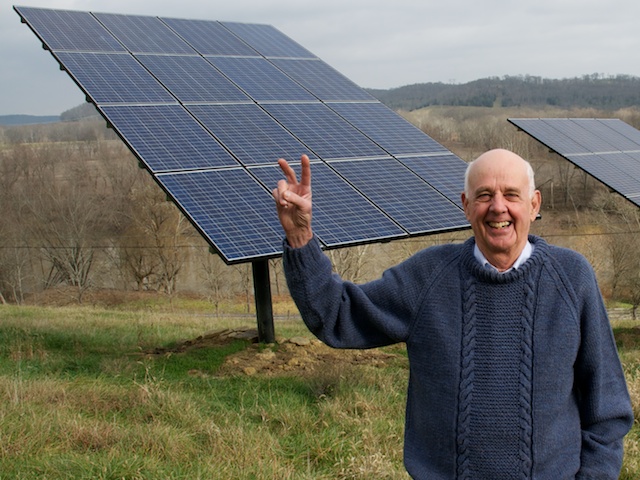
The way Berry wove together the interdependence and interconnectedness of people with land, water, wildlife, culture, communities, and economies opened an entirely new lens through which to view the world. He gave voice to something I had sensed but had not yet been able to fully articulate: that our relationship with the living world cannot be separated from how we live, work, build community, or conduct business.
What I didn’t expect when I first encountered Berry’s work, but came to appreciate years later while working throughout the Bluegrass region of Kentucky, was just how deeply his writing emerged from place. The beauty of that landscape and the cultural connections embedded within it seemed to be everywhere you turned. Farms, stone walls, woodlots, streams, towns, families, and generations of human labor all seemed woven together. Berry helped me see that place is not simply where we live or work. It is part of who we are.
A few years later, I stumbled upon Berry’s Manifesto: The Mad Farmer Liberation Front. I read it, read it again, and again, and again—and, well, I haven’t really put it down since. In fact, a copy has followed me around on my bulletin board for more than 30 years.
It spoke directly to my growing skepticism about capitalism and the extractive economy from the opening stanza: “Love the quick profit, the annual raise, vacation with pay. Want more of everything ready-made.” And then the warning: “When they want you to die for profit they will let you know.” Berry then turns toward what we might do instead: love what is good, what is right, and what is worth caring for across generations.
Two lines pulled at my heart and gave me confidence that the path I was on was true: “Invest in the millennium. Plant sequoias.” And then: “Say that the leaves are harvested when they have rotted into the mold. Call that profit.”
There it was. Berry had turned the very idea of profit on its head. What if profit could be measured in trees planted for generations we will never meet, soil built over centuries, healthy land and water, thriving communities, and relationships that endure? He had woven together a place-based, ecologically centered way of living and working while remaining true to each other, our communities, and the land. For someone struggling with how to reconcile the work of restoring the Earth with the conventions of business, those words were liberating.
But Berry wasn’t finished. He goes on to tell us where to put our faith: “…in the two inches of humus that will build under the trees every thousand years.” He tells us to be joyful, to laugh, to “…swear allegiance to what is nighest your thoughts,” and, once they are onto you, to move on. A gentle nod to civil disobedience. Something we could all practice a bit more these days.
Berry’s Manifesto rings even truer today than when he wrote it more than half century ago. That may be a sad commentary on where our planet and our culture are headed, but I find comfort and resolve in having something to hold onto, something to believe in, and something that continues to inspire action.
Perhaps that is the enduring gift of the Mad Farmer. Berry reminds us that another way of living is possible: one rooted in place, reciprocity, restraint, joy, and love for the living world. May his Manifesto: The Mad Farmer Liberation Front continue to carry us forward toward a more just, biodiverse, and reciprocal way of life.