Wild Solutions in Fine Dining
By Amy Nelson and Madalyn Mauthe
From the lowlands of the American Southeast to the highlands of New England, eating invasive species has become more than just a conversation in the minds of experts, especially when it comes to several award winning chefs and restaurants that are inviting their guests to look at the ecology of where their food is coming from.
Join us as we embark on an adventure of tastebuds, where we will meet chefs from around the world, converse with the people their culinary expertise has influenced, and even try a few dishes ourselves. After all, if you’re going to write about eating invasive species, you really ought to eat some yourself.
Let’s Eat
Known for its celebration of wild and locally sourced seasonal ingredients, “foraged.” has become one of Baltimore’s most acclaimed restaurants. In addition to receiving a 2023 James Beard Award nomination for Best Chef of the MidAtlantic region, foraged. owner and chef, Chris Amendola has been heralded in local media, mentioned in Food and Wine, and featured as the subject of an Emmy Award-winning documentary. Having learned that Amendola routinely includes invasive species on his menu, I booked a table with two colleagues on an early November evening.
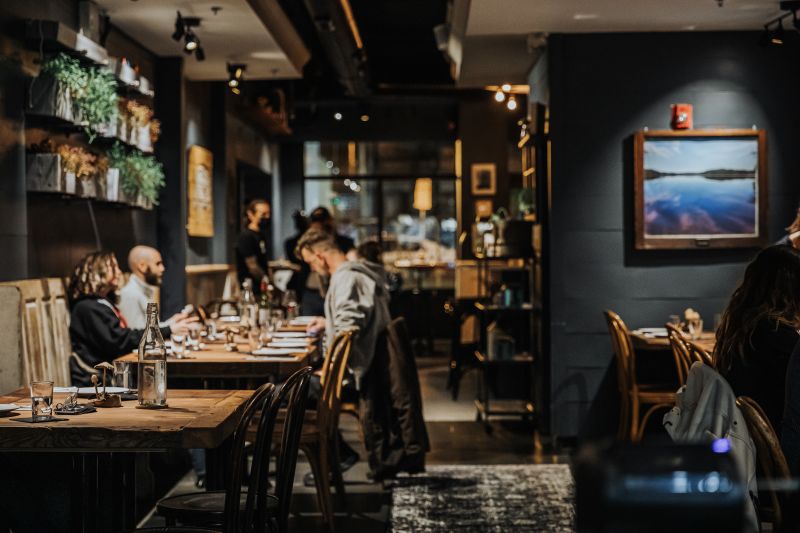
“People have gotten so lost on where their food comes from,” said Amendola. Earlier experience working in a South Carolina restaurant with its own farm, along with an introduction to foraging by other influential chefs, fueled Amendola’s passion for sustainability and the use of hyper-seasonal, hyper-local ingredients. One such ingredient—and a regular on the menu at foraged.—has not always been local. The blue catfish (Ictalurus furcatus) is native to the Mississippi, Missouri, and Ohio river systems, but in the 1970s and 80s, it was introduced in three Chesapeake Bay tributaries to establish recreational fisheries. It has since spread throughout the Chesapeake, where it is now an apex predator that is disrupting the food web as it consumes blue crabs, white perch, menhaden, striped bass, and even turtles. The USDA and Maryland’s Department of Natural Resources promote commercial and recreational harvesting of blue catfish, and Amendola has made use of this resource since the restaurant opened in 2017.
“Most people fry their catfish, but that’s not what we do,” said Amendola. “We pan sear it and baste it in butter, garlic, and thyme. People are really blown away by how good it actually is.”
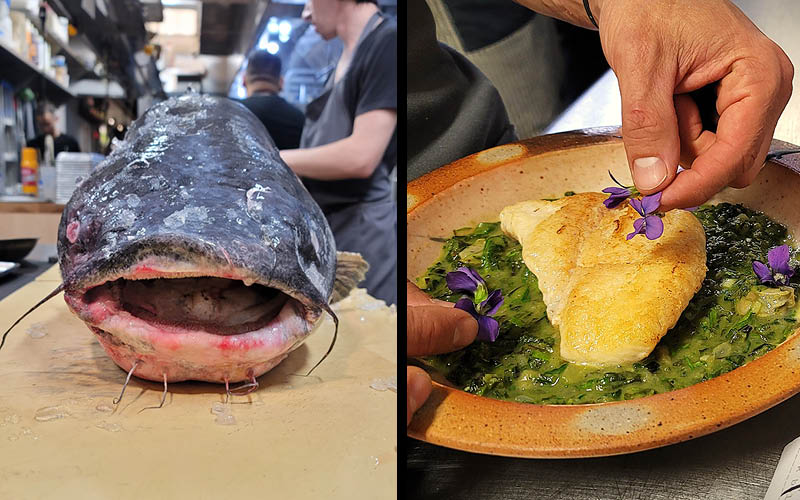
My colleagues and I now count ourselves among such people. The fish was firm, with a mild flavor and a touch of sweetness. It was well balanced by its supporting cast of roasted and pureed seasonal vegetables. “It tastes so much better than I expected,” said my colleague, Jennifer. “I’ve only ever eaten fried catfish, but the way it is prepared here, you can actually taste the fish, and it’s… elevated.”
Amendola’s choice to put blue catfish on the menu was influenced by more than its taste, however. “The way we’re depleting our oceans is not sustainable,” he said. “We are not ones to really serve rockfish (striped bass), grouper, snapper and all the commodity fish. I’d rather serve invasive species, whether it’s snakehead or catfish and more or less play our part in trying to get the local ecosystem back to where it needs to be.”
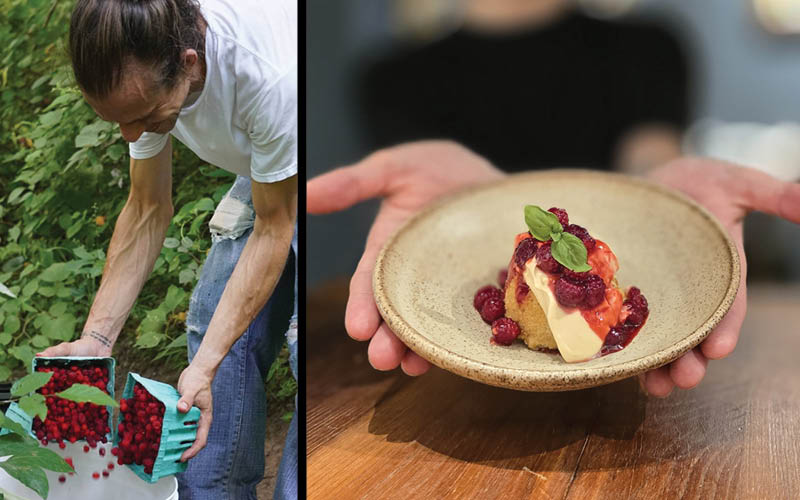
“I’m a bit of an ‘eat local’ person,” said my colleague, Erin, “But this experience makes me want to be even more intentional and eat more invasive species.” Erin informed us that invasive tumbleweeds, which are hugely problematic in her home state of New Mexico, are starting to appear on menus.
As our server cleared our very empty plates, we asked her what it was like to work in a restaurant so focused on sustainability. “I really love the concept,” she said. While most diners come to foraged. because they love great food, many express interest in the restaurant’s ethics, and are eager to learn about the ingredients in their dishes.
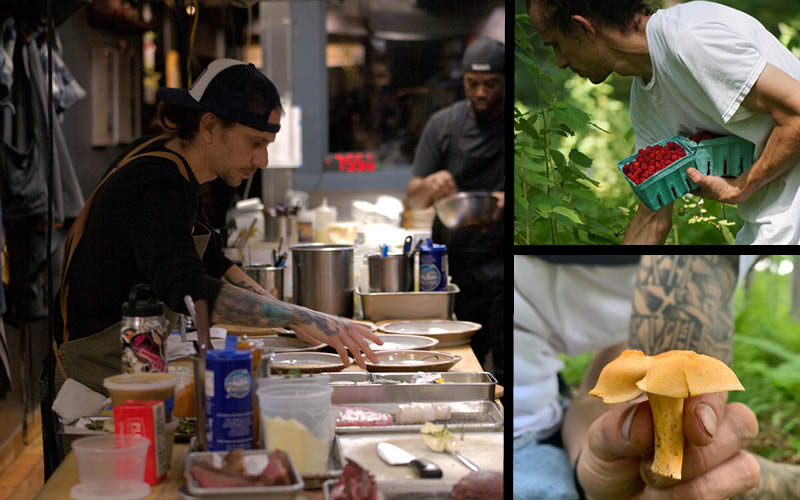
While Amendola does not urge his staff to “preach” to patrons, he does encourage them to discuss the ingredients and their connection to local ecosystems if asked about them. Katherine enjoys those opportunities and said that her own awareness has been raised as well. “It is really difficult now to see a huge [commercial food truck] in front of a restaurant or to see the amount of waste at other restaurants.”
It Feels Good to Eat (and cook) this Way
When it comes to serving invasives, Amendola is joined by other James Beard Award nominees Seng Luangrah in Washington, DC, Matt Kern in Fenwick, DE, and Hari Pulapaka in Deland, FL. Invasives have even appeared on the menus of Michelin Star restaurants, such as Jaras in Phuket, Thailand, where Chef Chalermwut ‘Nui’ Srivorakul reimagines Southern Thai cuisine by applying a zero-waste, ecologically-informed cooking philosophy that includes the use of invasive species. Among the offerings on Jaras’ nine-course “Sustainability Menu” are a squid tart featuring invasive water mimosa (Mimosa pigra), a plant that is threatening wetland systems across the tropics; and a reimagined kanom jeen (a traditional Thai rice noodle dish), with noodles made from invasive blackchin tilapia (Sarotherodon melanotheron) which has caused declines in fish populations and diversity in Thailand’s estuaries. Jaras has even partnered with the World Wildlife Fund-Thailand to research edible invasive species and raise awareness of them.
But the gratification of cooking with invasive species is being felt by a community of adventurous, professional chefs that extends beyond award winning restaurants. The Lowcountry of South Carolina, one of the most iconic culinary regions of the U.S and where Chef Amendola found inspiration, is also home to Wyatt Gaus, a private chef and owner of Charleston, South Carolina-based Herbally Wonderful Culinary.
Guas prioritizes local, sustainably sourced ingredients, including invasive species, and maximizes the use of his ingredients. His use of invasive garlic mustard (Alliaria petiolate) to create a flavorful and herby pesto might just be my intro to cooking with invasive species.
“The best way to enjoy food is to enjoy it as fresh as possible,” he says, “but I might use it later in a chimichurri, remoulade, or some other herb sauce.”
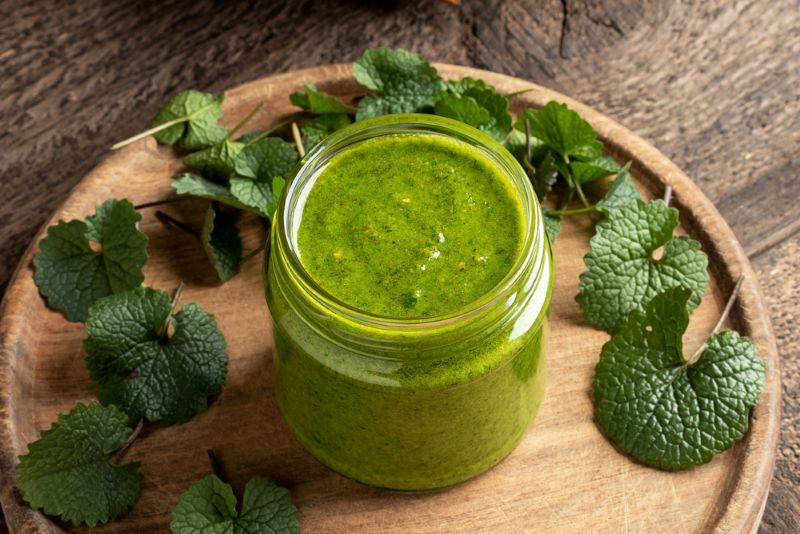
Introduced to North America in the mid-1800s, garlic mustard emerges early in the spring, blocking sunlight from and outcompeting native plants. According to Gaus, the plant’s younger leaves produce a taste profile that is equally “garlic-y” and “mustard-y.” He warns that the adult plant is bitter and the vines release a horseradish flavor, so he recommends picking them while they’re still young. Gaus is enthused by the growing interest in using invasive species. “I’ve been around localized food my entire life,” he said, “and [using invasive species] is a really cool concept.”
Pioneering the Gastronomy of Invasive Species
When it comes to getting invasive species on the menus of American restaurants, an early innovator was another James Beard Award nominee, Chef Bun Lai (Yes, the same Chef Bun Lai mentioned in our Expert Q&A with Joe Roman).
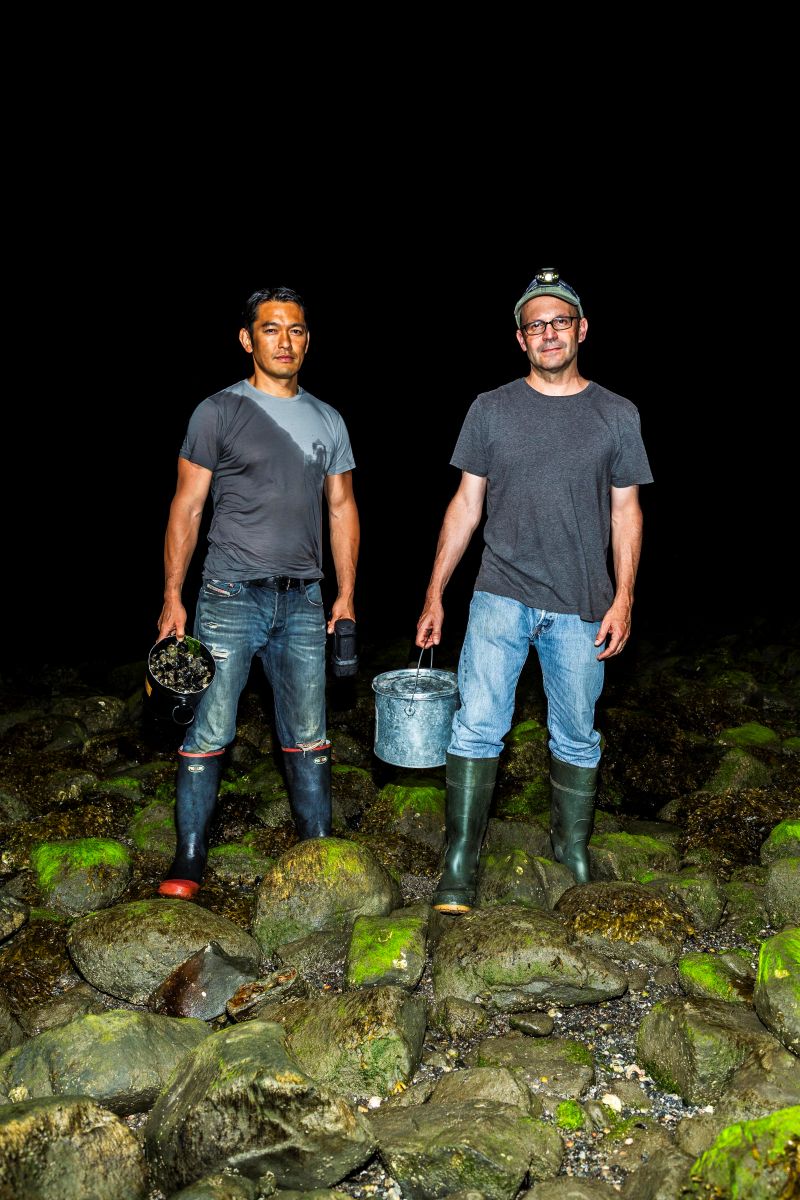
Wild food was central to Lai’s childhood in New Haven, CT, where his father conducted scientific research and his mother owned a traditional Japanese sushi restaurant, Miya’s. While he was growing up, his parents, originally from southern Japan and Hong Kong, often took him foraging for wild plants or collecting mussels along the shoreline of the Long Island Sound. Later, as a young chef working at Miya’s, Lai began to think about some of those ingredients.
“I was realizing that many of the ingredients that were being used in sushi bars around the world were impacting the environment in negative ways, and that many ingredients that people perceived as healthy were fundamentally unhealthy,” he said. “California rolls, for example, were made out of mysterious fish that was highly processed with sugar and food coloring.”
Lai began creating plant-based sushi rolls and by 2001, he had removed unsustainable seafood from the menu. His true “Eureka!” moment, however, came after he and a friend discovered a crab they had never seen before while foraging along the coast.
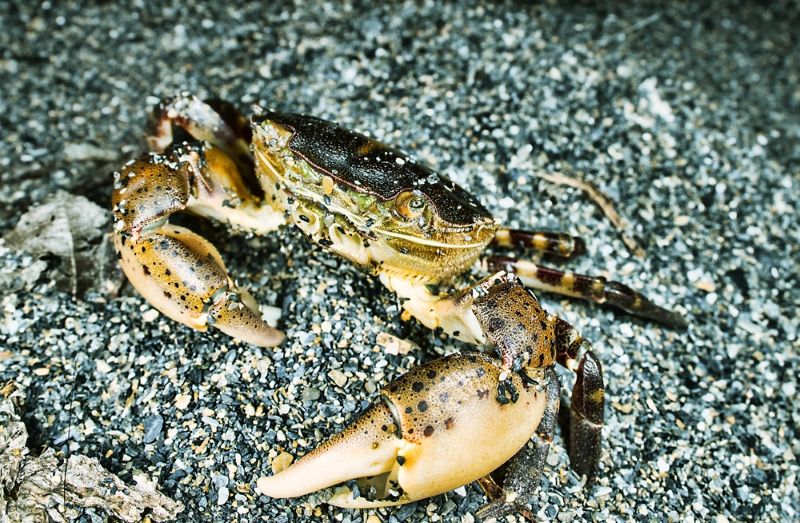
It was an invasive Asian shore crab, (Hemigrapsus sanguineus), and in them, Lai recognized a sustainable crab fishery that was being ignored. That crab soon became the main ingredient in Lai’s version of a California roll. “That first invasive species really became the hallmark of our cuisine,” he said.

Since then, Lai went on to create an entire menu featuring invasive species (some of which were only conceptual). They soon began including invasive weeds, like Japanese knotweed (Fallopia japonica) and mugwort (Artemisia vulgaris) in their plant-based sushi. “Ironically, many of the invasive plants are exponentially more nutritious and often tastier than their cultivated counterparts.” According to Lai, there is more of the antioxidant resveratrol in Japanese knotweed than there is in red grapes.
Miya’s had its own land, farm, boats, and shellfish-certified waters from which to harvest its own ingredients, and within a few years, Chef Bun Lai and Miya’s, his “mother’s little eatery,” began garnering worldwide attention. Even before Lai’s James Beard Award nomination in 2013, Miya’s was featured on the Food Network and listed among Gourmet’s Top Ten Healthiest Restaurants. His writing on sustainable food has been published in Scientific American, and he has been the subject of two documentaries (one of which, Blind Sushi, was a James Beard Award finalist for Best Documentary in 2018). In 2016, and he was named a White House Champion of Change.
But for Lai, the greatest rewards associated with his approach to food have come from the process of harvesting, preparing, and serving it.
“It wasn’t just a business. It is what I loved to do most when I was growing up: be outside in nature. So much of foraging and fishing isn’t about the fish you catch or the delicious plants that you forage; it’s the process. You may not find what you are looking for, and the experience is nonetheless nourishing.”
Lai closed Miya’s at the end of 2020 to focus on family and other endeavors. He is currently in the prototype phase of creating products from invasive species and other sustainable and underutilized products. [Stay tuned]. He also offers experiential outings where small groups can join him for a day of coastal foraging and fishing that ends with cooking and eating together outside. “It’s a vision of what sushi would look like if we ate in a way that paid homage to our local ecosystem,” he said.
“To be able to cook in a way that nourishes people and potentially has a positive impact on the environment, rather than being part of an extractive and damaging food system, is something that makes me feel good.”
Creating an Appetite for Invasive Species
There are challenges with bringing invasive species to market, including regulations. Bun Lai pointed out, “If you are in New York state, you cannot sell Japanese knotweed because it is illegal.” Out of concern about proliferation, some states have banned the commercial use of invasive species. But the regulatory environment may be changing along with consumer interest. In Connecticut, for example, new legislation went into effect just this October that allows for commercial use of invasive species such as European green crabs and Asian shore crabs.
There is also the challenge of perception. In other words, many invasive species have an image problem. A lack of familiarity with an ingredient or menu description may hinder a guest from even trying a new place. Post House Inn and Restaurant, located minutes away from downtown Charleston, South Carolina, is renowned for its high-quality ingredients and use of local purveyors for its menu selections.
Tyler Baca, assistant general manager at Post House, said, “A lot of people’s imagery, the way they associate things, plays a big part in what they choose to eat.” He admitted that people may find it less appealing to eat “something that has a connotation of being unwanted or not sought after.”
To help address this challenge, some state agencies have rebranded targeted edible invasive species, renaming them and promoting their taste and health benefits. Take the Asian carp, for example. In 2022, the State of Illinois unveiled “Copi” and created the website choosecopi.org, to promote consumption of the fish, and the markets and restaurants selling it, and pique the public’s interest in “Copi tacos” or “Copi burgers.” The state of Maryland also applied a rebranding strategy to fuel consumer demand of invasive northern snakehead (Channa argus), giving it the more appetizing moniker “Chesapeake Channa.”
The aversion towards eating invasive species doesn’t seem to come from local chefs. In fact, some feel strongly about the importance of using it in their dishes. Just ask biology graduate, former food truck owner, and current sous chef at Post House, MJ Boyd. “If you can find ways to market it, there’s no reason not to use it” he said of invasive species in general. “That’s absolutely where I stand on it.”
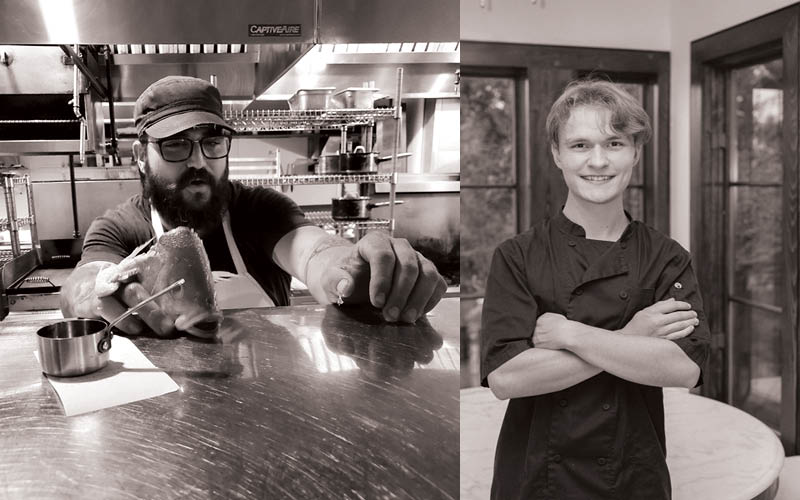
As farm-to-table-style dining continues to grow, younger chefs are paying attention not only to the seasonality of their local ingredients, but also the ways in which guests’ preferences may be changing, too.
A young chef himself, Wyatt Gaus said, “I feel like a lot of young people are more environmentally aware.” Data actually supports this. A 2024 survey by the Organic Trade Association revealed that the environmental impact of their food choices is a core concern among young consumers. The International Food Information Council’s 2022 ‘Food and Health Survey’ revealed that 73% of Gen Zs believe they have a greater concern about the environmental impact of their food choices than other generations.
Bun Lai also sees an increased interest in sustainable gastronomy and the use of invasive species in up-and-coming chefs and is hopeful about the future. “The sophisticated conversations chefs are having about this today could not have happened 20 years ago,” he said. “Today, some of the biggest companies in the world have sustainable food initiatives.”
Rekindling a Connection with the Land and Water
Our food choices affect the land and water around us. Whether we are conscious of it or not, we’re tied to what we eat. Amidst the ambiance, lighting, and lively chatter of a full dining room, it can be difficult to fully connect with the food we select from a printed menu. In not knowing the forests, gardens, fields, and waters from which the ingredients originated, we have blurred the connection between our food choices and the land and water that sustains all life.
Using invasive species in restaurants, catered events, or even the next potluck you host, regains footing of rekindling a connection with the land that has been lost in the developing modern world. A connection that is inherently felt, driven, and yearned for by all of us.